Explore our network of country and industry based websites to access localized information, product offerings, and business services across our group.
Log in to start sending quotation requests for any product.
Don't have an account? Sign Up Here
Home Learning Center Citric Acid Monohydrate
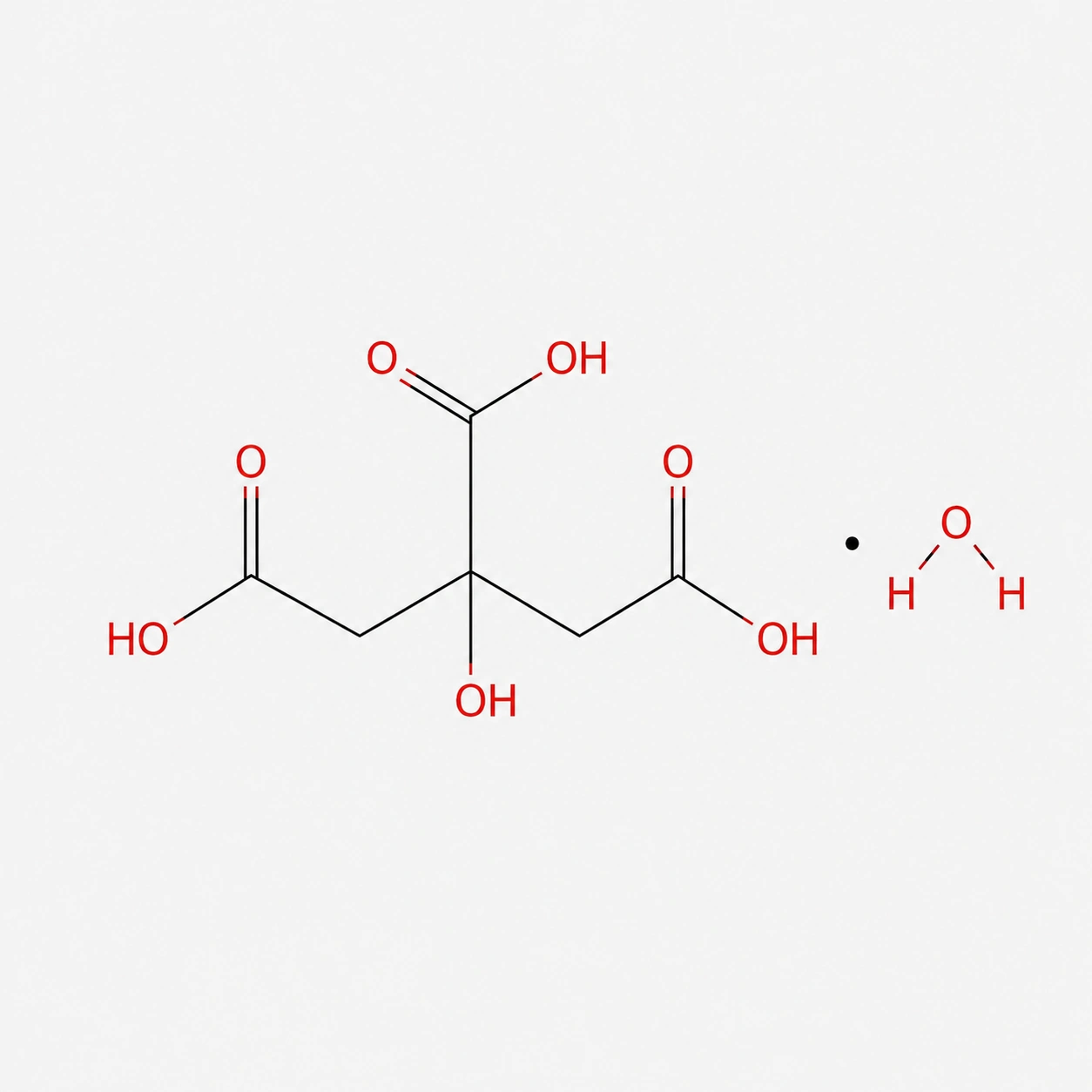
Citric Acid Monohydrate Structure
|
IUPAC Name |
2-hydroxypropane-1,2,3-tricarboxylic acid monohydrate |
|
CAS Number |
5949-29-1 |
|
HS Code |
2918.14 |
|
Molecular Formula |
C6H8O7·H2O |
|
Structural Formula |
HOOCCH2C(OH)(COOH)CH2COOH·H2O |
|
Synonyms |
Citric acid monohydrate, Citric acid hydrate, 2-Hydroxytricarballylic acid monohydrate, E330 |
|
Molecular Weight |
210.14 g/mol |
Citric Acid Monohydrate is a food-grade organic acid widely used as an acidulant, pH regulator, preservative, chelating agent, and flavor enhancer in food and beverage applications. It appears as a white crystalline powder or granules and contains one molecule of water of crystallization, making it the hydrated form of citric acid. Known for its clean sour taste and high water solubility, Citric Acid Monohydrate is commonly used in beverages, confectionery, jams, jellies, dairy products, bakery mixes, sauces, pharmaceuticals, cosmetics, and cleaning products. It is also recognized as food additive E330
From a formulation standpoint, citric acid monohydrate is valued because it dissolves readily in water and provides fast acidification. The molecule contains three carboxylic acid groups, which explains its strong acidulant function, buffering contribution, and chelating ability. Industrial literature notes that citric acid is colorless and easily water-soluble in pure form, exists as either anhydrous or monohydrate form, and has molecular weights of 192.12 and 210.14 respectively.
|
Physical Description |
White crystalline powder or granules |
|
Color / Form |
White to off-white |
|
Odor |
Odorless |
|
Taste |
Strong, clean sour/acidic taste |
|
Boiling Point |
Decomposes above 175 °C |
|
Melting Point |
153–159 °C |
|
Flash Point |
Not applicable (solid) |
|
Solubility |
Freely soluble in water; soluble in ethanol |
|
Density |
Approx. 1.665 g/cm³ |
|
pH (1% solution) |
Approx. 2.2 |
|
Stability / Shelf Life |
Stable under normal dry storage conditions. Hygroscopic above 75% RH |
|
Viscosity |
N/A (solid form) |
|
Polymerization |
No hazardous polymerization |
Citric acid monohydrate is one of the most widely used organic acids in the food ingredients market. Its main value is its ability to adjust acidity, sharpen flavor, improve preservative performance, control pH, and bind trace metals that may otherwise accelerate oxidation or color degradation.
In beverages, citric acid monohydrate is used in carbonated soft drinks, fruit juices, powdered drink mixes, energy drinks, flavored waters, ready-to-drink teas, and syrup concentrates. It gives a clean tartness, improves fruit flavor perception, balances sweetness, and supports microbial stability by lowering pH. In powdered beverages, it also contributes to rapid dissolution and a refreshing acidic profile.
In confectionery, it is used in gummies, sour candies, hard candies, fruit chews, jellies, and sugar coatings. It provides the sharp sour taste associated with fruit-flavored confectionery and can be blended with sugar or other food acids to create different sourness profiles. It is also used in controlled surface applications where a strong acid impact is needed.
In jams, jellies, fruit preparations, and fillings, citric acid monohydrate helps control pH for pectin gelation. Correct pH adjustment is critical because gel strength, texture, spreadability, flavor brightness, and shelf stability depend strongly on the acidity of the final product.
In dairy and processed cheese applications, citric acid and citrate systems can support pH regulation, emulsification, and mineral balance. It may be used in processed cheese, cream cheese-style products, dairy beverages, and other systems where acidity control and protein stability are important.
In bakery and dry mix products, citric acid monohydrate can be used as an acid component in leavening systems, especially when combined with bicarbonates. It may also appear in dessert mixes, instant powders, seasoning blends, and dry sauces where acidification is needed after reconstitution.
In meat, seafood, and processed foods, it can be used to adjust pH, support flavor balance, improve antioxidant systems, and reduce metal-catalyzed oxidation. It is not a stand-alone preservative for all systems, but it is often part of a broader preservation strategy involving pH, water activity, heat treatment, packaging, and other approved ingredients.
Beyond food and beverages, citric acid monohydrate is used in pharmaceuticals, nutraceuticals, cosmetics, personal care, detergents, water treatment, and industrial cleaning. Its chelating properties make it useful for binding metal ions, stabilizing formulations, and supporting descaling applications. Industrial literature describes citric acid applications across food, beverage, pharmaceuticals, cosmetics, detergents, metal cleaning, and other sectors.
Commercial production of citric acid is mainly based on fermentation of carbohydrate feedstocks such as molasses, glucose syrup, sucrose, or other sugar-rich substrates. The fermentation is commonly carried out using selected strains of Aspergillus niger, which accumulate citric acid under controlled process conditions. Scientific literature identifies fermentation as the dominant industrial route for citric acid production and notes that Aspergillus niger is widely used because of its high citric acid productivity and ability to utilize a range of raw materials.
The process begins with preparation of a sugar-containing medium, followed by sterilization, inoculation, fermentation, and controlled aeration. Fermentation parameters such as pH, temperature, oxygen supply, trace metal concentration, carbon source, nitrogen level, and phosphate concentration influence yield and product quality. After fermentation, the broth is separated from fungal biomass and then processed to recover citric acid.
A traditional recovery route involves precipitation with calcium hydroxide to form calcium citrate, followed by acidulation with sulfuric acid to release citric acid and form calcium sulfate as a by-product. The crude citric acid solution is then purified through filtration, decolorization, ion exchange, concentration, and crystallization. Industrial references also describe recovery methods and downstream processing as key parts of citric acid production.
The monohydrate form is obtained through crystallization under conditions that favor incorporation of one molecule of water into the crystal lattice. In practical commercial terms, producers control crystallization temperature, concentration, residence time, and drying conditions to achieve the required crystal form, purity, particle size, and moisture profile. Final product is usually dried, screened, packed in moisture-protective packaging, and released according to food-grade, pharmaceutical-grade, or technical-grade specifications.
Citric acid monohydrate has low acute toxicity and is widely used in food applications when produced and handled according to food-grade specifications. However, concentrated powder, dust, or strong solutions can irritate the eyes, skin, and respiratory tract. Handling should therefore focus on dust control, eye protection, clean storage, and prevention of unnecessary inhalation.
Safety data from Fisher Scientific classifies citric acid monohydrate with a warning signal word and identifies serious eye irritation, respiratory system effects from single exposure, and the possibility of combustible dust concentrations in air.
Citric acid monohydrate is not normally treated as a highly flammable material under standard storage and handling conditions. However, like many organic powders, fine dust may form combustible dust concentrations in air when dispersed and exposed to an ignition source. Warehouses and production areas should minimize dust accumulation, avoid open flames, control static discharge where dust is generated, and maintain good ventilation.
Dust exposure may cause irritation to the eyes, nose, throat, and respiratory tract. Direct eye contact can cause redness, tearing, and discomfort. Skin contact may cause mild irritation, especially with prolonged exposure or contact with concentrated solutions. Workers handling bulk powder should use good industrial hygiene practices, especially in weighing, mixing, bag dumping, sieving, and repacking operations.
Citric acid monohydrate is a crystalline organic acid. The main physical handling risks are dust generation, eye exposure, respiratory irritation, and potential combustible dust formation in poorly controlled powder-handling environments. Spilled material may also become slippery when wet because it dissolves and forms an acidic solution.
Wash affected skin thoroughly with soap and water. Remove contaminated clothing and shoes. If irritation, redness, or discomfort persists, seek medical advice. Contaminated clothing should be cleaned before reuse.
Immediately rinse eyes with clean running water for at least 15 minutes, lifting upper and lower eyelids occasionally. Remove contact lenses if present and easy to do. Seek medical attention if irritation, pain, redness, or blurred vision continues.
For small accidental exposure, rinse mouth with water. Give water to drink if the person is conscious and able to swallow. Do not induce vomiting unless instructed by medical personnel. Seek medical advice if large quantities are ingested or if symptoms such as stomach discomfort, nausea, or throat irritation occur.
Move the affected person to fresh air. Keep them comfortable and at rest. If coughing, throat irritation, breathing difficulty, or other respiratory symptoms persist, seek medical attention.
Use dry chemical powder, carbon dioxide, foam, or water spray depending on surrounding fire conditions. Avoid generating airborne dust during firefighting or cleanup. Firefighters should use protective equipment appropriate for the surrounding fire and possible decomposition products. Water spray may be used to cool containers and reduce dust, but direct high-pressure streams should be avoided if they disperse powder.
Small spill: Sweep or vacuum carefully using dust-minimizing methods. Avoid dry sweeping if it generates airborne dust. Collect the material into clean, labeled, sealable containers for reuse if uncontaminated or for disposal if contaminated. Wash the spill area only after the bulk powder has been collected.
Large spill: Isolate the area and prevent unnecessary personnel from entering. Avoid creating dust clouds. Collect mechanically using suitable equipment and place material in labeled containers. Prevent entry into drains, waterways, and soil. Citric acid can contribute to organic load in water systems, so disposal should follow local environmental regulations.
Store citric acid monohydrate in its original, tightly sealed packaging in a cool, dry, clean, and well-ventilated area. Protect the product from moisture, direct sunlight, excessive heat, strong bases, oxidizing agents, and incompatible materials. Because the product is used in food applications, food-grade material should be stored away from chemicals with strong odors, toxic substances, allergens, non-food-grade materials, and sources of physical contamination.
Opened bags should be resealed immediately after use. In humid environments, the product can absorb moisture, cake, or lose flowability, which may affect dosing accuracy and processing efficiency. Warehouses should apply FIFO rotation and inspect packaging regularly for damage, moisture ingress, and clumping.
|
Storage Parameter |
Recommended Condition |
|
Temperature |
Preferably 15–25 °C; avoid excessive heat |
|
Relative Humidity |
Keep dry; recommended below 60% RH where possible |
|
Shelf Life |
Commonly 24–36 months in original sealed packaging, subject to supplier specification |
|
Packaging |
Food-grade PE-lined paper bags, HDPE bags, fiber drums, or bulk bags with moisture barrier |
|
Protection |
Protect from moisture, sunlight, heat, dust, pests, and chemical contamination |
|
Segregation |
Store away from strong oxidizers, strong bases, and non-food-grade chemicals |
|
Inventory Practice |
FIFO rotation recommended |
|
Handling Area |
Use dust control, local ventilation, and clean food-grade handling procedures |
For more detailed information including pricing, customization, and shipping:
Discover more about this product and understand how it may fit into your operations, formulations, or production requirements.
Browse Product

 English
 Indonesian
 简体字
简体字
 العربية
 Español
 Français
 Português
 日本語
日本語
 한국어
한국어
 Tiếng Việt



















