Explore our network of country and industry based websites to access localized information, product offerings, and business services across our group.
Log in to start sending quotation requests for any product.
Don't have an account? Sign Up Here
Home Learning Center Fumaric Acid
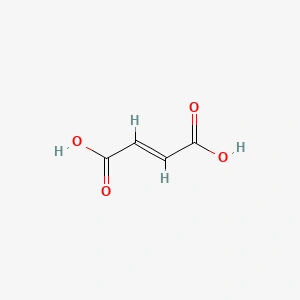
Fumaric Acid Structure
|
IUPAC Name |
(E)-but-2-enedioic acid |
|
CAS Number |
110-17-8 |
|
HS Code |
2917.19 |
|
Molecular Formula |
C4H4O4 |
|
Structural Formula |
HOOCCH=CHCOOH |
|
Synonyms |
Fumaric acid, trans-butenedioic acid, trans-1,2-ethylenedicarboxylic acid, allomaleic acid, E297 |
|
Molecular Weight |
116.07 g/mol |
Fumaric acid is a naturally occurring organic acid and a dicarboxylic acid with the molecular formula C4H4O4. It appears as a white crystalline powder or granules and is known for its strong, clean, long-lasting sour taste. Chemically, fumaric acid is the trans isomer of butenedioic acid, while maleic acid is the corresponding cis isomer. This trans configuration gives fumaric acid different solubility, stability, and handling behavior compared with maleic acid.
In food and beverage applications, fumaric acid is used as an acidulant, acidity regulator, flavor enhancer, pH control agent, and preservative-support ingredient. It is commonly known in food additive systems as E297. Compared with citric acid, fumaric acid has lower water solubility but provides strong acidifying power and persistent sourness. This makes it useful in dry beverage mixes, confectionery, bakery systems, gelatin desserts, fruit-flavored products, and acidified food formulations where slow dissolution or controlled acidity release is desirable.
Fumaric acid and its salts may be safely used in food under prescribed conditions in U.S. regulation. The U.S. eCFR states that fumaric acid and its calcium, ferrous, magnesium, potassium, and sodium salts may be safely used in food when they meet specified conditions, including a requirement that fumaric acid contains a minimum of 99.5% by weight of fumaric acid calculated on an anhydrous basis.
Commercially, fumaric acid is used in both food and industrial sectors. In the food industry, it supports acidity control, flavor balance, and shelf-life performance. In industrial applications, it is used in unsaturated polyester resins, alkyd resins, paints, coatings, plasticizers, paper sizing, and chemical intermediates. For buyers, the key commercial specifications usually include purity, particle size, moisture, maleic acid content, heavy metals, residue on ignition, color, food-grade compliance, and packaging condition.
|
Physical Description |
White crystalline powder or granules |
|
Color / Form |
White to off-white crystalline solid |
|
Odor |
Odorless or nearly odorless |
|
Taste |
Strong, clean sour taste |
|
Boiling Point |
Not normally applicable; decomposes/sublimes before conventional boiling |
|
Melting Point |
Approx. 287–300 °C, with decomposition or sublimation depending on test conditions |
|
Flash Point |
Not typically applicable for normal solid handling; combustible dust risk may exist |
|
Solubility |
Slightly soluble in water; more soluble in hot water and alkaline solutions |
|
Density |
Approx. 1.6 g/cm³, depending on crystal form and test method |
|
pH |
Acidic in aqueous solution; exact pH depends on concentration and dissolution conditions |
|
Stability / Shelf Life |
Stable under normal dry storage conditions; protect from moisture, heat, dust generation, and incompatible materials |
|
Viscosity |
N/A, solid form |
|
Polymerization |
Hazardous polymerization is not expected under normal storage conditions |
Fumaric acid is a high-strength food acid widely used where sharp but persistent acidity is required. It has strong acidifying power and good stability in dry products, making it valuable in powdered beverages, confectionery, bakery, desserts, fruit preparations, and processed foods.
In powdered beverages and dry drink mixes, fumaric acid provides tartness and acidity while supporting flavor brightness. Because it is less soluble than citric acid, it can deliver a slower, more sustained sour taste. This is useful in instant drinks, fruit-flavored powders, vitamin drink mixes, and effervescent-style dry formulations where acidity is needed but rapid moisture reaction must be managed carefully.
In confectionery, fumaric acid is used in hard candies, sour candies, gummies, chewing gum, fruit chews, and coated sweets. It provides a strong sour profile and can be combined with citric acid, malic acid, or tartaric acid to build a more complex acidity system. Its relatively low hygroscopicity compared with some other food acids can help improve stability in dry candy coatings and sugar-based systems.
In bakery products, fumaric acid can be used as an acidulant and pH control agent. It may be incorporated into leavening systems, tortillas, flatbreads, baked snacks, and shelf-life extension systems where acidity helps improve microbial control and product consistency. It is particularly useful in dry pre-mixes where low moisture absorption is important.
In gelatin desserts, fruit fillings, jams, and jellies, fumaric acid contributes acidity, flavor balance, and pH control. Correct pH adjustment is important for gel strength, flavor profile, preservation performance, and product texture. Because fumaric acid dissolves more slowly, processing conditions should be designed to ensure uniform distribution.
In processed foods, sauces, dressings, and seasonings, fumaric acid can be used to adjust acidity and support flavor stability. It may be selected when a manufacturer wants a strong acid impact with relatively low usage levels. It can also support preservation strategies when combined with other controls such as water activity, heat treatment, salt, sugar, preservatives, and packaging.
Outside the food sector, fumaric acid is an important chemical intermediate. It is used in unsaturated polyester resins, alkyd resins, paints, coatings, paper sizing, plasticizers, pharmaceuticals, and personal care formulations. These industrial applications make fumaric acid relevant not only as a food ingredient but also as a commodity chemical linked to construction, coatings, packaging, and manufacturing demand.
Commercial fumaric acid is commonly produced through the isomerization of maleic acid or maleic anhydride-derived solutions. Maleic anhydride is first hydrated to maleic acid, then converted from the cis configuration to the trans configuration, producing fumaric acid. After isomerization, fumaric acid is recovered by crystallization, separated, washed, dried, sieved, and packaged.
Another production pathway involves fermentation-based routes using carbohydrate feedstocks and selected microorganisms. Bio-based fumaric acid production has attracted interest because it may reduce dependency on petrochemical maleic anhydride. However, large-scale commercial supply has historically relied heavily on maleic anhydride-based routes because of cost, yield, and established industrial infrastructure.
For food-grade fumaric acid, manufacturing must be controlled to meet food additive specifications. Important quality parameters include assay, residue on ignition, heavy metals, maleic acid content, arsenic, lead, moisture, color, and particle size. The U.S. eCFR specifies that fumaric acid used under its food additive regulation must contain at least 99.5% fumaric acid by weight, calculated on an anhydrous basis.
Fumaric acid is generally handled as a low-to-moderate hazard solid in food and industrial environments, but it can cause serious eye irritation and may create combustible dust concentrations in air when dispersed as fine powder. Fisher Scientific’s SDS identifies fumaric acid with the signal word Warning and hazard statements including causes serious eye irritation and may form combustible dust concentrations in air.
Food-grade status does not remove the need for safe industrial handling. Bulk powder operations such as bag dumping, weighing, sieving, blending, and repacking can create dust exposure. Workers should minimize dust generation and use appropriate eye protection, dust controls, and hygiene practices.
Fumaric acid is a combustible organic solid, although it may be difficult to ignite under normal conditions. Fine dust dispersed in air may create an explosion or flash fire risk if exposed to ignition sources. Warehouses and production areas should prevent dust accumulation, avoid open flames, control static discharge where needed, and maintain good housekeeping.
Direct contact with fumaric acid dust may irritate the eyes, skin, and respiratory tract. Eye exposure is the most significant routine handling concern because SDS classifications identify serious eye irritation. Inhalation of dust may cause coughing, throat irritation, and discomfort, especially in poorly ventilated areas. Prolonged or repeated skin contact may cause mild irritation or dryness.
The main physical hazards of fumaric acid are dust formation, eye irritation, and combustible dust potential. Fine powder can become airborne during material transfer and mixing. Dust should not be allowed to accumulate on floors, ledges, equipment, or electrical components.
Wash affected skin thoroughly with soap and water. Remove contaminated clothing and shoes. If irritation persists, seek medical advice. Contaminated clothing should be cleaned before reuse.
Immediately rinse eyes with clean running water for several minutes, lifting eyelids occasionally. Remove contact lenses if present and easy to do. Continue rinsing and seek medical attention if irritation, redness, pain, or blurred vision persists. Fisher Scientific’s SDS specifically advises rinsing cautiously with water for several minutes after eye exposure.
Rinse mouth with water. Give water to drink if the person is conscious and able to swallow. Do not induce vomiting unless instructed by medical personnel. Seek medical advice if large quantities are ingested or if symptoms such as stomach discomfort, nausea, or throat irritation occur.
Move the affected person to fresh air. Keep them comfortable and at rest. If coughing, breathing difficulty, throat irritation, or other respiratory symptoms persist, seek medical attention.
Use dry chemical powder, carbon dioxide, foam, or water spray depending on surrounding fire conditions. Avoid actions that disperse powder into the air. Firefighters should wear appropriate protective equipment and respiratory protection if smoke, decomposition products, or heavy dust exposure may occur. Water spray may be used to cool containers and reduce dust, but high-pressure water streams should be avoided if they spread powder.
Small spill: Sweep or vacuum carefully using dust-minimizing methods. Avoid dry sweeping if it creates airborne dust. Collect the material into clean, labeled, sealable containers. Reuse only if the material is uncontaminated and suitable for the intended grade. Otherwise, dispose of according to local regulations.
Large spill: Isolate the area and prevent unnecessary personnel from entering. Avoid generating dust clouds. Use mechanical collection, vacuum systems suitable for combustible dust where applicable, or careful sweeping with dust suppression. Prevent entry into drains, waterways, and soil. Dispose of contaminated material according to local environmental and waste regulations.
Store fumaric acid in its original, tightly closed packaging in a cool, dry, clean, and well-ventilated area. Protect from moisture, direct sunlight, heat, and contamination. Keep away from strong oxidizing agents, strong bases, strong reducing agents, and incompatible chemicals. Because food-grade fumaric acid is used in food applications, it should be stored separately from industrial chemicals, strong odors, toxic materials, allergens, and non-food-grade substances.
Opened bags should be resealed immediately after use. The storage area should be clean and pest-controlled, with pallets kept away from walls and floors to prevent moisture exposure. FIFO rotation is recommended to maintain quality and traceability.
|
Temperature |
Recommended 15–25 °C; avoid excessive heat |
|
Relative Humidity |
Keep dry; preferably below 60% RH |
|
Shelf Life |
Commonly 24–36 months in original sealed packaging, subject to supplier specification |
|
Packaging |
Food-grade PE-lined paper bags, HDPE bags, fiber drums, or bulk bags with moisture barrier |
|
Protection |
Protect from moisture, sunlight, heat, dust, pests, and contamination |
|
Segregation |
Store away from strong oxidizers, strong bases, and incompatible chemicals |
|
Handling Area |
Use dust control, local ventilation, and clean food-grade handling procedures |
|
Inventory Practice |
FIFO rotation recommended |
For more detailed information including pricing, customization, and shipping:
Discover more about this product and understand how it may fit into your operations, formulations, or production requirements.
Browse Product

 English
 Indonesian
 简体字
简体字
 العربية
 Español
 Français
 Português
 日本語
日本語
 한국어
한국어
 Tiếng Việt



















