

Log in to start sending quotation requests for any product.
Don't have an account? Sign Up Here
Home Learning Center Glacial Acetic Acid
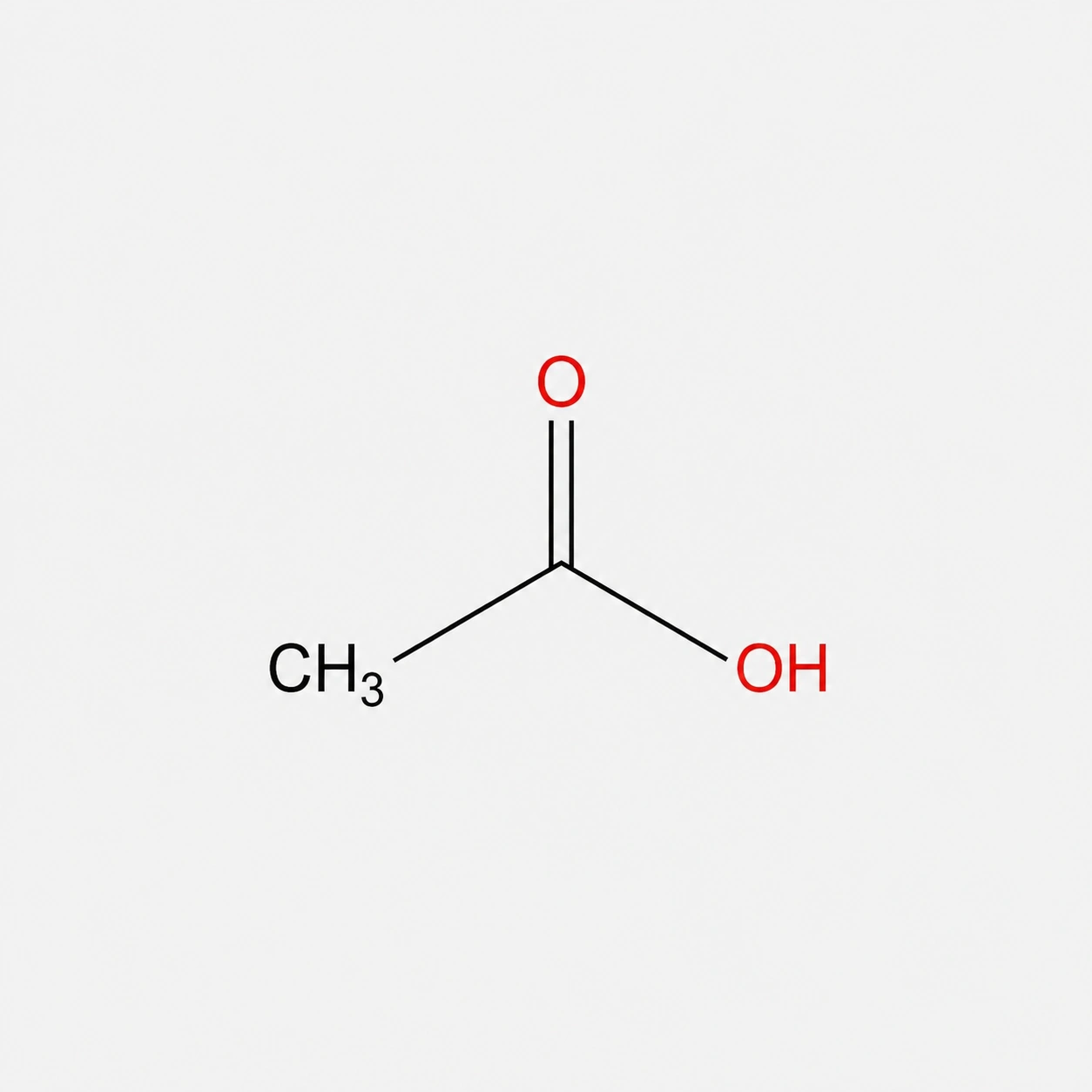
Glacial Acetic Acid Structure
|
IUPAC Name |
Ethanoic acid |
|
CAS Number |
64-19-7 |
|
HS Code |
2915.21 |
|
Molecular Formula |
C2H4O2 |
|
Structural Formula |
CH3COOH |
|
Synonyms |
Acetic acid, Glacial acetic acid, Ethanoic acid, Methanecarboxylic acid, Vinegar acid, E260 |
|
Molecular Weight |
60.05 g/mol |
Glacial acetic acid is the concentrated, water-free or near-water-free form of acetic acid. It is a clear, colorless liquid with a strong, sharp vinegar-like odor. The term “glacial” comes from its ability to solidify into ice-like crystals at temperatures around its freezing point, which is close to normal room-temperature conditions in colder environments. Unlike diluted vinegar, which contains a low concentration of acetic acid in water, glacial acetic acid is a highly concentrated chemical and must be handled with strict safety controls.
In food and ingredient applications, acetic acid is used as an acidity regulator, flavoring agent, preservative support, curing and pickling agent, pH control agent, solvent, and processing aid. The U.S. eCFR recognizes acetic acid as a substance that occurs naturally in plant and animal tissues and states that it may be produced by fermentation of carbohydrates or by organic synthesis. It also lists food-related functions including curing and pickling agent, flavor enhancer, flavoring agent and adjuvant, pH control agent, solvent, and vehicle.
From a commercial food ingredients perspective, glacial acetic acid is important because it serves as a concentrated source of acidity. It can be diluted to specific concentrations for vinegar production, pickling systems, sauces, condiments, marinades, dressings, preserved vegetables, and other acidified food products. However, its concentrated form is corrosive and flammable, so it should not be treated like ordinary food acids such as citric acid. It requires proper chemical storage, compatible packaging, controlled dilution procedures, and trained handling.
Glacial acetic acid also has broad non-food applications. It is a key industrial intermediate for producing vinyl acetate monomer, acetate esters, acetic anhydride, cellulose acetate, solvents, adhesives, coatings, plastics, textiles, pharmaceuticals, and cleaning products. For buyers and importers, the main commercial considerations are concentration, purity, grade, water content, color, iron content, aldehyde impurities, packaging type, transport classification, and whether the product is food grade or industrial grade.
|
Physical Description |
Clear, colorless liquid |
|
Color / Form |
Colorless liquid; may crystallize into ice-like solid near freezing point |
|
Odor |
Strong, pungent vinegar-like odor |
|
Taste |
Sharp acidic taste when highly diluted; concentrated product must not be tasted |
|
Boiling Point |
Approx. 117–118 °C |
|
Melting Point / Freezing Point |
Approx. 16.6 °C |
|
Flash Point |
Approx. 39–40 °C, depending on test method |
|
Solubility |
Miscible with water; also miscible with many polar organic solvents |
|
Density |
Approx. 1.049 g/mL at 20–25 °C |
|
pH |
Strongly acidic in aqueous solution; exact pH depends on concentration |
|
Stability / Shelf Life |
Stable under recommended storage conditions but sensitive to heat, ignition sources, incompatible chemicals, and moisture contamination |
|
Viscosity |
Low-viscosity liquid |
|
Polymerization |
Hazardous polymerization is not expected under normal storage conditions |
Glacial acetic acid is a high-strength acidulant and chemical intermediate used across food, beverage, pharmaceutical, agricultural, and industrial sectors. In food-related use, it is mainly valued for acidity control, pickling performance, flavor development, microbial inhibition through pH reduction, and compatibility with vinegar-based formulations.
In pickling and preserved vegetables, acetic acid helps lower pH and create acidic conditions that inhibit the growth of many spoilage and pathogenic microorganisms. It is commonly used in pickled cucumbers, onions, peppers, mixed vegetables, relishes, and other acidified food systems. In these applications, concentration control is critical because food safety depends on final pH, acid distribution, heat processing, packaging, and regulatory compliance.
In sauces, condiments, and dressings, glacial acetic acid may be diluted and incorporated into vinegar-style systems or acidified formulations. It provides sharp acidity, enhances flavor balance, and supports preservation when combined with salt, sugar, heat treatment, preservatives, and proper packaging. Typical product categories include ketchup, chili sauce, mustard, salad dressings, mayonnaise-style products, marinades, and dipping sauces.
In meat, seafood, and processed food systems, acetic acid can be used as a pH control agent, curing and pickling support ingredient, or antimicrobial processing aid depending on local regulations and product design. Its effectiveness depends on concentration, contact time, product matrix, and final formulation.
In bakery and snack applications, acetic acid may contribute to flavor, acidity adjustment, or mold-control systems, especially in vinegar powders, buffered vinegar ingredients, and acetate-based preservation systems. Direct use of glacial acetic acid requires careful dilution and formulation control.
In beverages and fermented products, acetic acid is associated with vinegar, kombucha-style acid profiles, fermented condiments, and acidified beverage components. However, glacial acetic acid must be used only where permitted and must meet food-grade specifications if intended for food or beverage use.
Beyond food, glacial acetic acid is a major industrial raw material. It is used to produce vinyl acetate monomer, acetic anhydride, acetate esters, cellulose acetate, pharmaceutical intermediates, dyes, textile chemicals, solvents, and cleaning products. This industrial demand is a major driver of global acetic acid trade, and supply can be influenced by methanol prices, carbon monoxide availability, petrochemical plant utilization, and downstream demand from paints, coatings, adhesives, and packaging sectors.
Glacial acetic acid can be produced by fermentation or by organic synthesis. For food and natural vinegar systems, acetic acid may originate from fermentation of carbohydrates or alcohol-containing substrates. For large-scale industrial production, synthetic routes dominate because they offer higher volume, lower cost, and more consistent output. The U.S. eCFR states that acetic acid is produced by fermentation of carbohydrates or by organic synthesis, and identifies major synthetic routes including oxidation of acetaldehyde derived from ethylene, liquid-phase oxidation of butane, and reaction of carbon monoxide with methanol derived from natural gas.
Modern large-scale production is commonly based on methanol carbonylation, where methanol reacts with carbon monoxide in the presence of a catalyst to produce acetic acid. The crude acid is then purified through distillation and other finishing steps to remove water, catalyst residues, light ends, heavy ends, and trace impurities. The final concentrated product is marketed as glacial acetic acid when it meets the required high-purity and low-water specifications.
For food-grade supply, additional requirements apply. The product must meet relevant food chemical specifications, and the supplier should provide documentation such as Certificate of Analysis, food-grade declaration, allergen statement, non-GMO statement where applicable, halal or kosher certificate where required, SDS, and regulatory compliance documents. Buyers should not assume that every glacial acetic acid shipment is suitable for food use, because industrial-grade material may not meet food-contact or food-additive requirements.
Glacial acetic acid is significantly more hazardous than many dry food acids because it is a concentrated corrosive liquid and a flammable liquid. It can cause severe skin burns and serious eye damage. Vapors may irritate the respiratory tract, and exposure to concentrated vapors can be harmful. Fisher Scientific’s SDS classifies acetic acid as hazardous under OSHA, with hazard statements including flammable liquid and vapor and causes severe skin burns and eye damage.
Food-grade use does not remove the chemical hazard of the concentrated product. Even if the material is intended for food manufacturing, workers must handle glacial acetic acid as a corrosive and flammable chemical until it has been properly diluted and incorporated into the final formulation. This is a key operational difference compared with solid organic acids such as citric acid.
Glacial acetic acid is a flammable liquid. It should be kept away from heat, sparks, open flames, hot surfaces, static discharge, and incompatible chemicals. Fisher Scientific’s SDS states that the product should be kept away from ignition sources and that containers should be kept tightly closed; it also includes static discharge prevention as a precautionary measure.
Vapor accumulation in poorly ventilated areas can increase fire and exposure risk. Storage and filling areas should have adequate ventilation, compatible electrical equipment where required, bonding and grounding for transfer operations, and strict no-smoking controls.
Glacial acetic acid can cause severe burns on skin contact and serious eye damage on eye exposure. Inhalation of vapor or mist can irritate the nose, throat, and lungs. Fisher Scientific’s SDS includes prevention statements to wear protective gloves, protective clothing, eye protection, and face protection, and to avoid breathing dust, fume, gas, mist, vapors, or spray.
Glacial acetic acid presents three main physical dangers: corrosivity, flammability, and vapor exposure. It can damage skin, eyes, and mucous membranes on direct contact. It can release irritating vapors, especially when heated or handled in poorly ventilated spaces. It can also ignite when vapors contact an ignition source.
Because glacial acetic acid may crystallize at lower ambient temperatures, blocked valves, partially frozen drums, or crystallized product should be handled carefully. Heating should only be done using approved indirect warming methods, never by direct flame.
Immediately remove contaminated clothing, shoes, and accessories. Rinse affected skin with plenty of water for at least 15 minutes. Seek medical attention immediately because concentrated acetic acid can cause chemical burns. Contaminated clothing should be washed before reuse or disposed of if heavily contaminated. Fisher Scientific’s SDS advises immediate rinsing and medical attention for exposure.
Immediately rinse eyes with clean running water for at least 15 minutes, lifting the eyelids occasionally. Remove contact lenses if present and easy to do. Continue rinsing and seek immediate medical attention. Eye exposure to glacial acetic acid should be treated as an emergency because the material can cause serious eye damage.
Rinse mouth with water. Do not induce vomiting. Never give anything by mouth to an unconscious person. Seek immediate medical attention or contact a poison center. Ingestion of concentrated acetic acid can cause burns to the mouth, throat, esophagus, and stomach. Fisher Scientific’s SDS specifically states to rinse mouth and not induce vomiting if swallowed.
Move the affected person to fresh air immediately and keep them comfortable for breathing. If breathing is difficult, seek medical attention. If symptoms persist, such as coughing, chest tightness, throat irritation, dizziness, or shortness of breath, medical evaluation is required. Fisher Scientific’s SDS advises moving the person to fresh air and keeping them comfortable for breathing.
Use carbon dioxide, dry chemical powder, or foam to extinguish fires involving glacial acetic acid. Water spray may be used to cool exposed containers, but direct water streams may spread burning liquid. Firefighters should wear full protective equipment and self-contained breathing apparatus where vapor exposure or combustion products are possible. Fisher Scientific’s SDS lists CO₂, dry chemical, or foam as suitable extinguishing media.
Small spill: Evacuate unnecessary personnel from the immediate area. Wear chemical-resistant gloves, goggles, face protection, protective clothing, and suitable respiratory protection if vapors are present. Stop the leak if it is safe to do so. Absorb the spill with inert absorbent material such as sand, vermiculite, or spill-control absorbent. Collect into compatible, labeled, corrosion-resistant containers for disposal.
Large spill: Isolate the area and eliminate all ignition sources. Prevent the liquid from entering drains, waterways, soil, and confined spaces. Use diking or bunding to contain the liquid. Transfer recovered material into compatible containers using suitable equipment. Ventilate the area thoroughly. Disposal must follow local, regional, and national hazardous waste regulations. Fisher Scientific’s SDS notes that waste generators must consult applicable hazardous waste regulations for accurate classification and disposal.
Store glacial acetic acid in tightly closed, compatible containers in a cool, dry, well-ventilated area. Keep away from heat, sparks, open flames, hot surfaces, oxidizing agents, strong bases, strong acids, reactive metals, and incompatible organic materials. Store away from food ingredients unless it is clearly identified as food-grade and segregated according to food safety procedures.
For warehouse and import-export handling, glacial acetic acid should be treated as a dangerous good. Fisher Scientific’s SDS lists transport information for ACETIC ACID, GLACIAL under UN2789, with hazard class 8, subsidiary hazard class 3, and packing group II. This means packaging, labeling, shipping documents, segregation, and carrier acceptance must be handled carefully.
|
Temperature |
Preferably store in a cool area; avoid excessive heat and freezing-related handling problems |
|
Ventilation |
Store in a well-ventilated area to prevent vapor accumulation |
|
Container |
Use compatible corrosion-resistant containers such as approved HDPE, stainless steel, glass-lined steel, or suitable lined tanks |
|
Closure |
Keep container tightly closed when not in use |
|
Ignition Control |
Keep away from heat, sparks, open flames, hot surfaces, and static discharge |
|
Segregation |
Store away from oxidizers, strong bases, reactive metals, and incompatible chemicals |
|
Shelf Life |
Typically stable under recommended storage conditions; confirm supplier’s stated shelf life |
|
Food-Grade Control |
Keep food-grade material segregated from industrial chemicals, allergens, strong odors, and contamination sources |
|
Inventory Practice |
FIFO rotation recommended |
|
Transport Classification |
UN2789, Acetic acid, glacial; Class 8, subsidiary Class 3, Packing Group II, subject to applicable transport rules |
For more detailed information including pricing, customization, and shipping:
Discover more about this product and understand how it may fit into your operations, formulations, or production requirements.
Browse Product