Explore our network of country and industry based websites to access localized information, product offerings, and business services across our group.
Log in to start sending quotation requests for any product.
Don't have an account? Sign Up Here
Home Learning Center Trisodium Citrate Dihydrate
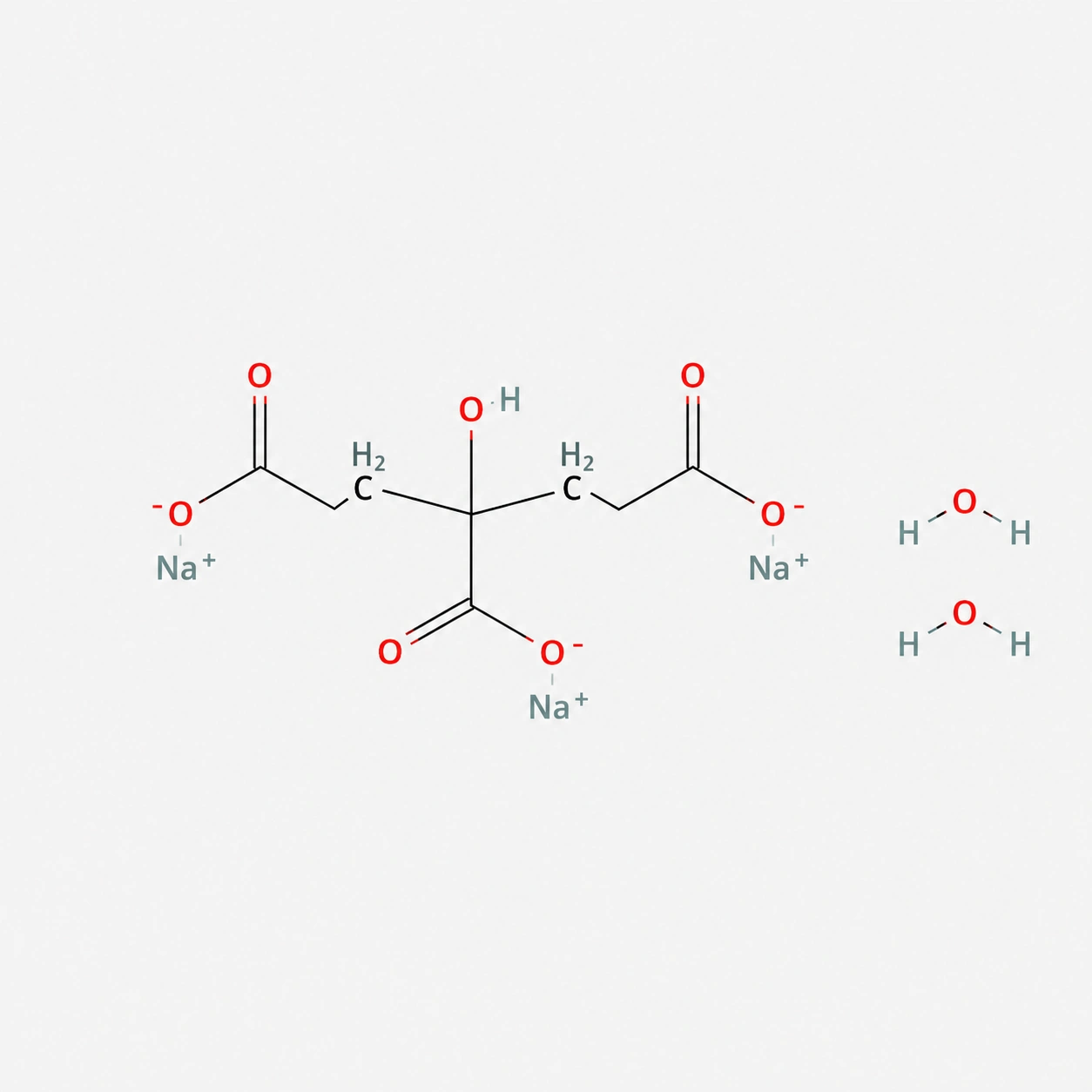
Trisodium Citrate Dihydrate Structure
|
IUPAC Name |
Trisodium 2-hydroxypropane-1,2,3-tricarboxylate dihydrate |
|
CAS Number |
6132-04-3 |
|
HS Code |
2918.15 / 29181510 for sodium citrate in some tariff systems |
|
Molecular Formula |
C6H5Na3O7·2H2O |
|
Structural Formula |
HOC(COONa)(CH2COONa)2·2H2O |
|
Synonyms |
Trisodium citrate dihydrate, Sodium citrate dihydrate, Sodium citrate tribasic dihydrate, Citric acid trisodium salt dihydrate, E331(iii) |
|
Molecular Weight |
294.10 g/mol |
Trisodium citrate dihydrate is the dihydrate form of trisodium citrate, a sodium salt of citric acid. It is commonly supplied as colorless crystals, white crystals, or a white crystalline powder. It is widely used in food, beverage, pharmaceutical, medical, cosmetic, and industrial applications because it provides buffering capacity, pH control, emulsification support, sequestration of metal ions, and mild salty-sour taste modification.
In food applications, trisodium citrate dihydrate is commonly associated with the food additive code E331(iii). It is not used primarily as a strong acidulant like citric acid, fumaric acid, or tartaric acid. Instead, its major value is as a buffering salt, acidity regulator, emulsifying salt, sequestrant, and stabilizer. It is especially important in processed cheese, dairy systems, beverages, jams, jellies, gelatin desserts, ice cream, sauces, and certain meat and seafood systems.
The U.S. eCFR affirms sodium citrate as a direct food substance used in food with no limitation other than current good manufacturing practice, provided it meets the applicable Food Chemicals Codex specifications. The regulation also states that sodium citrate is prepared by neutralizing citric acid with sodium hydroxide or sodium carbonate.
Compared with citric acid, trisodium citrate dihydrate is less acidic and more buffering in function. It helps resist sudden pH changes, improves mineral balance, complexes calcium and metal ions, and supports stable texture in dairy and processed food systems. In processed cheese, citrate salts help bind calcium associated with casein proteins, allowing proteins to hydrate and emulsify fat more effectively. This is why sodium citrate is commercially important in cheese spreads, cheese slices, sauces, and ready-to-eat dairy formulations.
From a trade and procurement perspective, trisodium citrate dihydrate is usually purchased according to assay, alkalinity/acidity, water content, chloride, sulfate, oxalate, heavy metals, arsenic, lead, clarity of solution, particle size, color, food-grade compliance, and packaging condition. Buyers should verify whether the product complies with FCC, USP, BP, EP, JP, or customer-specific standards depending on the intended application.
|
Physical Description |
Colorless crystals or white crystalline powder |
|
Color / Form |
White to colorless crystalline solid |
|
Odor |
Odorless or practically odorless |
|
Taste |
Mild saline, slightly alkaline, cooling taste |
|
Boiling Point |
Not applicable for normal solid handling; decomposes on strong heating |
|
Melting Point |
Not a simple melting point; dihydrate loses water on heating and decomposes at higher temperatures |
|
Flash Point |
Not applicable under normal solid handling conditions |
|
Solubility |
Freely soluble in water; practically insoluble or very slightly soluble in ethanol |
|
Density |
Approx. 1.7–1.8 g/cm³, depending on crystal form and test method |
|
pH |
Mildly alkaline in aqueous solution; typical food/pharma specifications often fall around pH 7.5–9.0 depending on concentration and method |
|
Stability / Shelf Life |
Stable under normal dry storage conditions; protect from moisture, contamination, and excessive heat |
|
Viscosity |
N/A, solid form |
|
Polymerization |
Hazardous polymerization is not expected under normal storage conditions |
Trisodium citrate dihydrate is a highly functional citrate salt used across food, beverage, pharmaceutical, and industrial applications. Its key functions are buffering, pH control, sequestration, emulsification support, protein stabilization, and mineral balance.
In processed cheese and dairy products, trisodium citrate dihydrate is widely used as an emulsifying salt and pH regulator. It helps manage calcium interactions in casein systems, improves protein hydration, supports fat emulsification, and contributes to a smooth, stable texture. It is commonly used in processed cheese slices, cheese spreads, cheese sauces, cream cheese-style products, dairy-based dips, and ready-to-eat cheese preparations.
In beverages, trisodium citrate dihydrate acts as a buffer and acidity regulator. It helps control pH, balance tartness, reduce overly sharp acidity, and improve flavor smoothness in fruit drinks, powdered beverages, sports drinks, flavored waters, and carbonated beverages. It is often used together with citric acid to create a citrate buffer system, allowing formulators to achieve both sourness and pH stability.
In jams, jellies, fruit preparations, and desserts, trisodium citrate dihydrate can support pH control, stabilize flavor, and influence gelling behavior. In pectin systems, careful pH control is essential for gel formation, texture, spreadability, and shelf stability. Sodium citrate may be used to moderate acidity and improve consistency, especially where acid release or pH buffering is needed.
In meat, seafood, and processed food systems, citrate salts can support water binding, pH control, and protein functionality. In some applications, citrate systems can improve texture, moisture retention, and processing stability. Usage must follow the regulations of the destination market and the specific food category.
In pharmaceutical and medical applications, trisodium citrate dihydrate is used as a buffering agent, alkalinizing agent, excipient, and anticoagulant component. PubChem notes that sodium citrate dihydrate has a role as an anticoagulant. It is used in certain blood collection systems and formulations where citrate binds calcium ions and helps prevent coagulation.
In cosmetics and personal care, it is used as a pH adjuster, buffering agent, and chelating support ingredient. In cleaning and detergent systems, citrate salts help bind hardness ions such as calcium and magnesium, improving cleaning performance and reducing scale formation.
Trisodium citrate dihydrate is produced by neutralizing citric acid with a sodium alkali, commonly sodium hydroxide or sodium carbonate. This is the same production principle described in the U.S. eCFR, which states that sodium citrate is prepared by neutralizing citric acid with sodium hydroxide or sodium carbonate.
A typical manufacturing process begins with preparation of a purified citric acid solution. Sodium hydroxide or sodium carbonate is then added under controlled conditions to neutralize the acid and form trisodium citrate. The reaction must be carefully managed to achieve the required pH, stoichiometric balance, and purity. After neutralization, the solution is filtered to remove insoluble impurities, concentrated by evaporation, and crystallized under conditions that favor the dihydrate form.
The crystals are then separated by centrifugation or filtration, dried under controlled conditions, sieved to the target particle size, and packed in moisture-protective packaging. For food-grade, pharmaceutical-grade, or compendial-grade material, additional controls are applied to meet specification limits for assay, water content, alkalinity/acidity, chloride, sulfate, oxalate, heavy metals, arsenic, lead, and clarity of solution.
Trisodium citrate dihydrate is generally considered a low-hazard food and pharmaceutical ingredient under normal handling conditions. However, like many fine organic powders, it can create dust during weighing, mixing, bag dumping, sieving, and repacking. Fisher Scientific’s SDS classifies trisodium citrate dihydrate as hazardous under OSHA due to combustible dust potential and uses the signal word Warning with the hazard statement “May form combustible dust concentrations in air.”
Food-grade status does not remove the need for safe powder handling. Dust exposure may cause mechanical irritation to the eyes, skin, nose, throat, or respiratory tract. Good housekeeping, ventilation, dust control, and eye protection are recommended for warehouse and production areas.
Trisodium citrate dihydrate is not normally treated as a significant fire risk under standard storage conditions, but fine dust dispersed in air may ignite or form explosive mixtures under certain conditions. Fisher Scientific’s SDS states that dust can form an explosive mixture with air and that fine dust dispersed in air may ignite. Storage and handling areas should prevent dust accumulation, avoid open flames, control ignition sources, and use appropriate cleaning methods.
Direct contact with powder may cause mild mechanical irritation to the eyes or skin. Inhalation of airborne dust may cause throat irritation, coughing, or respiratory discomfort, especially in poorly ventilated areas. Routine handling should include dust minimization, proper ventilation, and suitable eye protection during bulk powder operations.
The main physical danger of trisodium citrate dihydrate is dust formation. Fine powder can become airborne during transfer, blending, or repacking. Combustible dust risk is possible when fine particles accumulate and disperse in air near ignition sources. Deposits on floors, ledges, and equipment should be removed using dust-safe cleaning methods.
Wash affected skin with plenty of water for at least 15 minutes. Remove contaminated clothing if necessary. If irritation persists, seek medical advice. Fisher Scientific’s SDS advises washing skin with plenty of water for at least 15 minutes and contacting a physician if irritation persists.
Rinse eyes immediately with plenty of water, including under the eyelids, for at least 15 minutes. Remove contact lenses if present and easy to do. Seek medical attention if symptoms occur. Fisher Scientific’s SDS provides the same eye-contact guidance.
Rinse mouth with water. Do not induce vomiting. Give water to drink if the person is conscious and able to swallow. Seek medical attention if symptoms occur or if a large amount is ingested. Fisher Scientific’s SDS advises not inducing vomiting and seeking medical attention if symptoms occur.
Move the affected person to fresh air. Keep them comfortable and at rest. Seek medical attention if coughing, breathing difficulty, throat irritation, or other symptoms occur. Fisher Scientific’s SDS advises removal to fresh air and medical attention if symptoms occur.
Use water spray, carbon dioxide, dry chemical powder, or alcohol-resistant foam depending on surrounding fire conditions. Avoid creating airborne dust during firefighting or cleanup. Thermal decomposition may release irritating gases and vapors, including carbon monoxide, carbon dioxide, and sodium oxides. Fisher Scientific lists water spray, CO₂, dry chemical, and alcohol-resistant foam as suitable extinguishing media and identifies these decomposition products.
The main physical danger of trisodium citrate dihydrate is dust formation. Fine powder can become airborne during transfer, blending, or repacking. Combustible dust risk is possible when fine particles accumulate and disperse in air near ignition sources. Deposits on floors, ledges, and equipment should be removed using dust-safe cleaning methods.
Wash affected skin with plenty of water for at least 15 minutes. Remove contaminated clothing if necessary. If irritation persists, seek medical advice. Fisher Scientific’s SDS advises washing skin with plenty of water for at least 15 minutes and contacting a physician if irritation persists.
Rinse eyes immediately with plenty of water, including under the eyelids, for at least 15 minutes. Remove contact lenses if present and easy to do. Seek medical attention if symptoms occur. Fisher Scientific’s SDS provides the same eye-contact guidance.
Rinse mouth with water. Do not induce vomiting. Give water to drink if the person is conscious and able to swallow. Seek medical attention if symptoms occur or if a large amount is ingested. Fisher Scientific’s SDS advises not inducing vomiting and seeking medical attention if symptoms occur.
Move the affected person to fresh air. Keep them comfortable and at rest. Seek medical attention if coughing, breathing difficulty, throat irritation, or other symptoms occur. Fisher Scientific’s SDS advises removal to fresh air and medical attention if symptoms occur.
Use water spray, carbon dioxide, dry chemical powder, or alcohol-resistant foam depending on surrounding fire conditions. Avoid creating airborne dust during firefighting or cleanup. Thermal decomposition may release irritating gases and vapors, including carbon monoxide, carbon dioxide, and sodium oxides. Fisher Scientific lists water spray, CO₂, dry chemical, and alcohol-resistant foam as suitable extinguishing media and identifies these decomposition products.
Small spill: Sweep or vacuum carefully using dust-minimizing methods. Avoid dry sweeping if it creates airborne dust. Collect material in clean, labeled, sealable containers. Reuse only if the material is uncontaminated and remains suitable for its intended grade. Otherwise, dispose of according to local regulations.
Large spill: Isolate the area and avoid generating dust clouds. Use mechanical collection or a vacuum system suitable for fine powder handling. Prevent entry into drains, waterways, and soil. Dispose of contaminated material according to local environmental and waste regulations. Good housekeeping is important because accumulated fine dust can create combustible dust risk.
Store trisodium citrate dihydrate in original, tightly closed packaging in a cool, dry, clean, and well-ventilated area. Fisher Scientific’s SDS states that it should be stored in a well-ventilated place and kept tightly closed. Protect the product from moisture, excessive heat, dust contamination, pests, and strong odors. Keep away from incompatible materials such as strong oxidizing agents and strong acids.
For food-grade material, store separately from industrial chemicals, toxic substances, allergens, and non-food-grade materials. Opened bags should be resealed immediately after use. Warehouse controls should include palletized storage, dry floors, clean surroundings, pest control, traceability, and FIFO rotation.
|
Temperature |
Recommended 15–25 °C; avoid excessive heat |
|
Relative Humidity |
Keep dry; preferably below 60% RH |
|
Shelf Life |
Commonly 24–36 months in original sealed packaging, subject to supplier specification |
|
Packaging |
Food-grade PE-lined paper bags, HDPE bags, fiber drums, or bulk bags with moisture barrier |
|
Protection |
Protect from moisture, heat, dust, pests, strong odors, and contamination |
|
Segregation |
Store away from strong oxidizers, strong acids, and non-food-grade chemicals |
|
Handling Area |
Use dust control, good ventilation, and clean food-grade handling procedures |
|
Inventory Practice |
FIFO rotation recommended |
|
Regulatory Check |
Confirm food-grade, FCC/USP/EP/BP/JP compliance, and destination-country requirements before use |
For more detailed information including pricing, customization, and shipping:
Discover more about this product and understand how it may fit into your operations, formulations, or production requirements.
Browse Product

 English
 Indonesian
 简体字
简体字
 العربية
 Español
 Français
 Português
 日本語
日本語
 한국어
한국어
 Tiếng Việt



















