
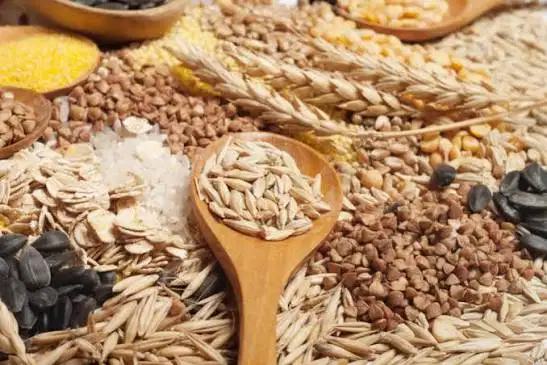
Amylase enzymes play a critical role in food manufacturing by breaking down starch into smaller carbohydrates that can be used in baking, brewing, starch processing, and industrial ingredient production. These enzymes are widely used by flour mills, commercial bakeries, food ingredient manufacturers, and starch-processing facilities to improve process efficiency and maintain consistent product quality.
In baking, amylases help make fermentable sugars available to yeast, supporting dough fermentation and bread development. In starch conversion, they facilitate the production of glucose syrups, maltodextrins, and other carbohydrate ingredients used across the food and beverage industry.
As manufacturers seek greater processing efficiency and more predictable product performance, amylase enzymes remain important tools for optimising starch utilisation and developing functional food ingredients.
What Are Amylase Enzymes?
Amylases are enzymes that catalyse the breakdown of starch, a carbohydrate composed primarily of amylose and amylopectin. They act on starch through different mechanisms, depending on the enzyme type.
The main commercial categories include:
Alpha-amylase: Breaks internal alpha-1,4 glycosidic bonds in starch, producing shorter carbohydrate chains and dextrins.
Beta-amylase: Releases maltose units from the non-reducing ends of suitable starch chains.
Glucoamylase: Releases glucose from starch-derived chains by acting on terminal glycosidic bonds; it can also hydrolyse alpha-1,6 branch points more slowly.
Commercial amylases may be produced through microbial fermentation or sourced from other biological systems. Different preparations are designed for specific temperature ranges, pH conditions, and processing requirements.
Selecting the appropriate enzyme depends on the raw material, desired carbohydrate profile, production process, and quality specifications.
Key Applications of Amylase in Starch Conversion
1. Starch Liquefaction
Starch liquefaction is an important stage in the production of starch-derived sweeteners and carbohydrate ingredients. During this process, gelatinised starch is broken down into shorter chains, reducing viscosity and making the material easier to handle.
Alpha-amylase is commonly used for this purpose because it rapidly cleaves internal bonds in starch molecules.
Potential manufacturing benefits include:
Reduced slurry viscosity
Improved pumping and mixing
Easier downstream processing
Preparation of starch hydrolysates for further enzymatic treatment
Greater control over intermediate carbohydrate composition
Liquefaction conditions must be matched to the enzyme preparation, starch source, solids concentration, pH, and temperature.
2. Glucose Syrup Production
Amylases are essential in producing glucose-containing syrups from starch. The process commonly involves liquefaction followed by saccharification, during which additional enzymes convert shorter carbohydrate chains into glucose.
Alpha-amylase typically supports liquefaction, while glucoamylase is commonly used during saccharification. Other enzymes may be incorporated depending on the desired product specifications.
Glucose syrups are used in confectionery, bakery products, beverages, sauces, and processed foods. Their functional properties depend on factors such as glucose content, dextrose equivalent, viscosity, and sweetness.
3. Maltodextrin Manufacturing
Maltodextrins are starch-derived carbohydrate ingredients produced through controlled partial hydrolysis. They are widely used as bulking agents, carriers, texture modifiers, and formulation ingredients.
Amylases help manufacturers control the degree of starch breakdown and produce hydrolysates with the desired functional characteristics.
Applications include powdered beverage mixes, seasonings, confectionery, instant foods, and encapsulated flavour ingredients.
For manufacturers, the objective is to achieve a consistent carbohydrate profile that meets requirements for solubility, viscosity, moisture control, and product stability.
4. Brewing and Fermentation
Amylase enzymes contribute to the conversion of starch into fermentable sugars in brewing and other fermentation processes.
During conventional brewing, malt enzymes help break down starch in the grain mash. Supplementary commercial amylases may be used in certain processes to improve starch utilisation or accommodate different raw materials.
The resulting sugars can be fermented by yeast to produce alcohol and carbon dioxide. The balance of fermentable and non-fermentable carbohydrates affects fermentation performance and the characteristics of the final beverage.
Enzyme selection depends on the grain source, mash conditions, fermentation objectives, and applicable production standards.
Applications of Amylase in Baking
1. Improved Dough Fermentation
Yeast requires fermentable sugars to produce carbon dioxide and other fermentation products. Flour naturally contains some sugars, but amylases can release additional fermentable carbohydrates from damaged starch during dough processing.
This can support yeast activity and help dough expand during fermentation and proofing.
For commercial bakeries, controlled amylase activity can contribute to consistent dough development. However, the outcome depends on flour characteristics, yeast activity, fermentation time, and other ingredients.
2. Bread Volume and Crumb Structure
During bread production, carbon dioxide generated by yeast expands the dough's gas cells. The dough must retain this gas until the structure sets during baking.
By increasing the availability of fermentable sugars, suitable amylase preparations can support fermentation and influence loaf volume and crumb structure.
The final result depends on the balance between enzyme activity and the dough's ability to retain gas. Excessive starch degradation can weaken the dough structure and negatively affect bread quality.
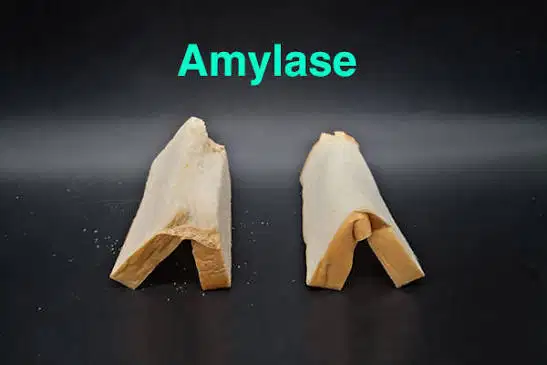
3. Crust Colour and Flavour Development
Amylases can release sugars that participate in browning reactions during baking, including Maillard reactions and caramelisation.
These reactions contribute to crust colour, aroma, and flavour. Controlled enzyme activity can help bakers achieve the desired crust characteristics and improve consistency between batches.
However, excessive sugar release can lead to overly dark crusts or other quality defects, especially when baking conditions and formulation are not adjusted accordingly.
4. Bread Freshness and Staling Control
Bread staling involves several changes after baking, including starch retrogradation, moisture redistribution, and changes in crumb texture.
Certain maltogenic alpha-amylase preparations are used in commercial baking to modify starch behaviour and help slow crumb firming during storage.
Depending on the formulation, these enzymes can support softer bread and improve perceived freshness over shelf life.
The effectiveness of an anti-staling enzyme depends on the bread type, dosage, baking conditions, packaging, and storage temperature. Amylases do not replace appropriate moisture management, packaging, or microbiological controls.
5. Flour Standardisation and Bakery Processing
Flour batches can differ in their natural amylase activity, damaged-starch content, and other functional properties. These differences may affect fermentation, dough handling, and finished bread quality.
Enzyme preparations can help bakeries adjust starch breakdown to achieve more predictable processing performance.
For industrial bakeries and flour mills, this can support formulation consistency and reduce variability across production batches. Enzyme dosage should be based on flour testing and validated baking trials rather than a fixed rate applied to every flour type.
Other Food Industry Applications
Amylase enzymes also serve a range of food manufacturing applications beyond baking and starch conversion.
Breakfast cereals and snacks: Amylases can modify starch during processing, influencing texture and carbohydrate composition.
Brewing and malt processing: They support starch breakdown and the availability of fermentable sugars.
Distilling and fermentation: They help convert starch-rich raw materials into sugars suitable for microbial fermentation.
Sauces and prepared foods: Selected amylases can modify starch viscosity and influence product consistency.
Animal feed processing: Amylases may be used in certain feed-manufacturing applications to support starch utilisation, subject to the relevant product specifications and regulations.
Each application requires an enzyme preparation suited to its raw material and operating conditions.
Factors Affecting Amylase Performance
Industrial amylase performance depends on several variables.
Enzyme type: Alpha-amylase, beta-amylase, and glucoamylase produce different carbohydrate profiles and serve different processing objectives.
Temperature: Each preparation has a specific operating range. Some industrial liquefaction enzymes are designed for elevated temperatures, while baking enzymes are selected for their activity during dough processing and their behaviour during baking.
pH: Acidity or alkalinity affects catalytic activity and enzyme stability.
Dosage and reaction time: Enzyme concentration and treatment duration influence the extent of starch breakdown.
Starch source: Corn, wheat, rice, potato, and other starches can behave differently due to variations in structure and processing history.
Substrate accessibility: Starch gelatinisation and damaged-starch content affect how readily enzymes can access their substrates.
Process conditions: Mixing, solids concentration, moisture, and interactions with other ingredients influence the outcome.
Manufacturers should validate performance using application-specific measurements such as viscosity, carbohydrate composition, fermentation behaviour, loaf volume, crumb firmness, or final-product specifications.
Quality Control and Regulatory Considerations
Selecting a food-grade amylase requires attention to product quality, regulatory compliance, and traceability.
Important checks include:
Declared enzyme activity and recommended dosage
Food-grade suitability for the intended application
Certificate of Analysis (COA)
Technical data sheet and applicable Safety Data Sheet (SDS)
Microbiological quality and relevant contaminant specifications
Production organism and allergen-related information, where applicable
Storage conditions, shelf life, and batch consistency
Applicable food-enzyme authorisation and labelling requirements
Regulatory status differs by jurisdiction and application. Manufacturers should verify the requirements of their destination market and confirm whether an enzyme is used as a processing aid or remains relevant to ingredient declaration.
Sourcing Amylase Enzymes for Industrial Applications
Procurement teams should evaluate amylase suppliers according to technical suitability, consistency, and total processing value.
Define the application: Identify whether the requirement is baking, starch liquefaction, glucose syrup production, maltodextrin manufacturing, or fermentation.
Specify enzyme activity: Compare activity units, recommended dosage, and performance under the intended process conditions.
Request technical documentation: Review the COA, technical data sheet, and applicable regulatory documents.
Conduct application trials: Test the enzyme against an untreated control and evaluate relevant quality parameters.
Assess process economics: Consider enzyme cost alongside yield, energy consumption, filtration performance, production time, and product quality.
Evaluate supply reliability: Review manufacturing capacity, lead times, packaging, storage requirements, and batch-to-batch consistency.
For large-scale users, the most economical enzyme is not necessarily the one with the lowest purchase price. A preparation that delivers reliable performance at a lower effective dosage or reduces processing bottlenecks may provide greater overall value.
Market Outlook: Amylases in Food and Starch Processing
Amylase demand is linked to the continuing use of starch-derived ingredients, industrial baking, fermentation, and processed foods. Manufacturers need enzymes that can accommodate different raw materials while delivering predictable results and supporting production efficiency.
Opportunities for enzyme suppliers include application-specific baking preparations, high-performance starch conversion systems, and technical support for optimising carbohydrate profiles.
For food manufacturers, successful implementation depends on selecting the correct enzyme, controlling process conditions, and measuring the economic and quality benefits of treatment.
Key Takeaways
Amylase enzymes are essential tools in starch conversion and baking. Alpha-amylase supports starch liquefaction and the production of shorter carbohydrate chains, while glucoamylase is widely used to produce glucose during saccharification. In baking, selected amylases support fermentation, influence crust colour, and can help maintain bread softness during storage.
The best results depend on enzyme selection, substrate characteristics, temperature, pH, dosage, and processing time. By combining suitable enzyme preparations with validated process controls and reliable sourcing, manufacturers can improve consistency, optimise starch utilisation, and support efficient food production.
Sources
Corn Starch CAS: 9005-25-8