
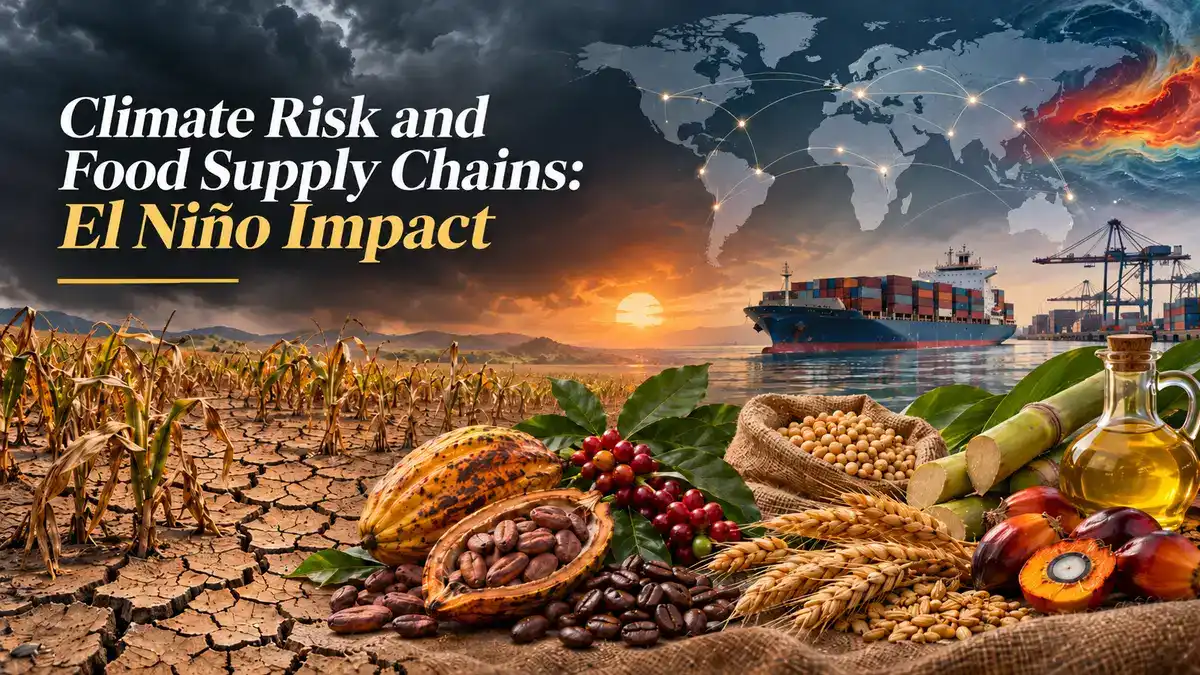
El Niño Disruptions and the Global Agricultural Landscape
A powerful climate pattern is reshaping global agriculture as a severe El Niño reaches its peak. Weather volatility, extended droughts, and erratic thermal spikes are compressing harvest seasons and sharply lowering crop yields worldwide. According to procurement intelligence forecasts, global food commodity prices could surge by 14% to 16% as supply deficits widen. This environmental pressure comes at a delicate time, compounding existing macro challenges such as reduced foreign aid budgets, elevated energy costs, and fertilizer trade disruptions. As spot-market prices escalate, food and beverage procurement organizations face severe operational and financial risk.
Climate disruption also intensifies social fragility among wild collectors and smallholder farming communities. Destabilized rural livelihoods increase vulnerability to land-use degradation and predatory trading practices when yields fail. In regions dependent on tropical botanicals, herbs, and specialty crops, short-term economic strain can dismantle local agricultural ecosystems. Adopting audited sustainability frameworks, such as FairWild certification, helps brands substantiate ethical sourcing narratives, support community livelihoods, and influence purchasing decisions among conscious consumers.
Regional Harvest Pressures: South America, Australia, and North America
Harvest conditions across major global agricultural basins highlight the geographic breadth of current climate disruptions:
South America: Severe drought and heat waves across Brazil, Colombia, and Ecuador have impaired yields for cocoa, cane sugar, coffee, and soybeans. Water stress in key agricultural belts threatens soil moisture levels ahead of upcoming planting cycles, keeping spot market costs elevated and creating tight inventory buffers.
Australia: Intense dry spells associated with El Niño have curtailed national wheat, barley, and canola production. Reduced rainfall across eastern and southern cropping zones has diminished exportable surpluses, putting additional pressure on international grain buyers reliant on Australian supply.
North America: Moisture deficits and fluctuating thermal patterns across the U.S. Midwest and Canadian Prairies have created ongoing volatility for corn, soy, and specialty pulse crops. Drought conditions across key river basins have also periodically disrupted barge transportation and inland logistics.
Key Food Ingredients Vulnerable to Climate Volatility
The combination of localized weather anomalies and macro-economic factors has placed several core food ingredients under heightened procurement risk. Buying organizations must closely monitor the following vulnerable commodity streams:
Cocoa and Chocolate Derivatives: Cocoa represents the highest short-term procurement risk. Unfavorable weather and disease pressure in West Africa and parts of South America have severely restricted bean availability, driving cocoa butter and powder costs to historical highs.
Palm Oil and Edible Fats: Prolonged dry weather in Southeast Asia and South America is projected to constrain palm oil output through 2027. Lower soil moisture impairs oil palm yield efficiency, compounding cost pressures across food processing, bakery, and oleochemical sectors.
Cane Sugar and Coffee Beans: Heatwaves in South America have disrupted crop flowering and reduced sucrose extraction rates. Premium Arabica and Robusta coffee supplies are experiencing heightened volatility, forcing roasters to re-evaluate their blending strategies.
Grains and Oilseeds: Wheat, barley, soybean oil, and canola meal face reduced yield projections across Australia and the Americas. The resulting tight ending stocks increase price sensitivity to any further supply chain bottlenecks or biofuel policy shifts.
Strategies for Building Resilient Ingredient Supply Chains
To navigate these compounding climate risks, food companies must move away from purely transactional purchasing models toward proactive strategic risk management. Mitigating exposure requires multi-layered supply chain strategies:
Detailed Supply-Chain Mapping: Procurement teams must establish granular visibility into primary and secondary growing regions to identify geographic single-source vulnerabilities early.
Origin and Variety Diversification: Qualifying alternative crop origins and resilient plant varieties ensures continuity when primary sourcing hubs suffer crop failures.
Securing Forward Coverage: Utilizing strategic forward contracts and inventory buffering allows procurement organizations to hedge against sharp price swings driven by weather events.
Monitoring Macro Drivers: Continuous tracking of logistics, energy costs, fertilizer availability, and biofuel policy changes provides early warning signals for cost spikes.
Upstream Partnerships and Technical Assistance: Investing in upstream supplier relationships through technical support, sustainable farming investments, and development-finance structures builds long-term resilience at the farm gate.
As climate volatility continues to disrupt global agricultural supply chains, securing a reliable and competitive source of food ingredients has become more important than ever. Food Ingredients Asia supports food manufacturers, distributors, and procurement professionals in sourcing a wide range of quality food ingredients through our global supplier network. Whether you are looking for alternative sourcing options, competitive quotations, or consistent bulk supply, our team is ready to assist with your procurement requirements. Explore our product portfolio at www.foodingredientsasia.com or send your inquiries to marketing@foodingredientsasia.com to discuss your ingredient sourcing needs and build a more resilient supply chain.