Soy Protein Concentrate vs. Soy Protein Isolate: Food Formulation Differences
Soy protein concentrate (SPC) and soy protein isolate (SPI) are widely used plant-based ingredients in the food manufacturing industry. Both are derived from soybeans and provide valuable protein for food fortification, meat alternatives, bakery products, beverages, and nutritional formulations. However, differences in protein concentration, composition, processing, and functional properties influence how each ingredient performs in a finished product.
For food manufacturers, selecting between soy protein concentrate and soy protein isolate involves more than comparing protein percentages. Factors such as water absorption, texture, flavor, solubility, processing conditions, and production costs can significantly affect product quality and formulation efficiency.
What Is Soy Protein Concentrate?
Soy protein concentrate is produced by removing a substantial portion of the soluble carbohydrates and other non-protein components from defatted soybean flakes while retaining much of the protein and some of the remaining soybean constituents.
Commercial soy protein concentrates typically contain around 65–70% protein on a dry-weight basis, although specifications vary by production method and supplier. They may retain more carbohydrates and other non-protein components than soy protein isolate, making them suitable for applications where texture, moisture management, and overall ingredient functionality are important.
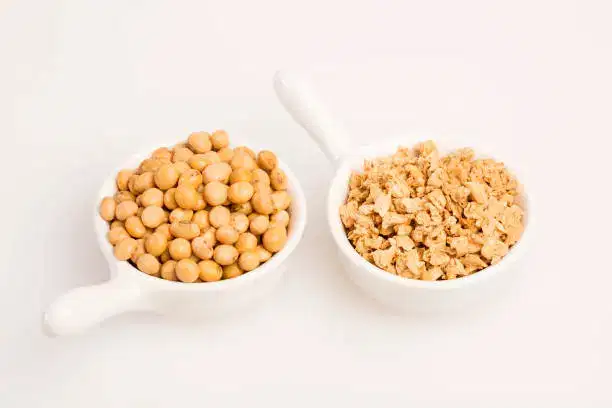
SPC is commonly used in processed meat products, plant-based meat alternatives, bakery products, cereals, snacks, and pet food. Depending on its processing method, it may be supplied in powdered, granular, or textured forms.
What Is Soy Protein Isolate?
Soy protein isolate is a 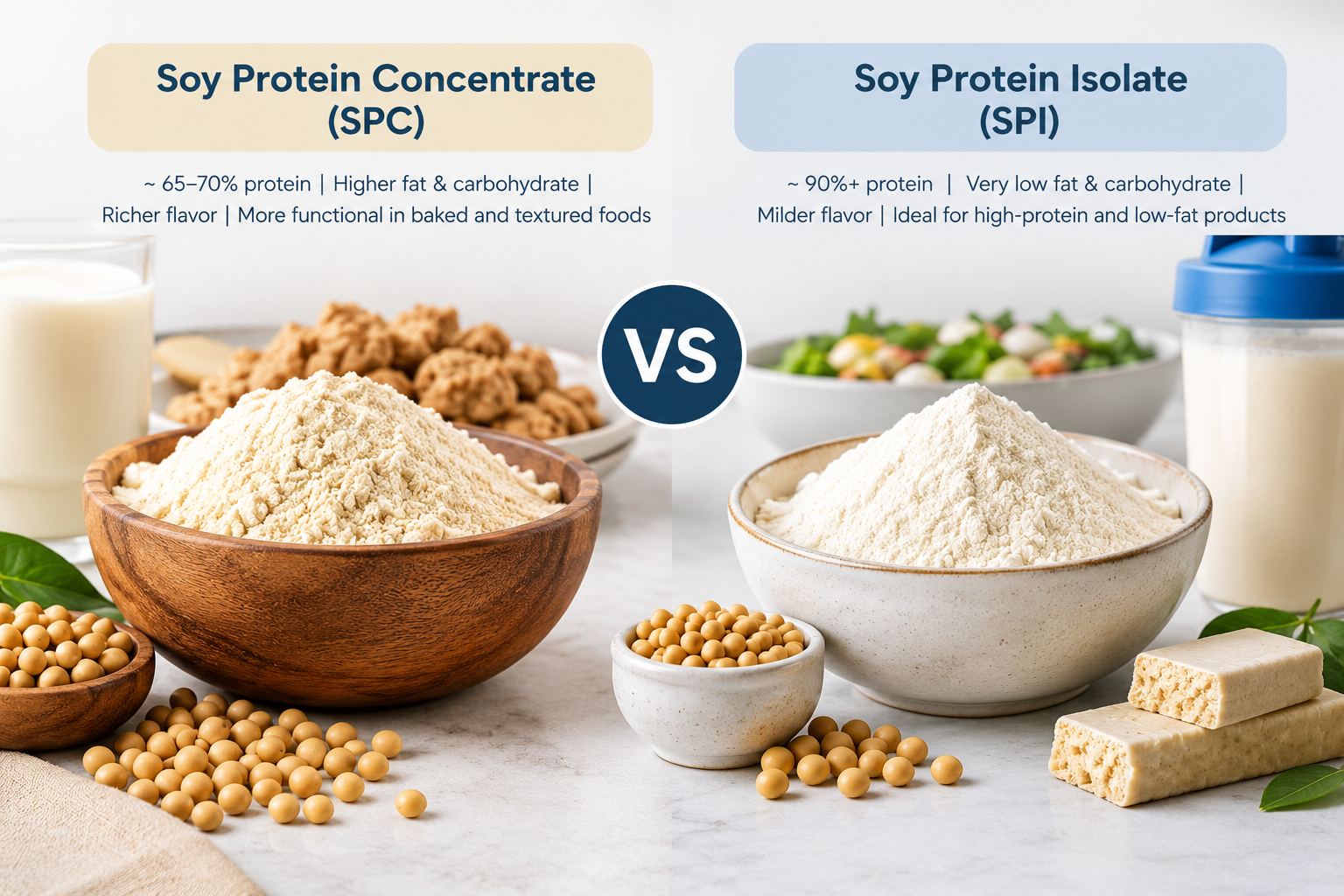 more highly purified soy protein ingredient, generally containing at least 90% protein on a dry-weight basis. Its production involves removing most of the non-protein components from defatted soybean material, typically through extraction and separation processes followed by protein recovery and drying.
Because of its higher protein concentration, SPI is particularly useful when manufacturers want to increase protein content without adding substantial amounts of other soybean components. It is widely used in protein beverages, nutritional powders, protein bars, dairy alternatives, processed foods, and selected plant-based meat formulations.
Soy protein isolate can provide useful emulsifying, binding, and gel-forming properties. However, its performance depends on the specific grade, pH, temperature, processing method, and composition of the food system.
[IMAGE 1: Insert a comparison image of soy protein concentrate and soy protein isolate powders, with soybeans and representative food applications.]
Key Differences Between Soy Protein Concentrate and Soy Protein Isolate
Although both ingredients originate from soybeans, their composition and functional performance can differ significantly.
Feature | Soy Protein Concentrate (SPC) | Soy Protein Isolate (SPI) |
|---|---|---|
Typical protein content | Approximately 65–70% | Generally 90% or higher |
Processing | Removes a substantial portion of non-protein components | More extensive purification to concentrate protein |
Carbohydrate content | Generally higher than SPI | Generally lower than SPC |
Protein concentration | Moderate to high | Very high |
Flavor and color | Can retain more characteristic soybean notes, depending on grade | Often milder, but processing and grade affect flavor |
Water interaction | Can provide useful water absorption and retention | Can provide water binding; performance depends on grade and formulation |
Functional properties | Useful in textured foods, meat products, and selected bakery applications | Useful for protein fortification, emulsification, binding, and gel formation |
Typical applications | Meat products, meat alternatives, bakery goods, cereals, and snacks | Protein drinks, nutritional powders, protein bars, dairy alternatives, and processed foods |
Formulation consideration | May contribute more non-protein solids and body | Allows higher protein delivery with less added ingredient |
Cost considerations | May be economical for applications that do not require maximum protein purity | May offer advantages when high protein concentration is essential, but pricing varies |
These differences are general rather than universal. Actual protein content, flavor, solubility, and functionality should be verified against the supplier's technical data sheet and certificate of analysis.
Applications of Soy Protein Concentrate in Food Manufacturing
Soy protein concentrate is particularly useful when manufacturers need a combination of protein, texture, and moisture management.
Meat products and meat alternatives: SPC can improve binding, water retention, and texture in burgers, sausages, meatballs, and plant-based mince. Textured soy protein concentrate can also provide a fibrous structure for meat-free products.
Bakery products: In selected formulations, SPC can increase protein content and contribute to dough and crumb characteristics. Formulators must assess its effect on water absorption, volume, color, and final texture.
Snacks and cereals: SPC can be incorporated into selected snack products, cereal formulations, and savory foods to increase protein content.
Pet food: Certain soy protein concentrate grades are used as protein sources and functional ingredients in pet food formulations, subject to nutritional and regulatory requirements.
SPC is particularly attractive when the formulation benefits from its texture-related properties and does not require the highest possible protein concentration.
Applications of Soy Protein Isolate in Food Manufacturing
Soy protein isolate is often selected for applications where high protein content and controlled formulation are priorities.
High-protein beverages: SPI can be used in protein drinks and nutritional beverages. Solubility, dispersion, heat stability, and sedimentation must be evaluated to achieve a smooth and stable product.
Sports nutrition: Protein powders and ready-to-mix products use SPI to provide concentrated plant-derived protein for active consumers.
Protein bars: SPI can increase protein content in bars and nutritional snacks, although formulators must manage hardness, dryness, and other texture changes.
Dairy alternatives: SPI may be used in selected plant-based beverages and other dairy-free products to improve protein content and contribute to body and stability.
Processed foods: Depending on the grade and formulation, SPI can contribute to emulsification, binding, and gel formation in sauces, prepared foods, and other products.
Its high protein concentration makes SPI useful when manufacturers need to meet a defined protein target while limiting the amount of ingredient added to the recipe.
How Protein Concentration Affects Food Formulation
Protein concentration is one of the most important differences between SPC and SPI. A higher protein percentage means manufacturers can deliver a target amount of protein using less ingredient, potentially leaving more room for other formulation components.
For example, consider a formulation that needs 20 grams of protein from the soy ingredient alone. Assuming SPC contains 70% protein and SPI contains 90% protein on the same reporting basis:
Soy protein concentrate required: approximately 28.6 grams.
Soy protein isolate required: approximately 22.2 grams.
This is a theoretical comparison based on stated protein percentages. Actual ingredient quantities should be calculated using the supplier's measured protein content, moisture basis, and applicable labeling or nutritional calculation requirements.
However, higher protein concentration does not automatically mean better product performance. A formulation may require the additional solids, water interaction, or texture contributions supplied by a concentrate. Manufacturers should therefore evaluate nutritional targets alongside sensory and processing requirements.
Functional Properties: Solubility, Texture, and Water Retention
Functional performance often determines whether SPC or SPI is the better choice for a particular food.
Solubility: Solubility influences how evenly a protein disperses in water and whether a beverage remains smooth during storage. Neither ingredient is automatically superior in every formulation because solubility varies with pH, temperature, processing history, and product grade.
Water-holding capacity: Protein ingredients can absorb or retain water, influencing juiciness, yield, and texture. SPC is frequently considered for textured and processed food systems, while SPI can also provide effective water binding depending on its functional characteristics.
Emulsification: Both ingredients can contribute to the stabilization of oil-and-water mixtures under appropriate conditions. Performance depends on protein structure, processing, and the presence of fats, salts, and other stabilizing ingredients.
Gel formation: Soy proteins can form networks under suitable heating and processing conditions. These networks can help establish firmness and structure in selected products.
Flavor and sensory quality: Soy-derived ingredients may introduce characteristic beany notes. The intensity depends on raw materials, processing, storage, and formulation. Flavor evaluation should be conducted in the finished food rather than relying exclusively on ingredient specifications.
[IMAGE 2: Insert a food application image showing plant-based burgers, protein beverages, and high-protein snack products made with soy ingredients.]
Cost, Processing, and Ingredient Selection
The commercial choice between soy protein concentrate and soy protein isolate depends on ingredient prices, protein requirements, processing performance, and the intended food application.
SPC may be a suitable choice when manufacturers need a functional protein ingredient for meat products, textured foods, or bakery applications. SPI may be more appropriate when the product requires a higher protein concentration, such as a protein beverage or nutritional powder.
Nevertheless, the lowest price per kilogram does not necessarily translate into the lowest formulation cost. Manufacturers should compare cost per unit of protein, inclusion rate, processing yield, sensory performance, and any additional ingredients required to achieve the desired texture or stability.
Before finalizing a supplier, product developers should review:
Protein content and moisture specifications.
Solubility, water absorption, and other relevant functional properties.
Flavor, odor, and color characteristics.
Microbiological specifications and food-safety documentation.
Allergen labeling requirements, including soy.
Consistency between production batches.
Pricing, minimum order quantities, lead times, and supply reliability.
Pilot trials are essential because two ingredients with similar protein content may behave differently in the same recipe.
Making the Right Choice for Your Product
Soy protein concentrate and soy protein isolate serve related but distinct purposes in food manufacturing. SPC is often suitable for applications that benefit from protein combined with texture and moisture-related functionality, while SPI is particularly valuable when a high protein concentration is a priority.
For meat alternatives, textured foods, and selected bakery products, SPC may provide the desired combination of structure and formulation flexibility. For protein drinks, nutritional powders, and products requiring concentrated protein delivery, SPI may be the more suitable starting point.
Ultimately, the best ingredient depends on the target protein level, processing conditions, sensory expectations, nutritional requirements, and total formulation cost. Comparing technical specifications and conducting application-specific trials helps food manufacturers select the ingredient that delivers consistent quality and commercial value.
Sources
Corn Gluten Meal (60% Min Protein) - United States CAS: 66071-96-3