Explore our network of country and industry based websites to access localized information, product offerings, and business services across our group.
Log in to start sending quotation requests for any product.
Don't have an account? Sign Up Here
Home Modified Tapioca Starch Market: Supply, Innovation, and Growth Outlook
Trade Insights | Supply Chain | 24 February 2026
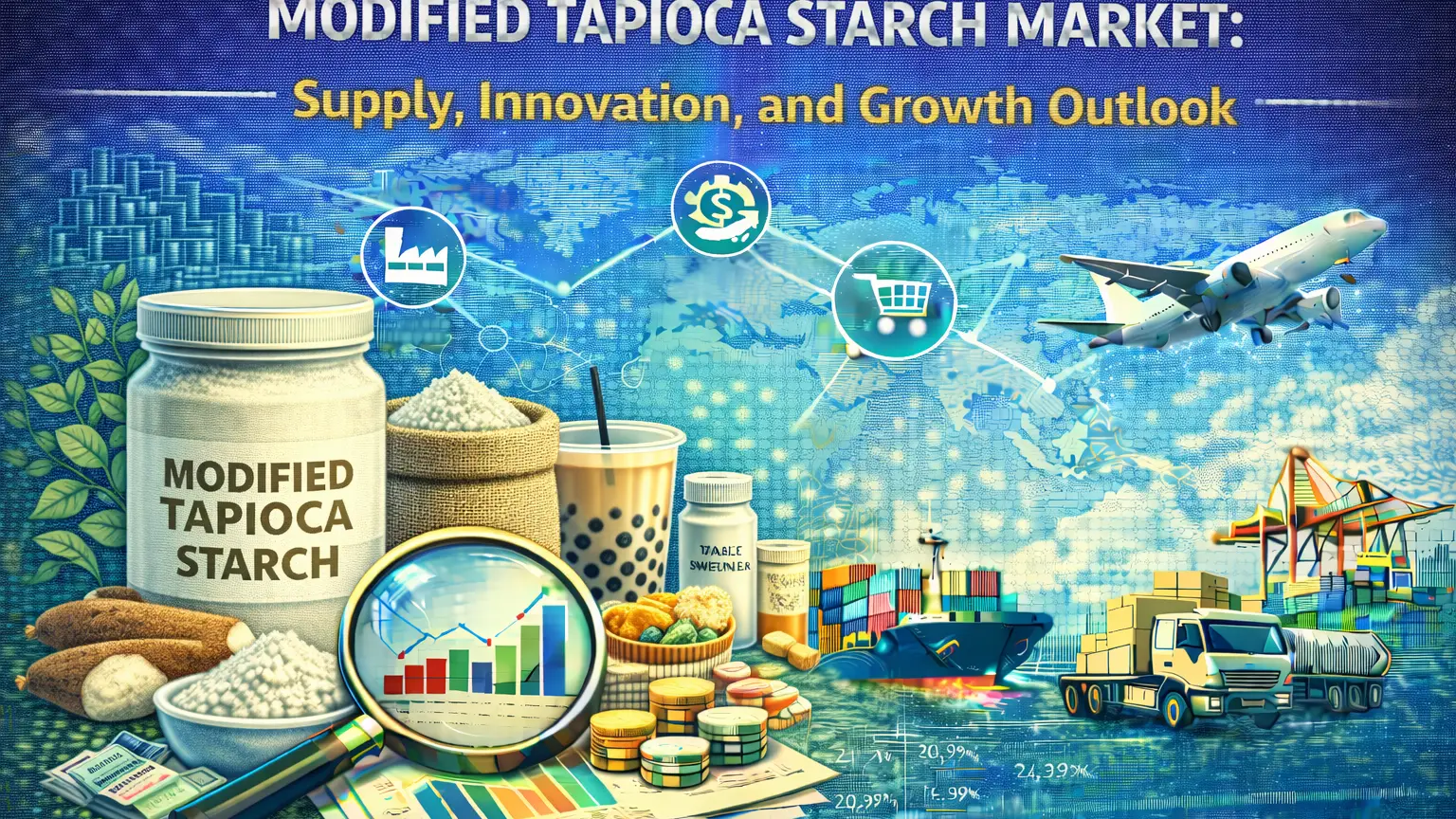
The global modified tapioca starch market has seen significant shifts over the last few years, with demand surging across multiple industries. As of 2026, the modified tapioca starch market is poised for expansion, driven by evolving consumer preferences, technological innovations, and the increasing adoption of tapioca-based products. Tapioca starch, once primarily used in food products, now finds applications in a broad array of industries, including pharmaceuticals, textiles, and paper production.
Modified tapioca starch plays a critical role in several industries due to its versatile properties. Unlike regular tapioca starch, modified starch undergoes chemical or physical processes that enhance its functionality, making it suitable for diverse applications. In the food industry, for example, it is used as a thickening agent in sauces, soups, and processed foods, offering stability and texture enhancement. The pharmaceutical industry also relies heavily on modified tapioca starch for its use in tablets, capsules, and as a binder in drug formulations. Beyond food and pharmaceuticals, it has become a critical ingredient in industries such as cosmetics, adhesives, and textiles, where it is used for its binding and stabilizing properties.
The growing trend of gluten-free and natural products has also accelerated the demand for modified tapioca starch, especially as it is perceived as a healthier, plant-based alternative to other starches. This surge in demand across sectors is a primary driver of growth in the modified tapioca starch market.
Despite the market's growth, several challenges persist within the supply chain of modified tapioca starch. One of the primary obstacles is the raw material sourcing. Tapioca, the base crop for tapioca starch, is highly sensitive to environmental conditions, such as temperature fluctuations and droughts, which can lead to supply disruptions. Moreover, regions that produce tapioca, like Southeast Asia, are often prone to geopolitical instability, which can further disrupt the supply chain.
Additionally, the complex process of modifying tapioca starch adds another layer of difficulty to the supply chain. The production of modified starch requires specialized equipment and skilled labor, which may not always be readily available in all regions. The transportation and storage of modified tapioca starch also require careful handling to avoid contamination and degradation, which could impact the final product quality.
As the modified tapioca starch market expands, there are several emerging trends that companies are leveraging to stay ahead. One key innovation is the development of bio-based modified tapioca starch, which aligns with the growing demand for sustainable, eco-friendly products. This type of starch is derived from non-GMO sources and is increasingly being used in food packaging, cosmetics, and personal care products as a biodegradable alternative to synthetic polymers.
In addition, technological advancements in processing methods have led to the development of higher-quality modified starches. New enzymatic and physical modification processes allow manufacturers to create starches with specific properties tailored to diverse applications. These innovations not only enhance product quality but also improve production efficiency, ultimately lowering costs for consumers.
The rise of the plant-based food sector has also contributed to the growth of the modified tapioca starch market. Manufacturers are increasingly turning to modified starches to create meat substitutes, dairy-free products, and gluten-free baked goods. This trend is expected to continue in the coming years as consumer preferences for healthier, sustainable food options grow.
Looking ahead to 2026, the modified tapioca starch market is expected to continue its growth trajectory, driven by the expanding demand from various industries and innovations in production techniques. While challenges related to supply chain disruptions, sourcing, and production complexities remain, the industry is adapting through technological advancements and a focus on sustainability. Companies that can navigate these challenges while capitalizing on emerging trends will be well-positioned to thrive in the evolving market.
As industries seek reliable suppliers of high-quality modified tapioca starch, Tradeasia International stands out as a global solution provider, offering a wide range of modified starches and other specialty chemicals. With a reputation for delivering top-quality products and reliable supply chain solutions, Tradeasia International is committed to helping businesses meet their sourcing needs in an ever-changing global market.
We're committed to your privacy. Tradeasia uses the information you provide to us to contact you about our relevant content, products, and services. For more information, check out our privacy policy.


 English
 Indonesian
 简体字
简体字
 العربية
 Español
 Français
 Português
 日本語
日本語
 한국어
한국어
 Tiếng Việt




















