Sustainable food ingredients are becoming a strategic priority for manufacturers in 2026 as the food industry looks for ways to reduce waste, improve resource efficiency and meet changing consumer expectations. Plant-based proteins, natural functional additives, fermentation-derived materials and ingredients recovered from food-processing by-products are creating new opportunities across food production and ingredient trading.
For procurement teams and chemical suppliers, this shift involves more than replacing conventional raw materials with greener alternatives. Buyers must also evaluate ingredient functionality, food safety, regulatory compliance, pricing consistency and the reliability of suppliers. Companies that balance environmental performance with commercial practicality can build more resilient sourcing strategies and respond to demand for responsibly produced foods.
Why Sustainable Food Ingredients Matter in 2026
Food manufacturers face pressure to manage environmental impacts while maintaining product quality and controlling production costs. Sustainable ingredients can support these objectives through improved resource use, alternative raw material sources and more efficient manufacturing processes.
The concept extends beyond whether an ingredient comes from a plant. Its sustainability depends on factors such as agricultural practices, processing energy, water consumption, transportation, packaging and waste management.
Several priorities are shaping ingredient decisions in 2026:
Resource efficiency: Manufacturers seek ingredients and production methods that use water, energy and agricultural resources more effectively.
Waste reduction: Food processors increasingly examine by-products that can become useful sources of fiber, protein, oils or other functional components.
Supply chain resilience: Diversifying raw material sources can reduce dependence on a single crop, supplier or production region.
Product transparency: Buyers want better information about ingredient origins, processing methods and environmental performance.
Functional performance: Sustainable alternatives must deliver the texture, stability, taste and shelf life that manufacturers require.
These priorities create opportunities for ingredient producers, distributors and international traders that can demonstrate reliable quality alongside responsible sourcing practices.
Plant-Based Proteins and Alternative Ingredient Sources
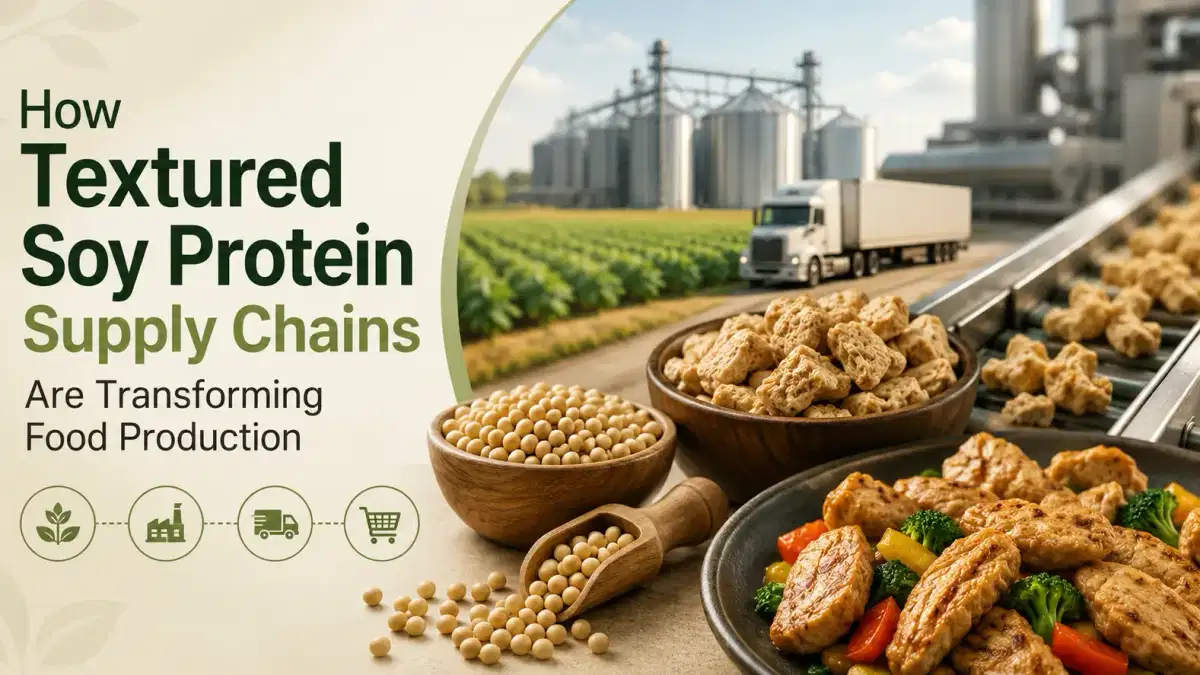
Plant-based proteins remain an important area of sustainable food innovation. Soy, peas, beans and other legumes offer protein sources for meat alternatives, dairy substitutes, prepared meals, nutritional products and specialized food formulations.
Manufacturers increasingly focus on performance as well as ingredient origin. Protein solubility, water retention, emulsification, texture and flavor influence how effectively an ingredient performs in a finished product.
Alternative protein development also extends beyond conventional crops. Researchers and producers are investigating microbial proteins, algae and fermentation-derived ingredients, although commercial readiness and regulatory requirements vary by product and market. The Food and Agriculture Organization identifies alternative proteins and emerging food-production systems as important areas for food-system innovation.
For ingredient buyers, these developments create several sourcing considerations:
Protein specifications: Confirm protein content, moisture limits, microbiological quality and relevant nutritional characteristics.
Functional consistency: Test how the ingredient performs in the intended food formulation rather than relying only on its general specification.
Allergen management: Review allergen declarations, cross-contact controls and labelling requirements.
Supply availability: Check production capacity, seasonal exposure and the supplier's ability to maintain consistent volumes.
The strongest opportunities lie in ingredients that combine dependable performance with a clear commercial advantage. Manufacturers need alternatives that work at production scale without creating unacceptable changes in flavor, texture or cost.
Natural Additives, Fibers and Functional Ingredients
Sustainable formulation strategies also depend on ingredients that improve stability, texture, moisture retention and shelf life. Natural-origin additives and functional ingredients can help manufacturers develop products with specific processing and nutritional characteristics.
Several established products already serve important functions in food manufacturing. Xanthan gum supports thickening and viscosity control, pectin helps form gels in suitable applications, guar gum contributes thickening and stabilization, while corn starch and maltodextrin serve a range of formulation and processing purposes.
Lecithin also plays a useful role in emulsification, helping manufacturers manage mixtures of ingredients that would otherwise separate. Its suitability depends on the source, grade and requirements of the finished product.
However, natural origin does not automatically guarantee a lower environmental footprint. Manufacturers should assess how suppliers produce and process these materials, how much energy and water production requires and whether the ingredient performs efficiently in the intended application.
Upcycled Ingredients and the Circular Food Economy
Upcycling offers food manufacturers another route to sustainable ingredient sourcing by turning suitable food-processing by-products into valuable materials. Fruit peels, seed residues, cereal bran, vegetable trimmings and spent grains can contain useful proteins, fibres, oils and other compounds.
A 2026 review published by the American Chemical Society highlights the potential to transform food waste into value-added ingredients while addressing resource losses across agricultural production, processing and distribution.
Commercial applications may include:
Fruit-processing residues: Selected peels and pomace can provide dietary fibre, pectin or other useful components, depending on their composition and processing.
Cereal by-products: Bran and other milling residues can contribute fibre and support the development of higher-fibre food products.
Oilseed residues: Suitable seed meals may offer opportunities for protein recovery or other ingredient applications.
Brewing by-products: Spent grain can provide fibre and protein for selected food formulations after appropriate processing and safety assessment.
Upcycling can create additional revenue streams for agricultural producers and food processors while reducing the amount of material discarded. However, buyers must evaluate contamination risks, traceability, microbiological quality and processing consistency before approving recovered materials for food use.
Suppliers should also explain how they collect, preserve and process by-products. A material that deteriorates during storage or requires extensive treatment may offer less environmental or commercial value than its initial description suggests.
Fermentation and Ingredient Processing Innovations
Fermentation is expanding the range of ingredients manufacturers can produce or modify. Conventional fermentation already supports established food processes, while newer approaches use selected microorganisms to develop functional compounds, improve ingredient characteristics or produce alternative proteins.
Precision fermentation offers another pathway for producing specific ingredients through controlled biological processes. Depending on the application, these methods may help manufacturers access particular proteins, enzymes or other functional compounds without relying exclusively on conventional extraction from agricultural raw materials.
The commercial potential depends on production efficiency, process scale, energy requirements and the ability to meet food-grade specifications. Regulatory approval and manufacturing economics also influence whether an emerging ingredient can compete with established alternatives.
Processing improvements can contribute to sustainability as well. More efficient extraction, filtration, drying and separation methods may improve ingredient yields or reduce resource consumption, although results vary by material and process.
For procurement teams, the important question is whether an innovation delivers measurable value in the intended application. Buyers should request technical specifications, processing information and performance samples before replacing an established ingredient with a newer alternative.
Food Safety, Traceability and Regulatory Requirements
Sustainable sourcing must maintain the same commitment to food safety as conventional ingredient procurement. Changes in raw material sources, processing methods or supplier locations can introduce new quality risks that manufacturers need to assess before commercial use.
Upcycled materials require particular attention because their composition can vary with the original crop, collection conditions and processing history. Depending on the source, relevant hazards may include pesticide residues, heavy metals, mycotoxins and microbiological contamination.
Buyers should verify the following before approving an ingredient:
Documentation: Obtain current technical data sheets, certificates of analysis and applicable safety documentation.
Traceability: Confirm the origin of raw materials and whether the supplier can trace individual batches through processing and distribution.
Regulatory status: Check permitted uses, additive requirements, allergen declarations and labelling rules in the destination market.
Quality assurance: Review relevant testing procedures, manufacturing controls and procedures for handling non-conforming batches.
Change management: Require notification when suppliers change raw materials, production sites or processing methods in ways that could affect product quality.
Requirements differ between jurisdictions and ingredient categories. A material accepted for one application or market may require additional review before another manufacturer can use it.
Sustainability claims also require supporting evidence. Buyers should request documented information about the specific environmental benefits being claimed rather than treating labels such as natural, plant-based or upcycled as proof of overall sustainability.
Sustainable Sourcing and Global Ingredient Trade
The shift towards sustainable food ingredients is changing how manufacturers evaluate suppliers, negotiate contracts and plan inventory. Procurement teams increasingly need to balance price, technical suitability, delivery reliability and documented sourcing practices.
For international ingredient traders, this creates opportunities to connect manufacturers with producers of food-grade starches, gums, acids, sweeteners, fibres and other functional materials. However, the ability to provide complete documentation and consistent product quality remains essential for building long-term business relationships.
A practical sourcing strategy should include these steps:
Define the application. Specify the required function, grade, purity, physical properties and performance criteria before approaching suppliers.
Compare total procurement costs. Evaluate the purchase price alongside freight, storage, testing, wastage and any additional processing requirements.
Assess supplier reliability. Review production capacity, lead times, minimum order quantities and the availability of alternative supply sources.
Request sustainability evidence. Ask for relevant information about raw material origins, resource use, waste reduction and production practices.
Test before scaling. Conduct formulation trials and quality assessments before committing to large commercial volumes.
Buyers should also distinguish between established ingredients and emerging alternatives. Established products may offer proven functionality and wider availability, while newer materials may provide sustainability benefits but require additional validation or specialised handling.
A diversified supplier network can help manufacturers respond to seasonal changes, regional disruptions and fluctuations in raw material costs. Clear specifications and regular supplier reviews further support consistent purchasing decisions.
What Food Manufacturers and Buyers Should Prioritise Next
Sustainable food ingredients in 2026 represent a combination of established functional materials and developing technologies. Plant proteins, natural-origin additives, upcycled by-products and fermentation-derived ingredients each offer different opportunities, but no single ingredient solves every sustainability challenge.
For manufacturers, the next step is to identify where ingredient changes can deliver practical improvements without compromising safety, quality or affordability. Procurement teams should prioritise alternatives that meet technical requirements and demonstrate environmental benefits through credible supporting information.
For chemical and food ingredient traders, the opportunity lies in understanding the relationship between ingredient specifications, end-use applications and buyer requirements. Suppliers who provide consistent quality, transparent documentation and dependable logistics can help customers move from sustainability targets to practical sourcing decisions.
The most successful sourcing strategies will combine innovation with careful supplier evaluation. Sustainable ingredients must perform reliably in real production environments while supporting commercially viable products and responsible resource management.
Xanthan Gum (E415) CAS: 11138-66-2
SOURCE LINK: https://pubs.acs.org/afsthl/article/6/4/853/5138524/Upcycling-Food-Waste-into-Value-Added-Natural