

Sweetener Blends: Balancing Taste, Cost and Performance in Food Formulation
Sweetener blends are an important tool for food manufacturers seeking to reduce sugar, manage formulation costs and maintain consumer acceptance. By combining two or more sweetening ingredients, manufacturers can develop sweetness profiles that better match the requirements of beverages, bakery products, dairy foods, confectionery and other processed foods.
A well-designed blend can help address challenges associated with individual sweeteners, including lingering aftertaste, delayed sweetness, excessive sweetness intensity, processing limitations and the loss of bulk when sugar is reduced. However, there is no universal blend that works equally well across every food category. Ingredient selection depends on the product's sensory profile, processing conditions, target cost and regulatory requirements.
What Are Sweetener Blends?
Sweetener blends are combinations of two or more sweetening ingredients designed to achieve a specific sweetness profile or formulation objective. They may combine high-intensity sweeteners, bulk sweeteners, polyols or other ingredients that contribute sweetness and physical structure.
High-intensity sweeteners, such as sucralose, steviol glycosides, acesulfame potassium and aspartame, provide sweetness at relatively low inclusion levels. Other ingredients, including erythritol, maltitol and xylitol, can provide both sweetness and bulk, although their sensory and technological properties differ.
The US Food and Drug Administration explains that high-intensity sweeteners are many times sweeter than sugar, meaning relatively small quantities can deliver the desired sweetness. However, these ingredients do not necessarily replace the physical functions of sugar in a recipe. FDA – High-Intensity Sweeteners
For manufacturers, blending therefore involves two related but distinct decisions: how to achieve the desired sweetness and how to replace any other functions lost when sugar is reduced.
Why Food Manufacturers Use Sweetener Blends
Improving Sweetness Quality
Different sweeteners have different sweetness-onset times, intensity profiles and aftertastes. Some deliver sweetness quickly, while others have a more gradual profile or leave a lingering sensation.
Combining sweeteners can help balance these characteristics. For example, a formulation may use one ingredient to provide the initial sweetness and another to improve the overall sensory profile.
The effectiveness of a combination depends on concentration, flavour system, acidity, temperature and the food matrix.
Reducing Formulation Costs
Ingredient cost is an important consideration when developing sugar-reduced products. High-intensity sweeteners can deliver substantial sweetness at low inclusion levels, while bulk sweeteners may be needed to maintain solids and texture.
A blend can help manufacturers balance ingredient prices with the amount required to achieve the target sweetness. However, the lowest-priced ingredient does not necessarily produce the lowest total formulation cost.
Manufacturers should also account for processing changes, bulking agents, flavour masking, product stability, quality testing and potential reformulation expenses.
Supporting Sugar Reduction
Replacing sugar can affect more than taste. In bakery products, sugar contributes to browning, moisture retention and structure. In beverages, it contributes dissolved solids and mouthfeel. In frozen desserts, it influences freezing behaviour and texture.
Sweetener blends can address the sweetness component of sugar reduction, but additional ingredients or process changes may be required to replace sugar's other functions.
Maintaining Consumer Acceptance
Consumers may reject a reduced-sugar product if it tastes noticeably different from the original. A suitable blend can help manufacturers maintain a familiar sweetness profile while reducing conventional sugar.
Sensory testing remains essential because preferences vary between markets, consumer groups and product categories.
Common Sweetener Combinations and Their Applications
Sucralose and Acesulfame Potassium
Sucralose and acesulfame potassium, commonly called Ace-K, are high-intensity sweeteners used in various reduced-sugar and sugar-free food and beverage formulations.
The combination can be explored when manufacturers want to balance sweetness intensity and sensory characteristics. Its suitability depends on the product's flavour, acidity, concentration and processing conditions.
Potential applications include:
Flavoured beverages
Powdered drink mixes
Dairy-based drinks
Sugar-free desserts
Selected confectionery products
Manufacturers should verify the permitted uses of both sweeteners in the target market and conduct sensory trials to establish the appropriate ratio.
Steviol Glycosides and Erythritol
Steviol glycosides are high-intensity sweeteners derived from stevia leaves or produced through other authorised processes, depending on the specific ingredient. Erythritol is a polyol that can contribute bulk and sweetness.
Combining them can be useful in selected reduced-sugar products where manufacturers want to balance intense sweetness with a larger quantity of a bulk ingredient.
Potential applications include:
Reduced-sugar beverages
Powdered drink preparations
Selected desserts
Tabletop sweetener products
Certain confectionery formulations
Erythritol can produce a cooling sensation, which may be desirable in some products but less suitable in others. Its solubility and crystallisation behaviour must also be considered.
Aspartame and Acesulfame Potassium
Aspartame and Ace-K have been used together in selected beverage and tabletop sweetener formulations. Manufacturers may investigate this combination when seeking a particular sweetness profile.
However, aspartame is not suitable for every processing environment. Its stability depends on factors including temperature, pH and storage duration. Products intended for heat processing or extended storage require application-specific validation.
Aspartame also contains phenylalanine, making applicable labeling requirements important for people with phenylketonuria (PKU).
Polyols and High-Intensity Sweeteners
Polyols such as maltitol, xylitol and erythritol can provide bulk and sweetness, while a high-intensity sweetener can be used to adjust the final sweetness level.
This approach may be relevant to sugar-free confectionery, chewing gum, chocolate and selected bakery products.
The formulation must account for the different properties of individual polyols, including cooling sensation, solubility, crystallisation, energy contribution and gastrointestinal tolerance. A high-intensity sweetener can increase sweetness, but it cannot automatically correct every textural or processing issue.
Sweetener Blends in Different Food Applications
Beverages
Beverages are an important application for sweetener blends because sweetness, acidity, aroma and mouthfeel strongly influence the overall flavour profile.
In soft drinks and flavoured waters, the blend must work with the product's acid system, flavours, colours and carbonation where applicable.
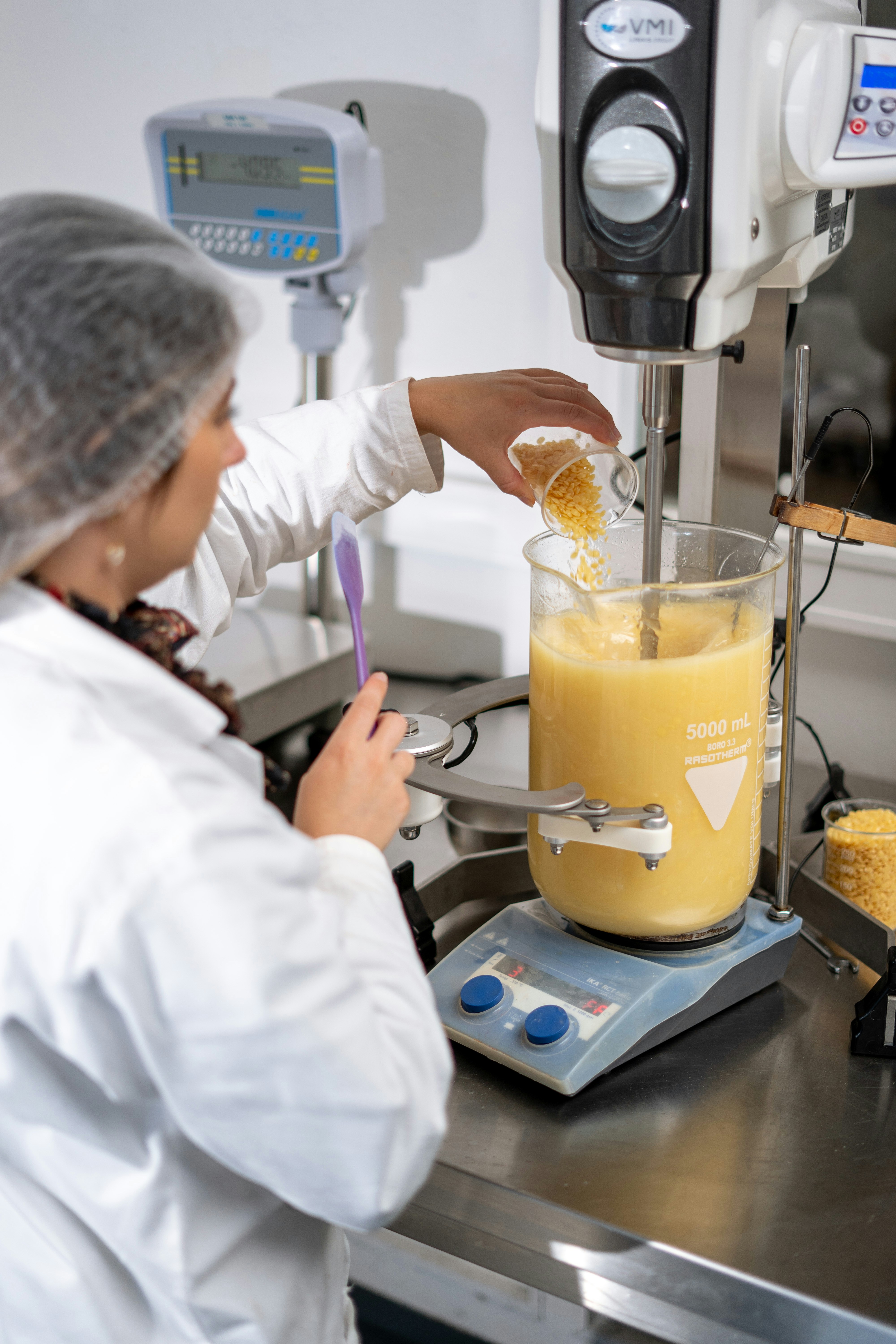
Product developers should evaluate:
Sweetness onset and duration
Aftertaste
Flavour balance
Acidity and perceived sweetness
Solubility and clarity
Stability during processing and storage
Cost per finished litre
For powdered beverages, moisture sensitivity and blend uniformity are also important. Poorly distributed ingredients can lead to inconsistent sweetness between servings.
Bakery Products
Bakery applications require a different approach because sugar contributes both sweetness and physical functionality.
In cookies, cakes and biscuits, reducing sugar can affect spread, browning, moisture retention, crumb structure and shelf life. A high-intensity sweetener blend may restore sweetness but generally cannot replace the bulk and baking functions of sucrose on its own.
Manufacturers may need to combine sweeteners with suitable bulking agents or fibres and adjust the recipe and baking process.
Trials should examine dough handling, finished-product dimensions, texture, colour, moisture and storage stability.
Dairy Products and Frozen Desserts
In yogurt, flavoured milk, ice cream and other dairy products, sweetener selection must account for the interaction between sweetness, acidity, dairy flavour and texture.
A blend that works well in a beverage may not deliver the same sensory result in a fermented dairy product. Protein content, stabilisers, fat level and processing conditions can all influence performance.
For frozen desserts, developers must also consider freezing-point effects and scoopability. Sweetener blends may need to be supported by other ingredients to reproduce the functions of conventional sugar.
Confectionery and Chewing Gum
Confectionery products often require specific sweetness timing, texture, flavour release and storage stability.
In chewing gum, the blend must work with the gum base, softeners and flavour system. In hard candies, the ingredients must be suitable for the cooking process. In sugar-free chocolate, particle size, viscosity and mouthfeel become important considerations.
Polyols may supply bulk in some of these applications, while high-intensity sweeteners can fine-tune sweetness. The best combination depends on the product's structure and intended sensory characteristics.
How to Balance Taste, Cost and Performance
Step 1: Define the Product Objective
Before selecting ingredients, manufacturers should identify the primary goal. It may be to reduce sugar, lower ingredient costs, improve sweetness quality, eliminate a particular aftertaste or create a sugar-free product.
The target determines which ingredients are suitable and what trade-offs can be accepted.
Step 2: Establish a Sensory Benchmark
The existing product provides a useful reference for sweetness intensity, onset, duration and aftertaste.
For a new product, the team should define the desired sensory profile before selecting a blend. This reduces the risk of choosing ingredients based only on their sweetness intensity or supplier recommendations.
Step 3: Compare Ingredient Costs at the Required Use Level
A meaningful cost comparison should consider the amount of each ingredient required to achieve the desired sweetness, not just the price per kilogram.
A simplified ingredient-cost calculation is:
Sweetener cost per batch = Sum of each ingredient's quantity multiplied by its purchase price per unit.
For a commercial comparison, the calculation should also account for blending, handling, transport, testing and any additional ingredients required to maintain product quality.
Step 4: Evaluate Processing Performance
The selected blend must perform under actual manufacturing conditions.
Important variables include temperature, pH, solubility, mixing time, moisture, shelf life and compatibility with other ingredients.
Suppliers' technical data can help narrow the options, but pilot trials are needed to confirm performance in the finished product.
Step 5: Conduct Sensory Testing
Sensory evaluation should compare candidate blends against the target profile or existing product.
Testing may include sweetness intensity, onset, lingering sweetness, bitterness, metallic notes, cooling sensation, mouthfeel and overall acceptability.
Where appropriate, manufacturers can use trained panels for detailed profiling and consumer testing to assess preference.
Step 6: Validate the Final Formulation
The selected blend should be assessed at pilot and production scale. The final review should include quality consistency, nutritional composition, stability, manufacturing efficiency, labeling and regulatory compliance.
A blend that performs well in a laboratory sample may behave differently during commercial processing or extended storage.
Regulatory and Labelling Considerations
Sweetener regulations vary by country and food category. A blend is not automatically authorised simply because its individual ingredients are used in other products.
European Union
In the EU, sweeteners must be authorised for the intended food use and comply with the relevant conditions of use. Labels must identify sweeteners in accordance with applicable requirements, including their name or E number.
The European Food Safety Authority continues to re-evaluate a number of sweeteners that were permitted before 20 January 2009. Its current sweeteners overview lists the status of individual assessments, including completed evaluations for several sweeteners and ongoing re-evaluations for others.
Manufacturers should check the current authorised-use conditions for each ingredient rather than relying solely on a supplier's general statement of regulatory compliance.
Sources: EFSA – Sweeteners and European Commission – Re-evaluation of Food Additives.
United States
In the United States, high-intensity sweeteners may be regulated as approved food additives or used under applicable GRAS provisions, depending on the ingredient and circumstances. Their safety and permitted conditions of use must be established for the intended application.
The FDA identifies six high-intensity sweeteners approved as food additives: saccharin, aspartame, acesulfame potassium, sucralose, neotame and advantame. Certain steviol glycosides and monk fruit extracts have also been the subject of GRAS notifications.
Manufacturers should confirm the status of the exact ingredient and intended use before marketing a formulation.
Source: FDA – High-Intensity Sweeteners.
Nutrition and Marketing Claims
The use of a sweetener blend does not automatically qualify a product for a “sugar-free,” “no added sugar,” “reduced sugar” or “low calorie” claim.
Eligibility depends on the finished product and the regulations in the target market. Manufacturers should verify the following before launch:
Sugar content and nutrition calculations
Conditions for nutrition claims
Ingredient declarations
Any required warnings
Applicable sweetener use limits
Special requirements for ingredients such as aspartame
Evidence supporting any health-related claims
How to Select a Reliable Sweetener Blend Supplier
For food ingredient buyers, the quality of the blend and the supplier's technical support are both important.
Review Technical Documentation
Request information covering:
Ingredient composition and ratio
Sweetness profile and recommended use level
Purity and relevant specifications
Solubility and processing conditions
Stability and storage requirements
Allergen and cross-contact information, where relevant
Certificate of Analysis
Regulatory documentation for the target market
For proprietary blends, confirm what information the supplier can disclose and whether the documentation is sufficient for your quality and regulatory teams.
Request Application-Specific Samples
A blend intended for a beverage may not be appropriate for a baked product or confectionery application. Buyers should request samples for the exact food category and conduct trials using their intended recipe.
Assess Cost and Supply Reliability
Evaluate the total cost of use rather than purchase price alone. Consider minimum order quantities, lead times, availability of individual ingredients, batch consistency and the supplier's ability to support scale-up.
For manufacturers serving several markets, documentation and supply continuity are particularly important because permitted uses and labeling rules may differ between destinations.
Market Opportunities for Sweetener Blends
Sweetener blends can support product development across multiple food categories where manufacturers are seeking to manage sugar content, taste and cost.
Relevant applications include:
Reduced-sugar soft drinks
Powdered beverages
Flavoured dairy products
Sugar-free confectionery
Chewing gum and mints
Reduced-sugar bakery products
Frozen desserts
Tabletop sweeteners
Selected nutritional products
The commercial opportunity lies in developing application-specific formulations rather than relying on a single standard blend for every product. Manufacturers that combine sensory testing, cost modelling, technical validation and regulatory review are better positioned to develop blends that meet both consumer expectations and commercial targets.
What Food Manufacturers Should Consider Before Buying a Sweetener Blend
Before selecting a blend, manufacturers should determine:
What level of sugar reduction is required?
What sweetness profile should the finished product achieve?
Which ingredients are suitable for the product's pH and processing conditions?
Is additional bulk or texture functionality required?
What is the total ingredient cost at the intended use level?
How will the blend affect aftertaste and flavour release?
Does the blend remain stable throughout the product's shelf life?
Is each ingredient authorised for the intended food category and market?
What labeling or warning requirements apply?
Can the supplier provide application-specific technical support and consistent quality?
Sweetener blends are a practical formulation tool for balancing taste, cost and performance in modern food manufacturing. Their success depends on choosing compatible ingredients, understanding the functions of sugar in the original product and validating the complete formulation under real production conditions.
Sources
Basic Chromium Sulphate CAS: 10101-53-8