

Basic Information
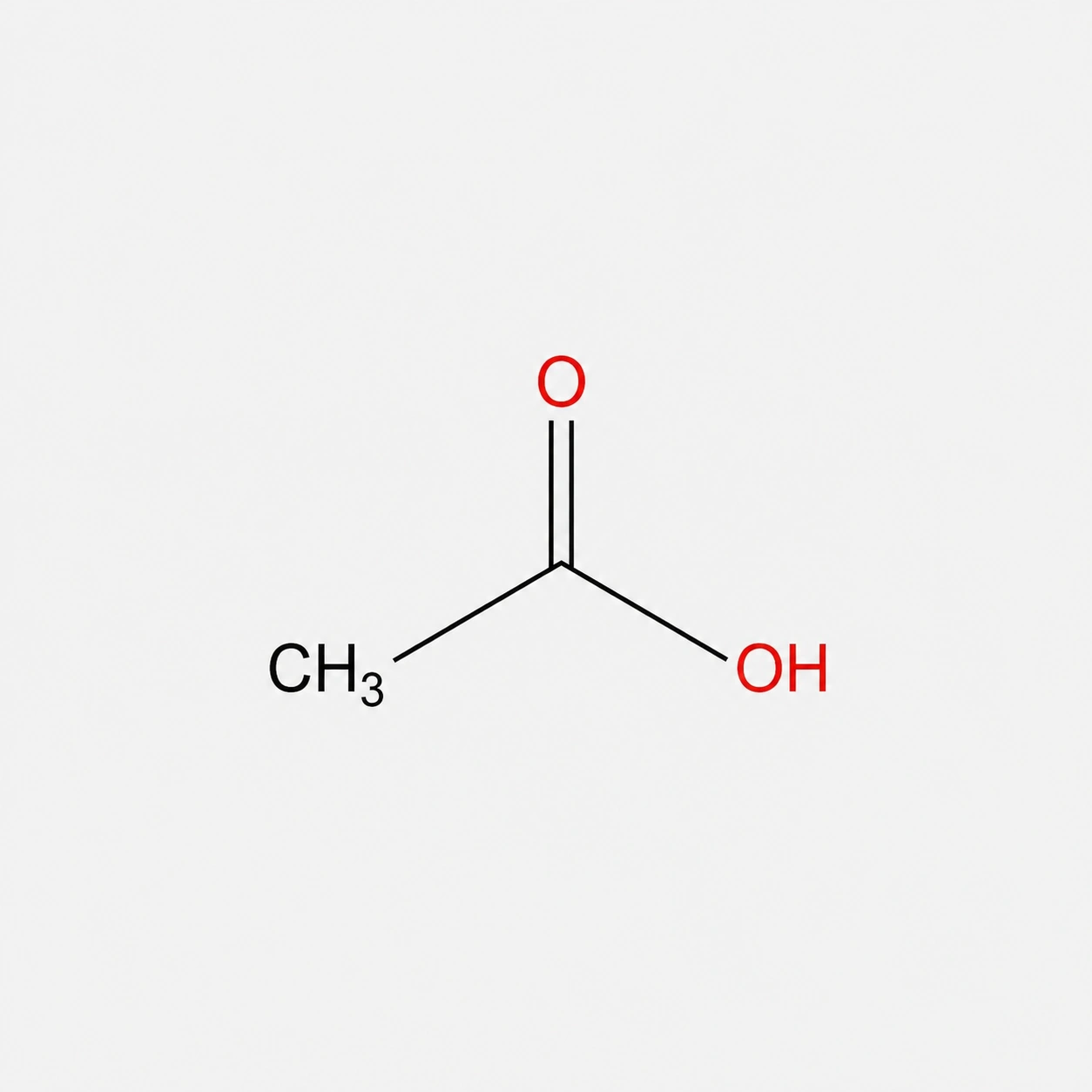
Glacial Acetic Acid Structure
IUPAC Name | Ethanoic acid |
CAS Number | 64-19-7 |
HS Code | 2915.21 |
Molecular Formula | C2H4O2 |
Structural Formula | CH3COOH |
Synonyms | Acetic acid, Glacial acetic acid, Ethanoic acid, Methanecarboxylic acid, Vinegar acid, E260 |
Molecular Weight | 60.05 g/mol |
Description
Glacial acetic acid is the concentrated, water-free or near-water-free form of acetic acid. It is a clear, colorless liquid with a strong, sharp vinegar-like odor. The term “glacial” comes from its ability to solidify into ice-like crystals at temperatures around its freezing point, which is close to normal room-temperature conditions in colder environments. Unlike diluted vinegar, which contains a low concentration of acetic acid in water, glacial acetic acid is a highly concentrated chemical and must be handled with strict safety controls.
In food and ingredient applications, acetic acid is used as an acidity regulator, flavoring agent, preservative support, curing and pickling agent, pH control agent, solvent, and processing aid. The U.S. eCFR recognizes acetic acid as a substance that occurs naturally in plant and animal tissues and states that it may be produced by fermentation of carbohydrates or by organic synthesis. It also lists food-related functions including curing and pickling agent, flavor enhancer, flavoring agent and adjuvant, pH control agent, solvent, and vehicle.
From a commercial food ingredients perspective, glacial acetic acid is important because it serves as a concentrated source of acidity. It can be diluted to specific concentrations for vinegar production, pickling systems, sauces, condiments, marinades, dressings, preserved vegetables, and other acidified food products. However, its concentrated form is corrosive and flammable, so it should not be treated like ordinary food acids such as citric acid. It requires proper chemical storage, compatible packaging, controlled dilution procedures, and trained handling.
Glacial acetic acid also has broad non-food applications. It is a key industrial intermediate for producing vinyl acetate monomer, acetate esters, acetic anhydride, cellulose acetate, solvents, adhesives, coatings, plastics, textiles, pharmaceuticals, and cleaning products. For buyers and importers, the main commercial considerations are concentration, purity, grade, water content, color, iron content, aldehyde impurities, packaging type, transport classification, and whether the product is food grade or industrial grade