
Bagikan produk ini :
Milk Powder
- Asal
- : China
- Nomor CAS
- : 93605-22-6
- Kode HS
- : 0402.29.90
Info Dasar
- Physical State
- : Solid
- Appearance / Color
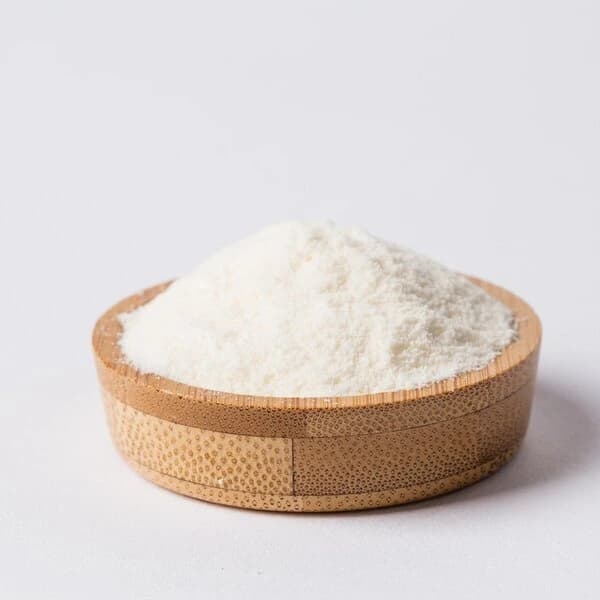
- : White to cream powder
- Odor
- : Mild dairy
- Taste
- : Mild, sweet
- Moisture Content (%)
- : <4%
- pH
- : 6.5-7.0
- Synonyms & Trade Names
- : Skim milk powder; Whole milk powder; Dried milk
- Total Plate Count (TPC)
- : <50,000 CFU/g
- Yeast & Mould
- : <500 CFU/g
- E. Coli
- : <10 CFU/g
- Coliform Bacteria
- : <10 CFU/g
- Salmonella
- : Negative/25g
- Shelf Life
- : 12 months
- Packaging Size
- : 25 kg
- Packaging Type
- : Laminated paper bag / tin
- Storage Conditions
- : Cool, dry, dark; sealed
- Halal Certification
- : Available
- Kosher Certification
- : Available
- ISO / HACCP
- : Yes
- Food Grade / Regulatory Status
- : Food/Feed grade
- Crude Protein (%, min)
- : 34% min (SMP)
- Crude Fat / Ether Extract (%, max)
- : 1.5% max (SMP)
- Ash Content — Feed (%, max)
- : 8.5% max (SMP)
- Calcium Content, Ca (%)
- : 1.3%
- Phosphorus Content, P (%)
- : 1.0%
- Bulk Density
- : ~0.55 g/cm³
- Antioxidant Treatment
- : None
- TSE/BSE Compliance Declaration
- : Compliant (heat processed)
- Species of Origin Declaration
- : Bovine
- Aflatoxin B1
- : <0.05 ppb
- Heavy Metals — Feed (As, Pb, Hg, Cd)
- : Compliant
- Dioxins & PCBs (pg WHO-TEQ/g fat)
- : Not applicable
Kategori
Bagikan produk ini :
Brief Overview
Milk powder is obtained by dehydration of milk. Dehydration of milk is done to increase milk's shelf life without using a refrigerator. Several types of milk powders are based on requirements, like whole, skimmed, and buttermilk. Milk powders are widely used around the world for their various applications. From infant formulas to desserts, milk powders have found their way to being one of the most prominent market players in the world. Apart from the food industry, milk powder is widely used in the field of biotechnology and also for research purposes.
Manufacturing Process
The first step is separation and standardization. The raw milk from the dairy factory is pasteurized and separated into skim milk and cream using the centrifugal cream separator. It must be ensured that there is 26 - 30 % fat in the milk powder. This step is followed by preheating, where milk is heated to 75 – 120 °C. The milk is held at this temperature for a few minutes. The milk is preheated to control the denaturation of whey proteins in the milk, destroys bacteria, inactivates enzymes, generates natural antioxidants, and imparts heat stability. The next step is evaporation. In the evaporator, the preheated milk is concentrated in stages” from around 9.0% total solids content for skim milk and 13% for whole milk, up to 45 - 52 % total solids. This is achieved by boiling milk below 72 °C and removing water as vapor. This vapor can be recycled again. The next step is spray drying, involving atomizing milk concentrates from the evaporator into fine droplets. This is performed in a large drying chamber with facilities for hot air flow. The milk droplets are then cooled by evaporation, leaving a fine powder with around 6 % moisture content with a mean particle size typically of < 0.1 mm diameter. Final or “secondary” drying takes place in a fluid bed or in a series of such beds, in which hot air is blown through a layer of fluidized powder removing water to the point of moisture content between 2 - 4 %. The final stage is the packaging. Milk powders are enormously more stable than fresh milk, but protection from moisture, oxygen, light, and heat is needed to preserve their quality and shelf life. Milk powder is packed into either plastic-lined multi-wall bags or bulk bins.