Introduction
The Strategic Journey of a Functional Dairy Protein in Global Industry
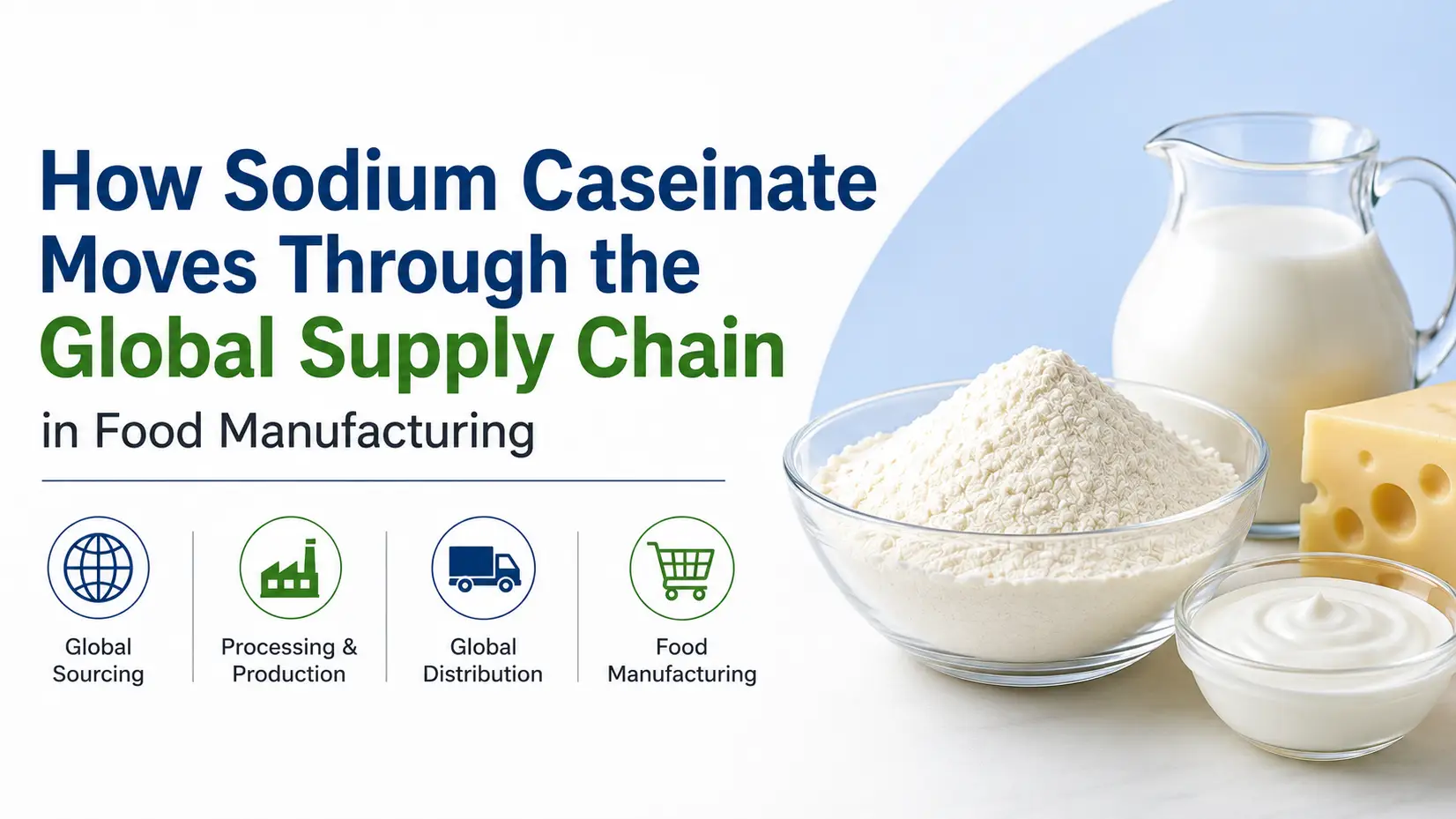
Sodium caseinate plays a critical yet often overlooked role in modern food manufacturing, acting as a multifunctional protein ingredient that enables texture, stability, and emulsification across countless applications. Its global supply chain reflects a highly interconnected system linking dairy farms, industrial processors, and multinational food manufacturers.
Raw Milk Production: The Dairy Foundation
The sodium caseinate supply chain begins at dairy farms where raw milk is produced as the primary biological input. This stage is highly sensitive to environmental conditions, feed quality, and herd productivity. Since casein forms a significant portion of milk protein, fluctuations in milk yield directly affect downstream availability. Global dairy regions such as Europe and New Zealand dominate this stage, creating geographic concentration risks that influence global pricing and supply stability.
Casein Extraction and Primary Processing
Once collected, raw milk is separated into skim milk and cream, with casein extracted from the protein-rich skim fraction. Industrial processors use controlled acidification or enzymatic coagulation to isolate casein curds, which are then purified and dried. This stage transforms a perishable agricultural input into a semi-processed industrial ingredient. Efficiency and precision are essential, as even small variations in pH or temperature can affect yield and quality consistency.
Conversion into Sodium Caseinate
The extracted casein undergoes chemical neutralization using sodium hydroxide, converting it into sodium caseinate—a water-soluble functional protein. This transformation enhances emulsification, solubility, and binding properties, making it suitable for processed food applications. According to industry specifications, this conversion is a controlled chemical process that defines the final performance characteristics of the ingredient in industrial formulations.
Industrial Drying and Functional Stabilization
After conversion, sodium caseinate is spray-dried into a fine powder form to ensure long shelf life and transport stability. This stage is capital and energy intensive, requiring specialized drying systems and strict moisture control. The resulting powder becomes highly stable under ambient conditions, allowing it to replace more perishable dairy inputs in global food manufacturing supply chains.
Global Trade Routes and Export Hubs
The sodium caseinate market is globally distributed, with production concentrated in export-oriented dairy economies such as the EU and New Zealand. These regions supply high-demand markets in Asia, the Middle East, and Latin America. International trade flows are shaped by logistics efficiency, container availability, and regulatory standards. Because many importing countries lack domestic production capacity, they rely heavily on these global supply corridors, making the market sensitive to geopolitical and shipping disruptions.
Downstream Applications in Food Manufacturing
In food manufacturing, sodium caseinate is widely used in processed meats, coffee creamers, bakery products, and nutritional beverages. Its emulsifying and stabilizing properties allow manufacturers to maintain texture consistency, improve mouthfeel, and extend shelf life. It is especially valued in large-scale industrial food systems where performance consistency is more important than natural variability in raw ingredients.
Conclusion
The global supply chain of sodium caseinate illustrates how a natural dairy protein evolves into a highly engineered food ingredient powering modern manufacturing systems. From farm-level milk production to advanced chemical conversion and global distribution, each stage adds value while introducing complexity and dependency.
As demand for functional proteins continues to grow across food, nutrition, and industrial sectors, supply chain resilience becomes increasingly important. This is where integrated trade expertise and reliable sourcing partners play a vital role. Companies like Tradeasia International help bridge these global gaps by ensuring consistent sourcing, efficient logistics, and dependable supply chain solutions—supporting manufacturers in maintaining uninterrupted production and competitive market positioning.
Sources: