

Basic Information
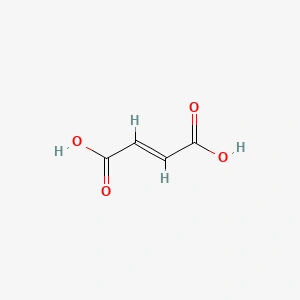
Fumaric Acid Structure
IUPAC Name | (E)-but-2-enedioic acid |
CAS Number | 110-17-8 |
HS Code | 2917.19 |
Molecular Formula | C4H4O4 |
Structural Formula | HOOCCH=CHCOOH |
Synonyms | Fumaric acid, trans-butenedioic acid, trans-1,2-ethylenedicarboxylic acid, allomaleic acid, E297 |
Molecular Weight | 116.07 g/mol |
Description
Fumaric acid is a naturally occurring organic acid and a dicarboxylic acid with the molecular formula C4H4O4. It appears as a white crystalline powder or granules and is known for its strong, clean, long-lasting sour taste. Chemically, fumaric acid is the trans isomer of butenedioic acid, while maleic acid is the corresponding cis isomer. This trans configuration gives fumaric acid different solubility, stability, and handling behavior compared with maleic acid.
In food and beverage applications, fumaric acid is used as an acidulant, acidity regulator, flavor enhancer, pH control agent, and preservative-support ingredient. It is commonly known in food additive systems as E297. Compared with citric acid, fumaric acid has lower water solubility but provides strong acidifying power and persistent sourness. This makes it useful in dry beverage mixes, confectionery, bakery systems, gelatin desserts, fruit-flavored products, and acidified food formulations where slow dissolution or controlled acidity release is desirable.
Fumaric acid and its salts may be safely used in food under prescribed conditions in U.S. regulation. The U.S. eCFR states that fumaric acid and its calcium, ferrous, magnesium, potassium, and sodium salts may be safely used in food when they meet specified conditions, including a requirement that fumaric acid contains a minimum of 99.5% by weight of fumaric acid calculated on an anhydrous basis.
Commercially, fumaric acid is used in both food and industrial sectors. In the food industry, it supports acidity control, flavor balance, and shelf-life performance. In industrial applications, it is used in unsaturated polyester resins, alkyd resins, paints, coatings, plasticizers, paper sizing, and chemical intermediates. For buyers, the key commercial specifications usually include purity, particle size, moisture, maleic acid content, heavy metals, residue on ignition, color, food-grade compliance, and packaging condition.