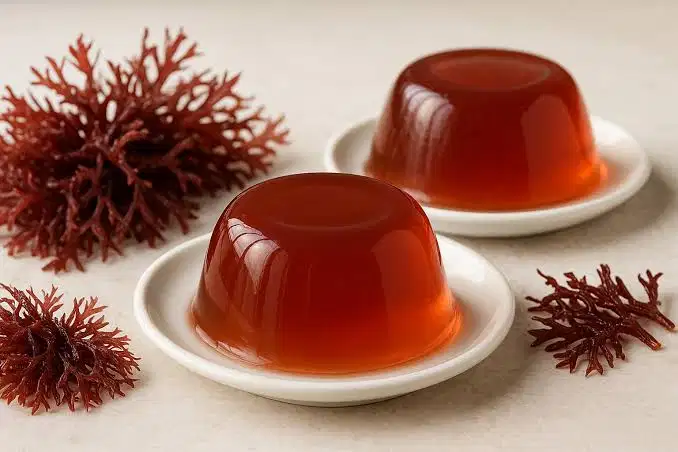
Agar is a seaweed-derived hydrocolloid widely used as a gelling agent in food manufacturing. It helps create firm textures and stable structures in products such as jellies, desserts, confectionery, bakery fillings, and selected processed foods.
One of agar's defining characteristics is its ability to form a gel when a hot aqueous solution cools. Unlike gelatin, agar gels generally remain firm at considerably higher temperatures, making them useful in applications where heat resistance and shape retention are important.
Agar is also relevant to plant-based product development because it can provide gelling functionality without relying on animal-derived gelatin. However, its texture and melting behavior differ from gelatin, so manufacturers must select ingredients and processing conditions according to the desired product characteristics.
For food manufacturers, ingredient suppliers, and procurement teams, agar offers opportunities to develop differentiated products while managing texture, processing performance, ingredient specifications, and cost.
What Is Agar?
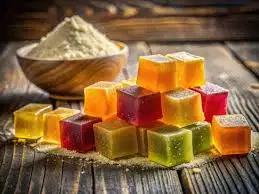
Agar, also known as agar-agar, is a polysaccharide extracted from certain species of red seaweed. It is commercially available in forms such as powder, flakes, and strips, with powder commonly used in industrial food formulations.
Its primary function in food manufacturing is gel formation. Agar is generally dispersed in water and dissolved using heat. As the solution cools, its molecular chains form a network that traps water and creates a gel.
Key functional properties include:
Gelling: Creates firm structures in liquid-based formulations.
Heat resistance: Agar gels typically withstand higher temperatures before melting than gelatin gels.
Texture control: Helps create defined, sliceable, or shape-retaining products.
Water management: Forms networks that immobilize water within the gel structure.
Plant-based suitability: Provides a gelling option for products formulated without animal-derived gelatin.
Performance depends on agar grade, concentration, seaweed source, formulation composition, and processing conditions.
Why Agar Matters in Food Manufacturing
Texture is an important factor in product quality, consumer acceptance, and manufacturing consistency. A dessert that does not set properly, a filling that loses its shape, or a confectionery product that softens during distribution can create commercial and quality-control problems.
Agar can help manufacturers achieve specific texture and stability objectives.
Potential benefits include:
Creating firm gels and structured desserts
Supporting shape retention in selected bakery fillings
Developing plant-based alternatives to gelatin-set products
Maintaining texture under warmer handling conditions
Supporting innovative product shapes and presentations
Providing a functional ingredient for specialty food formulations
Agar is not suitable for every application. Some products require the softer, more elastic, or melt-in-the-mouth texture provided by other gelling agents. Ingredient selection should therefore be based on the final product's performance requirements.
Key Applications Across Food Categories
1. Jellies and Gelled Desserts
Jellies and desserts are among agar's established food applications.
Agar can create clear or translucent gels, depending on the grade and formulation, with a firm texture that holds its shape after setting.
Potential applications include:
Fruit jellies
Water-based dessert gels
Dessert toppings
Traditional Asian confectionery
Layered desserts
Specialty gelled products
Manufacturers should assess gel firmness, flavor release, appearance, and the stability of the finished product during storage and distribution.
2. Confectionery
Agar can be used in selected confectionery formulations where a defined gel structure is required.
Its performance is influenced by sugar concentration, acidity, and the other ingredients in the formulation. Certain agar grades are suitable for high-sugar confectionery, but results depend on the specific product and process.
Important formulation considerations include:
Gel strength
Setting time
Texture and chewiness
Sugar concentration
Flavor release
Resistance to deformation during handling
Agar does not reproduce the exact texture of every gelatin-based confectionery product. Product developers should test the formulation against the intended sensory and processing specifications.
3. Bakery Fillings, Icings, and Glazes
Agar's ability to form heat-resistant gels can be useful in selected bakery applications.
Potential uses include fruit fillings, icings, glazes, and coatings that need to maintain structure during handling or exposure to warmer conditions.
Agar may help manufacturers achieve:
Improved shape retention
Defined filling consistency
Reduced unwanted flow
More stable coatings in suitable formulations
Consistent texture during distribution
The ingredient must be compatible with the product's acidity, sugar level, moisture content, and baking or filling process. Testing is particularly important when the formulation will undergo further heating after the gel has formed.
4. Plant-Based Desserts
Agar offers a useful gelling option for plant-based desserts that do not use animal-derived gelatin.
Applications may include:
Plant-based fruit jellies
Coconut-based desserts
Dairy-free dessert gels
Layered plant-based puddings
Specialty confectionery
Other water-based gelled products
However, agar and gelatin produce different sensory experiences. Agar generally forms a firmer gel that can be more brittle and less likely to melt in the mouth at body temperature.
Manufacturers seeking a softer or more elastic texture may need to evaluate other hydrocolloids or carefully designed ingredient combinations.
5. Dairy and Alternative Dairy Products
Agar is used in selected dairy and dessert formulations where gel formation or texture control is needed. It may also be evaluated in certain plant-based alternatives, depending on the formulation.
Potential considerations include:
Gel structure
Water retention
Texture during storage
Compatibility with proteins and other stabilizers
Resistance to processing and handling conditions
Agar should not be assumed to behave identically in dairy and plant-based systems. Each formulation requires evaluation because proteins, minerals, acidity, and other ingredients can change the final texture.
6. Meat, Fish, and Other Structured Foods
Agar has also been used in selected meat, fish, and poultry products where a gelled structure is desired.
Its heat resistance can be useful in certain cooked or canned formulations, although the correct grade, dosage, and processing conditions depend on the application.
For these products, manufacturers must consider food safety, thermal processing, texture, moisture retention, and product stability together.
How Agar Forms a Gel
Agar's gelling behavior is linked to its molecular structure and the changes that occur during heating and cooling.
In general, the manufacturing process involves three stages:
1. Hydration and Dispersion
Agar is dispersed in the appropriate liquid and hydrated according to the grade and process requirements.
2. Heating
The mixture is heated sufficiently to dissolve the agar and create a uniform solution. Inadequate heating or poor dispersion can lead to inconsistent gel formation.
3. Cooling and Setting
As the solution cools, agar chains associate into a three-dimensional network that traps water and forms a gel.
The final structure depends on the agar concentration, the liquid composition, cooling conditions, and the presence of other ingredients.
Manufacturers should follow supplier guidance for dissolution temperature, mixing, dosage, and setting conditions rather than applying one process to every product.
Agar vs. Gelatin: What Manufacturers Should Consider
Agar is often considered when developing products without animal-derived gelatin, but the two ingredients are not interchangeable on a one-to-one basis.
Property | Agar | Gelatin |
|---|---|---|
Origin | Seaweed-derived | Commonly derived from animal collagen |
Gel formation | Dissolves with heating and sets on cooling | Hydrates and forms a gel under suitable cooling conditions |
Typical texture | Firm and potentially brittle | Often softer and more elastic |
Melting behavior | Generally requires much higher temperatures to melt | Usually melts at lower temperatures |
Plant-based suitability | Suitable for many plant-based formulations | Not suitable for vegan formulations |
Formulation approach | Requires application-specific dosage and processing | Requires its own formulation and processing controls |
The choice depends on the intended texture, serving conditions, manufacturing process, dietary requirements, and consumer expectations.
Important: Successful reformulation generally requires a recipe or process designed for the selected gelling agent, rather than simply substituting equal weights of agar and gelatin.
What Influences Agar Performance?
Several factors affect agar's functionality in food products.
1. Concentration
Agar concentration influences gel firmness and texture. Excessive use may produce a gel that is too hard or brittle, while insufficient use may result in weak setting.
2. Agar Grade and Source
Different commercial grades can vary in gel strength, viscosity, color, and other functional characteristics.
3. Sugar Content
Sugar can influence gel properties and the behavior of the surrounding liquid. The effect depends on the agar grade and overall formulation.
4. Acidity
Low-pH formulations may require special attention because prolonged heating under acidic conditions can affect agar's performance.
5. Heating and Cooling
Dissolution, mixing, and cooling conditions influence gel uniformity and setting behavior.
6. Other Ingredients
Proteins, salts, minerals, and other hydrocolloids can influence the texture and stability of the final product.
Food manufacturers should establish the appropriate processing conditions through formulation trials and quality testing.
Quality, Safety, and Regulatory Considerations
Before using agar commercially, manufacturers should verify that the selected grade meets the requirements of the intended food application and target market.
Important considerations include:
Food-grade specifications and purity
Supplier quality assurance
Certificate of analysis
Microbiological and contaminant specifications
Applicable food-additive permissions
Labeling requirements
Packaging and storage conditions
Batch-to-batch consistency
Traceability and supporting documentation
Regulatory permissions and conditions of use can vary by jurisdiction and food category. Buyers should confirm the current requirements for each market in which the product will be manufactured or sold.
Agar's use as a gelling agent also does not replace appropriate food-safety controls, validated processing, or shelf-life testing.
Market Implications
Interest in plant-based products, specialty desserts, and texture innovation creates opportunities for hydrocolloids such as agar.
Potential areas of commercial demand include:
Plant-based dessert development
Vegan confectionery
Bakery fillings and coatings
Specialty jellies
Structured food products
Heat-resistant gel applications
Premium and innovative food formulations
Commercial success depends on performance, consumer acceptance, cost, and the ability to maintain consistent quality at production scale.
Agar may be particularly attractive where its heat resistance or plant-based origin provides a clear advantage over alternative gelling agents.
Competitive Intelligence
Companies evaluating agar and other hydrocolloids should monitor several factors.
Product Innovation
Track launches in plant-based desserts, confectionery, and specialty gelled foods.
Technical Performance
Compare gel strength, texture, thermal behavior, and compatibility across suitable grades.
Supplier Capabilities
Evaluate quality systems, sourcing reliability, documentation, and production capacity.
Regulatory Developments
Monitor food-additive requirements and market-specific restrictions.
Commercial Scalability
Assess whether laboratory results can be reproduced consistently in commercial production.
These indicators help buyers distinguish promising applications from those that may be technically difficult or commercially uncompetitive.
Procurement Considerations
Procurement teams sourcing agar should evaluate more than the quoted price.
Key criteria include:
Required gel strength and grade
Food-grade specifications
Supplier consistency and reliability
Certificate of analysis and technical documentation
Packaging and storage requirements
Lead times and supply continuity
Regulatory suitability for the destination market
Technical support for formulation trials
Total landed cost
Close coordination between procurement, research and development, quality assurance, and regulatory teams can reduce the risk of selecting an unsuitable grade.
For plant-based products, procurement teams should also confirm that the supplier's documentation supports any relevant dietary or product claims.
Looking Ahead
Agar remains a valuable gelling ingredient for food manufacturers seeking firm textures, heat-resistant gels, and plant-based formulation options.
Its role extends across desserts, confectionery, bakery applications, and selected structured foods. However, performance depends on the ingredient grade, formulation, and manufacturing process, making technical evaluation essential before commercial adoption.
For ingredient suppliers and procurement professionals, the strongest opportunities lie in matching agar's functional properties to clearly defined product needs.
The goal is to achieve consistent texture and processing performance while meeting quality, safety, regulatory, and cost requirements.
Key Takeaways
Agar is a seaweed-derived hydrocolloid used primarily for gelling in food manufacturing.
Applications include jellies, desserts, confectionery, bakery fillings, and selected structured foods.
Its ability to form gels that withstand relatively high temperatures can benefit specific formulations.
Agar offers a plant-based option for products that would otherwise use animal-derived gelatin.
Its texture and melting behavior differ from gelatin, so direct one-to-one substitution is generally unsuitable.
Grade, concentration, pH, sugar content, and processing conditions influence performance.
Procurement teams should prioritize food-grade quality, regulatory suitability, documentation, and supply consistency.
Sources
https://pmc.ncbi.nlm.nih.gov/articles/PMC3551143/
Polyethylene Glycol (200) - China CAS: 25322-68-3