Explore our network of country and industry based websites to access localized information, product offerings, and business services across our group.
Log in to start sending quotation requests for any product.
Don't have an account? Sign Up Here
Home Textured Soy Protein Uses for Food Manufacturing and Foodservice Buyers Markets
Trade Insights | Applications and Buyers | 20 May 2026
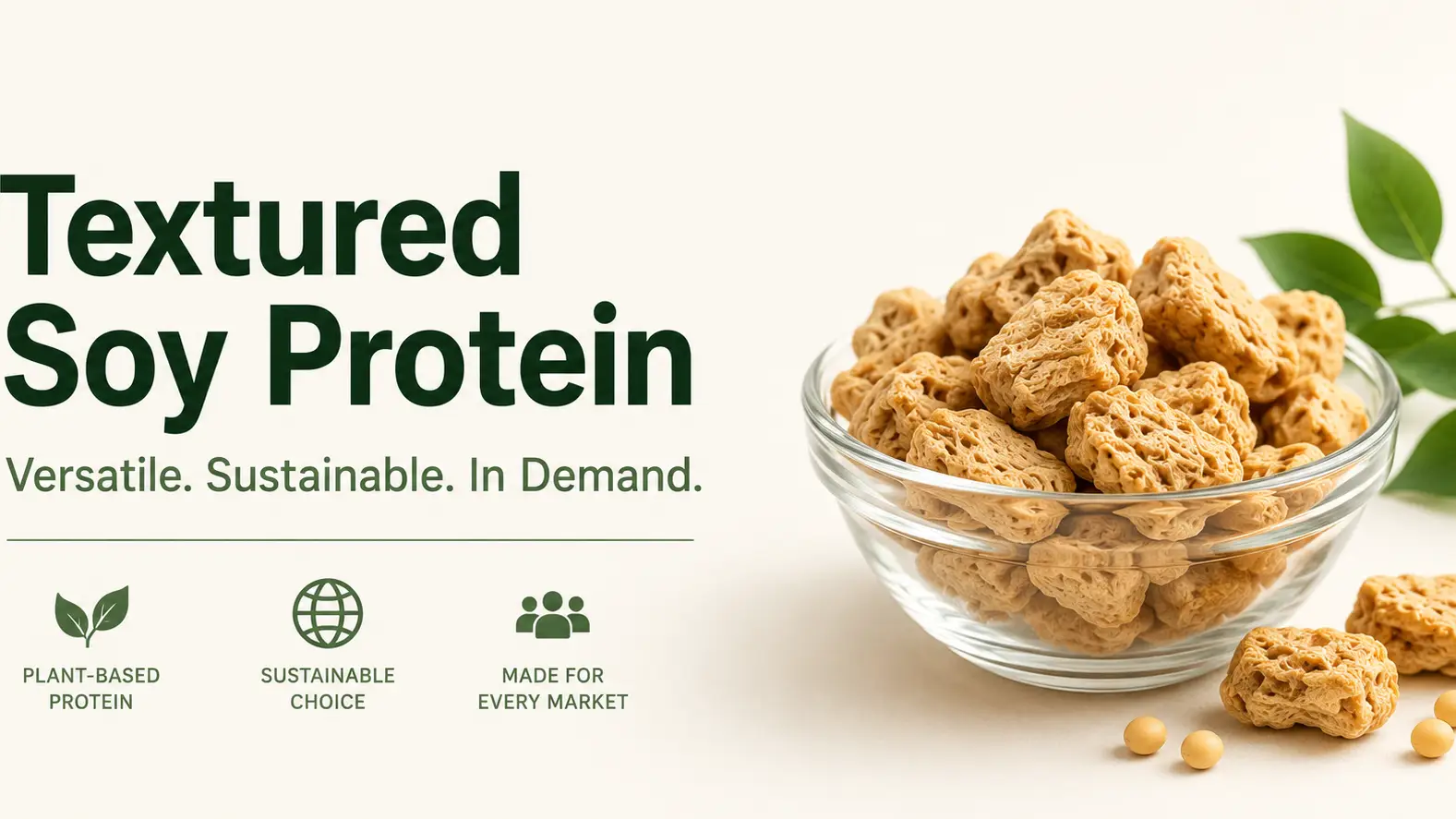
Textured soy protein (TSP) has emerged as a strategically important ingredient in the global food ingredients landscape, particularly as manufacturers and foodservice operators seek scalable, cost-efficient, and sustainable protein solutions. Derived from defatted soy flour through an extrusion process, TSP is widely recognized for its meat-like texture, high protein functionality, and versatility across a broad range of food applications.
In recent years, the demand for alternative protein sources has accelerated due to shifting consumer preferences, rising meat prices, and growing sustainability commitments within the food industry. This has positioned textured soy protein as a core formulation component in processed foods, plant-based meat alternatives, and institutional foodservice menus. Its ability to replicate the structure of animal protein while maintaining affordability makes it especially valuable for large-scale production environments.
Beyond its functional benefits, TSP is increasingly viewed as a strategic procurement ingredient for global food manufacturers and buyers. It supports product innovation while enabling consistent supply chain performance across diverse markets. As the industry continues to evolve, textured soy protein is expected to maintain a central role in bridging nutritional demand with industrial food production efficiency.
Textured soy protein (TSP) has evolved into a cornerstone ingredient within the global alternative protein ecosystem. Produced primarily from defatted soy flour, it serves as a cost-effective and functional protein source for large-scale food production. The increasing pressure on food manufacturers to balance nutrition, sustainability, and cost efficiency has significantly expanded its adoption. Buyers across industrial food sectors value TSP not only for its protein content but also for its ability to mimic meat-like texture in diverse formulations.
In food manufacturing, textured soy protein is widely used as a meat extender and replacer in processed foods such as sausages, burgers, nuggets, and ready-to-eat meals. Its water absorption capacity and fibrous structure make it ideal for improving yield while maintaining product consistency. Manufacturers also integrate TSP into shelf-stable meals and frozen food products, where stability and protein enrichment are critical. The versatility of TSP allows producers to optimize formulation costs without compromising sensory quality.
The foodservice industry has become a strong demand driver for textured soy protein, particularly in fast-casual dining, institutional catering, and quick-service restaurants. Chefs and menu developers use TSP to create plant-based dishes that appeal to vegetarian, vegan, and flexitarian consumers. Its neutral flavor profile allows easy seasoning adaptation across cuisines, from Asian-style stir-fries to Western-style tacos and pasta sauces. This adaptability supports menu innovation while helping operators maintain competitive food costs.
The main buyers of textured soy protein include food manufacturers, ingredient distributors, foodservice chains, and private-label brands. Procurement typically occurs through B2B ingredient suppliers and global commodity trading networks. Large-scale buyers prioritize consistent quality, protein concentration, and reliable supply chains. As demand grows, sourcing strategies are increasingly focused on long-term supplier partnerships and contract-based purchasing to ensure price stability and product availability.
The global supply chain for textured soy protein is closely tied to soybean production, with major sourcing regions including North and South America and parts of Asia. Processing facilities convert soybeans into defatted flour before extrusion into textured forms. Supply chain efficiency is critical, as fluctuations in soybean prices directly influence TSP market stability. Sustainability certifications and non-GMO sourcing are becoming increasingly important purchasing criteria for international buyers.
The future of textured soy protein is strongly linked to the expansion of plant-based diets, regulatory support for sustainable food systems, and innovations in food extrusion technologies. Rising demand for affordable protein alternatives in emerging markets is also accelerating global consumption. As consumer awareness of environmental impact grows, food manufacturers and foodservice providers are expected to deepen their reliance on TSP as a scalable protein solution.
Textured soy protein continues to play a strategic role in bridging cost efficiency and nutritional functionality across food manufacturing and foodservice industries. Its adaptability across product categories positions it as a long-term staple in global protein formulation strategies. As supply chains mature and demand for sustainable ingredients strengthens, companies that secure reliable sourcing partnerships will hold a competitive advantage.
In this evolving landscape, Tradeasia International stands out as a trusted global partner, supporting businesses with consistent supply solutions and expertise in industrial raw materials, helping buyers navigate complex commodity markets with confidence.
Sources:
We're committed to your privacy. Tradeasia uses the information you provide to us to contact you about our relevant content, products, and services. For more information, check out our privacy policy.


 English
 Indonesian
 简体字
简体字
 العربية
 Español
 Français
 Português
 日本語
日本語
 한국어
한국어
 Tiếng Việt




















