
Food-Grade Phosphates: Applications in Meat, Dairy and Bakery Products
Food-grade phosphates are widely used in the food processing industry to improve product quality, maintain consistency, and support efficient manufacturing. These ingredients are phosphate-based compounds selected for specific functional properties, including moisture retention, acidity regulation, protein stabilization, and chemical leavening. Depending on their composition and application, they can help manufacturers achieve the desired texture, appearance, and performance in a wide range of food products.
Common food-grade phosphates include sodium phosphates, potassium phosphates, calcium phosphates, and sodium tripolyphosphate. Each type has different chemical characteristics, making the selection of the appropriate phosphate essential for achieving the desired results in food formulations.
Applications of Food-Grade Phosphates in Meat Products
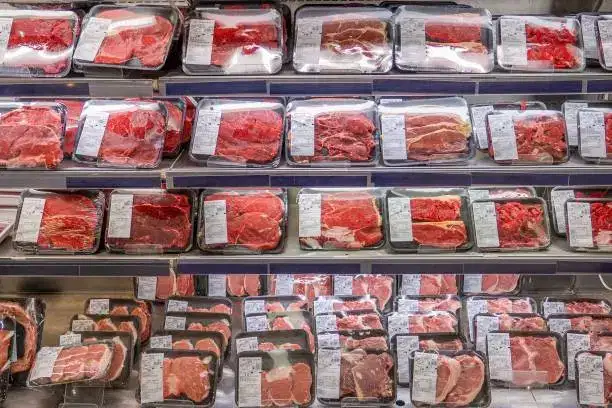
In meat and poultry processing, food-grade phosphates are primarily valued for their ability to improve water retention, texture, and product consistency. They are commonly used in products such as cooked ham, sausages, deli meats, poultry products, and other processed meat formulations.
One of their key functions is increasing the meat's ability to retain moisture during processing and cooking. Phosphates can influence muscle proteins and pH, helping reduce cooking losses and improve juiciness. This is particularly important for manufacturers seeking consistent product weight, texture, and eating quality.
Food-grade phosphates can also support protein extraction and binding, helping processed meat ingredients form a more uniform structure. In emulsified products such as frankfurters, appropriate phosphate systems can contribute to a stable mixture of meat proteins, fat, and water.
Additional benefits include:
Moisture retention: Helps reduce water loss during cooking and processing.
Texture improvement: Supports a tender, cohesive, and consistent product structure.
Processing performance: Assists protein functionality and binding in suitable formulations.
Flavor protection: Certain phosphate applications can help maintain product quality during processing and storage.
Sodium tripolyphosphate (STPP) is one example used in muscle-food processing, subject to applicable food regulations and permitted usage levels. The correct phosphate type and dosage depend on the product formulation, processing conditions, and local regulatory requirements.
Applications of Food-Grade Phosphates in Dairy Products
The dairy industry uses food-grade phosphates to improve the stability, texture, and processing characteristics of selected dairy products. Their ability to interact with proteins and minerals makes them useful in processed cheese, evaporated milk, dairy-based beverages, and certain powdered dairy formulations.
In processed cheese, phosphate salts can act as emulsifying salts. They help manage the interactions between casein proteins, water, and fat, supporting a smooth texture and more uniform melting behavior. The choice of phosphate system influences the final product's firmness, spreadability, and consistency.
In evaporated milk and some dairy powders, phosphates can help improve protein dispersion and manage mineral interactions. Depending on the formulation, these functions may support a more stable product and reduce undesirable changes during processing or storage.
Key applications include:
Processed cheese: Helps promote smoothness, emulsification, and consistent melting.
Evaporated milk: Supports protein dispersion and product stability.
Dairy powders: Can assist dispersion and functionality during reconstitution.
Dairy beverages: Certain phosphate salts help regulate acidity and stabilize formulations where permitted.
Selecting the right phosphate requires consideration of the dairy product's protein content, mineral balance, pH, heat treatment, and desired texture. Manufacturers must also account for interactions with other ingredients to avoid issues such as excessive firmness, poor dispersion, or unwanted changes in flavor.
Applications of Food-Grade Phosphates in Bakery Products
In bakery manufacturing, food-grade phosphates play an important role in chemical leavening, dough performance, and finished-product consistency. They are used in products such as cakes, muffins, biscuits, pancakes, cookies, and other baked goods.
Certain phosphate salts function as acid components in baking powders. When combined with sodium bicarbonate and exposed to moisture, they participate in reactions that release carbon dioxide. During baking, this gas helps expand the batter or dough, creating a lighter texture and the desired volume.
Different phosphate-based leavening acids react at different rates. Manufacturers can select suitable compounds to control gas release during mixing, resting, and baking. This helps match the leavening system to the production process and the required characteristics of the finished product.
Monocalcium phosphate is one example of a phosphate used in bakery applications. Depending on the formulation, it can contribute to leavening performance and pH control.
Other potential benefits include:
Improved product volume: Supports gas production and expansion during baking.
Texture consistency: Helps achieve a uniform crumb and desired internal structure.
Process control: Allows manufacturers to select leavening systems suited to different mixing and baking conditions.
Formulation flexibility: Supports the development of different bakery products with specific texture and performance requirements.
The performance of phosphate-based leavening systems depends on the type and amount of phosphate used, the bicarbonate level, moisture availability, and baking conditions. Proper formulation is essential to avoid undesirable aftertastes, uneven expansion, or inconsistent product quality.
Choosing the Right Food-Grade Phosphate
Although food-grade phosphates share a common chemical basis, they are not interchangeable in every application. Their solubility, acidity or alkalinity, mineral interactions, and reaction rates influence their suitability for different food products.
Manufacturers should consider the following factors when selecting a phosphate:
Product requirements: Identify whether the main objective is moisture retention, emulsification, protein stabilization, or leavening.
Compatibility: Evaluate interactions with proteins, minerals, fats, and other formulation ingredients.
Processing conditions: Consider mixing, heating, cooking, baking, and storage requirements.
Product quality: Assess the desired texture, appearance, stability, flavor, and shelf-life characteristics.
Regulatory compliance: Confirm that the selected phosphate is permitted for the intended food category and used within applicable limits.
Food-grade specifications are also important. Manufacturers should obtain appropriate technical documentation and certificates of analysis from qualified suppliers to verify that ingredients meet the relevant purity and quality requirements.
Food Safety and Regulatory Considerations
Food-grade phosphates must meet applicable identity, purity, and usage requirements. Regulations differ by country and food category, so manufacturers should confirm the rules governing each intended application rather than assuming that every phosphate is approved for every food.
Phosphorus is an essential nutrient, but excessive phosphorus intake can be a concern, particularly for people with impaired kidney function. For this reason, food manufacturers should use phosphate additives only at technically appropriate and legally permitted levels. Compliance with ingredient-labeling requirements is also essential.
Food-grade phosphates are valuable functional ingredients in meat, dairy, and bakery manufacturing. They can improve moisture retention in processed meats, support emulsification and stability in dairy products, and provide controlled leavening in baked goods. By selecting the appropriate phosphate for each formulation, manufacturers can improve consistency, processing efficiency, and finished-product quality while meeting food safety and regulatory requirements.
As food manufacturers continue to focus on product consistency and formulation performance, understanding the specific functions of different phosphate compounds remains important for developing reliable food products.
https://www.fsis.usda.gov/food-safety/safe-food-handling-and-preparation/food-safety-basics/additives-meat-and-poultry?
https://www.efsa.europa.eu/en/topics/topic/food-additives?
Ammonium Polyphosphate CAS: 68333-79-9