Global Food Ingredients Trade in 2026: Key Markets, Suppliers, and Emerging Opportunities
The global food ingredients trade is becoming more diversified as food manufacturers seek reliable supplies of sweeteners, starches, functional ingredients, flavours, colours, emulsifiers, preservatives, proteins, fibres, and other formulation materials. In 2026, sourcing decisions are increasingly influenced not only by price, but also by supply security, regulatory requirements, sustainability, product functionality, and the ability of suppliers to provide consistent documentation.
For international buyers and suppliers, the key opportunity is therefore not simply increasing trade volume. It is identifying the markets, ingredient categories, and supply partnerships where demand is expanding while maintaining competitive pricing, quality, compliance, and traceability.
Global Food Ingredients Trade Landscape in 2026
Food ingredients represent a broad group of products, including:
Sweeteners and sugar substitutes
Food starches and modified starches
Hydrocolloids and stabilisers
Emulsifiers
Preservatives
Natural and synthetic colours
Flavours and flavour enhancers
Enzymes
Functional fibres
Plant proteins
Vitamins and nutritional ingredients
Oils and fats
Dairy ingredients
Specialty ingredients
This diversity means there is no single global trade pattern for food ingredients. Commodity-based ingredients may be dominated by agricultural producers, while specialty ingredients can depend more heavily on technology, processing capabilities, intellectual property, and regulatory approvals.
Trade-intelligence data also shows significant cross-border activity. Volza's latest global food-ingredient shipment dataset identified China, Malaysia, and the United States among the leading exporting countries, while Vietnam, the United States, and Russia appeared among the leading importing countries in its broad food-ingredients category. The dataset covers specific shipment classifications rather than the entire food ingredients market, so it should be viewed as a trade-flow indicator rather than a complete measure of market size.
Key Regional Markets
Asia-Pacific
Asia-Pacific remains one of the most important regions for global food ingredient demand and supply.
A recent market assessment estimated that Asia-Pacific accounted for 34.02% of global food ingredient market revenue in 2025, making it the largest regional market. China, India, Japan, Southeast Asia, and other Asian markets are supported by large food-processing industries, expanding urban populations, and growing demand for packaged and convenience foods.
The region is also important as a manufacturing and export base. China and Malaysia, for example, are prominent exporters in broad food-ingredient shipment data.
Key opportunities include:
Starches and hydrocolloids
Plant proteins
Functional ingredients
Natural colours
Sweeteners
Food additives
Oils and fats
Bakery ingredients
Beverage ingredients
Southeast Asia is particularly interesting for companies seeking emerging demand. The launch of SIAL Vietnam in November 2026 reflects growing international interest in the region's food and beverage industry and its role in connecting suppliers with buyers.
North America
North America remains a major market for functional, nutritional, clean-label, and speciality ingredients.
The United States has a large food-processing industry and significant demand for ingredients that support reformulation, convenience foods, health-oriented products, and regulatory compliance.
Market data indicates that the United States was valued at approximately US$63.07 billion within the global food ingredients market in 2025.
For suppliers entering the U.S. market, regulatory documentation is particularly important. Ingredient status, permitted uses, specifications, labelling, allergen information, and safety documentation can influence whether an ingredient can be successfully commercialised.
Europe
Europe remains an important destination for natural, sustainable, functional, and specialty food ingredients.
European buyers increasingly evaluate ingredients according to more than price and technical performance. Sustainability, traceability, responsible sourcing, food safety, and regulatory compliance can all influence procurement decisions.
The region is therefore attractive for suppliers that can combine technical performance with credible documentation and transparent sourcing practices.
Latin America
Latin America has both a large domestic food industry and significant agricultural production capacity.
Countries such as Brazil, Argentina, Mexico, Chile, Colombia, and Peru participate in global agricultural and food ingredient supply chains.
Opportunities include:
Plant-based ingredients
Fruit and vegetable concentrates
Natural colours
Cocoa and cocoa derivatives
Sweeteners
Oils
Starches
Agricultural extracts
Functional ingredients
The region's agricultural base provides opportunities for suppliers that can move from commodity exports toward higher-value processed ingredients.
Middle East and Africa
The Middle East and Africa represent growing opportunities for food ingredient suppliers, particularly because of increasing food processing, import dependence in several markets, and demand for convenient and packaged foods.
Halal compliance is especially important across many markets. Recent industry analysis indicates that halal ingredients are increasingly becoming a sophisticated, certification-driven supply chain where documentation, traceability, and segregated processing can influence supplier selection.
Potential opportunities include:
Halal-certified ingredients
Dairy ingredients
Starches
Sweeteners
Flavours
Preservatives
Plant proteins
Functional ingredients
Leading Supplier Countries
China
China remains one of the most significant manufacturing and export bases for food ingredients.
Its advantages include extensive manufacturing capacity, broad chemical and biotechnology capabilities, competitive production costs, and established international logistics networks.
China is particularly relevant for buyers sourcing commodity and specialty ingredients such as:
Starches
Sweeteners
Organic acids
Hydrocolloids
Food additives
Amino acids
Nutritional ingredients
Flavour-related materials
However, buyers should assess supplier quality systems carefully because product specifications and manufacturing standards can vary between suppliers.
Malaysia
Malaysia has an important position in food ingredient trade, particularly in oils, fats, palm-derived ingredients, specialty ingredients, and related processing sectors.
Current trade-intelligence data places Malaysia among the leading global food ingredient exporters.
Its geographic position also makes it an important supply base for customers across Asia and other international markets.
United States
The United States combines a large domestic food industry with significant ingredient manufacturing capabilities.
Major areas of strength include:
Sweeteners
Starches
Proteins
Functional ingredients
Nutritional ingredients
Specialty additives
Flavours and colours
The U.S. market also has sophisticated demand for ingredients supporting clean-label, functional nutrition, protein enrichment, fibre, and reformulation.
India
India is becoming increasingly important as both a food ingredient producer and a processing hub.
Its agricultural base supports production of spices, starches, botanical extracts, oleochemicals, plant proteins, sweeteners, and other ingredients.
The country's expanding food-processing industry is also creating opportunities for value-added exports rather than relying exclusively on unprocessed agricultural commodities.
India's potato industry provides one example of this trend. Rising production and demand for frozen fries, dehydrated potato ingredients, flakes, granules, and processed snacks are creating additional export opportunities.
Europe
European countries remain important suppliers of high-value specialty ingredients, including enzymes, flavours, functional systems, emulsifiers, natural colours, nutritional ingredients, and advanced food technologies.
European suppliers often compete through technical expertise, product consistency, regulatory support, sustainability credentials, and formulation assistance rather than solely through low-cost production.
Food Ingredient Categories With Strong Trade Potential
Functional and Nutritional Ingredients
Functional ingredients remain one of the most important areas of innovation.
These include:
Dietary fibres
Plant proteins
Prebiotic ingredients
Vitamins and minerals
Probiotic ingredients
Specialty carbohydrates
Functional lipids
Growing consumer interest in digestive health, protein, immunity, and nutritional quality is encouraging manufacturers to reformulate conventional foods.
A recent market assessment identified functional and nutritional ingredients as the largest product segment in the global food ingredients market in 2025.
Food Starches
Starch remains a fundamental ingredient in food manufacturing because of its roles in thickening, binding, gel formation, texture, and moisture management.
The global food starch market is estimated at approximately US$41.8 billion in 2026 by Future Market Insights, with demand supported by processed food manufacturing and applications requiring reliable texture and processing performance.
Opportunities extend from conventional starches to modified and specialty starches designed for specific processing conditions.
Natural Colours
Natural colours continue to attract interest as manufacturers reformulate products and respond to consumer preferences and regulatory developments.
Suppliers with reliable sources of anthocyanins, carotenoids, beetroot-based colours, spirulina-derived colours, turmeric extracts, and other natural colouring systems may find opportunities in beverages, confectionery, dairy, bakery, and processed foods.
Hydrocolloids and Stabilising Systems
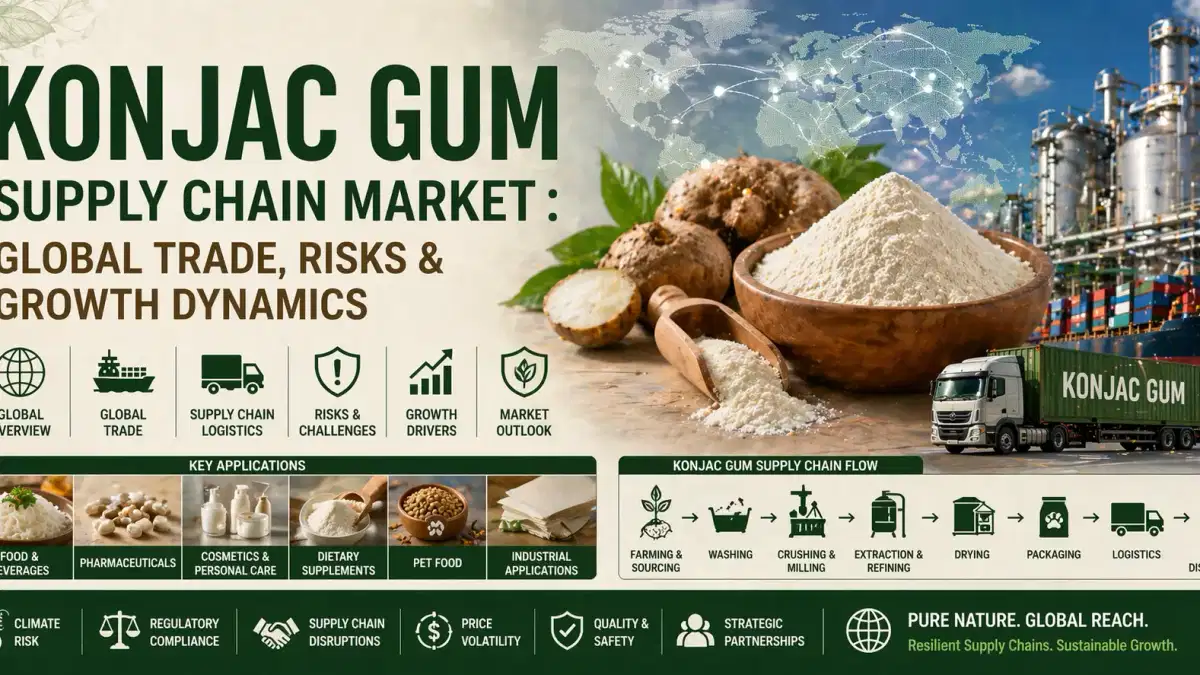
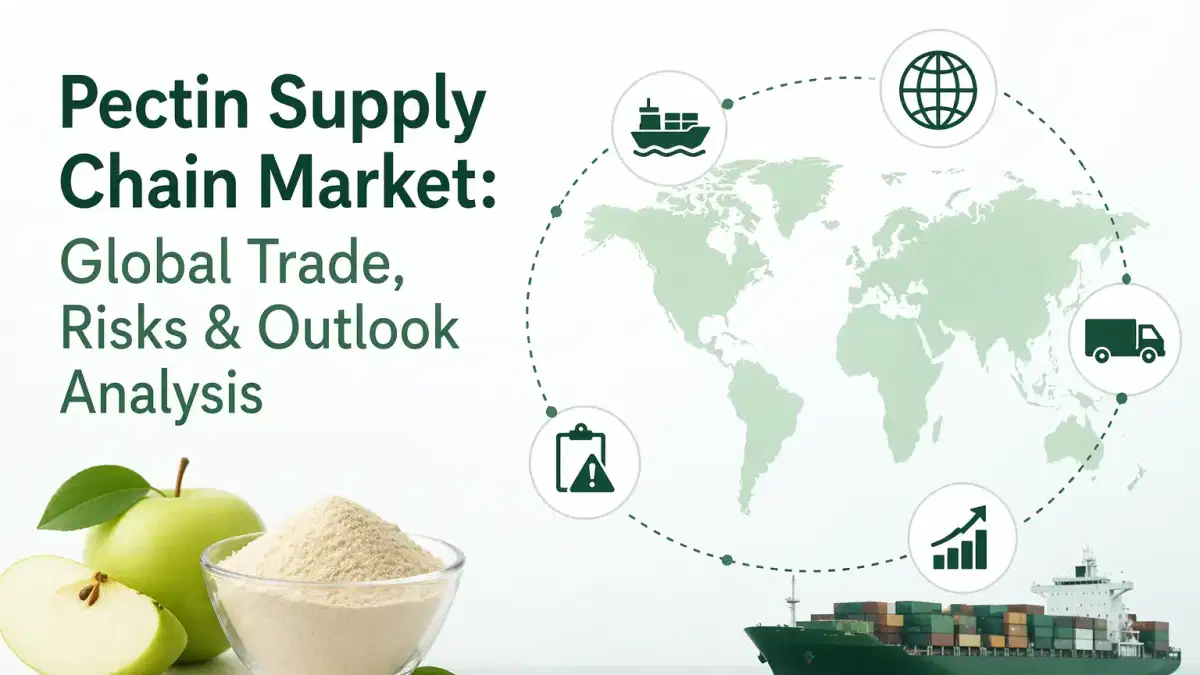
Hydrocolloids such as pectin, xanthan gum, guar gum, carrageenan, and other texturising ingredients are important for controlling viscosity, suspension, gelation, and stability.
Demand can come from beverages, sauces, dairy products, plant-based foods, bakery products, and processed foods.
For buyers, performance consistency is critical because small changes in viscosity or hydration can affect industrial processing.
Plant Proteins
Plant proteins continue to provide opportunities in meat alternatives, dairy alternatives, nutrition products, bakery, snacks, and beverages.
Soy, pea, wheat, rice, potato, and other plant proteins can differ considerably in solubility, flavour, digestibility, functionality, and processing performance.
Suppliers able to provide consistent, application-specific protein systems may have an advantage over commodity suppliers.
Emerging Opportunities in Global Food Ingredient Trade
Clean-Label and Naturally Derived Ingredients
Food manufacturers are increasingly interested in ingredients that support simpler or more recognisable ingredient declarations.
This is creating opportunities for natural colours, plant-derived fibres, botanical extracts, naturally sourced flavours, and alternative preservation systems.
However, “natural” is not a universal regulatory category. Suppliers need to understand the definition and labelling requirements in each target market.
Fibre and Gut-Health Ingredients
Fibre has moved beyond traditional cereals and bakery products into beverages, snacks, dairy alternatives, sauces, and other mainstream categories.
The opportunity is particularly strong for multifunctional fibres that provide both nutritional value and technical benefits such as water binding, texture, bulking, and stability.
Halal-Certified Ingredients
Halal certification can open access to large consumer markets and international food manufacturing supply chains.
For suppliers, the opportunity extends beyond obtaining a certificate. Buyers may require documented segregation, traceability, compliant processing, and reliable certification management throughout the supply chain.
Sustainable and Traceable Ingredients
Sustainability is increasingly becoming a procurement criterion.
Buyers may request information about:
Country of origin
Agricultural practices
Carbon footprint
Water use
Deforestation risks
Labour practices
Certifications
Supplier traceability
Suppliers that can provide reliable documentation and measurable sustainability information may be better positioned for international contracts.
Specialty Ingredients for Reformulation
Food manufacturers are continuously reformulating products to reduce sugar, sodium, saturated fat, or artificial additives while maintaining taste and texture.
This creates opportunities for ingredients that solve specific formulation challenges rather than simply adding nutritional value.
Examples include:
Sugar-reduction systems
Fat replacers
Natural sweeteners
Flavour modulators
Texturisers
Functional fibres
Protein systems
Natural preservation solutions
Challenges Affecting Global Food Ingredient Trade
Freight and Energy Costs
Food ingredients can be sensitive to transportation costs, particularly products with relatively low value-to-weight ratios.
Higher energy, fuel, warehousing, and logistics costs can significantly affect landed cost.
Geopolitical Risks
International food ingredient supply chains can be affected by geopolitical conflicts, sanctions, trade restrictions, tariffs, shipping disruptions, and changes in import policies.
Recent global disruptions have highlighted the importance of maintaining alternative sourcing routes and avoiding excessive dependence on a single country or supplier.
Climate and Agricultural Risks
Weather conditions can affect crops used to produce sugars, oils, starches, proteins, spices, botanical extracts, and other ingredients.
Droughts, floods, heatwaves, and changing rainfall patterns can reduce supply or increase raw material prices.
Regulatory Differences
An ingredient permitted in one country may have different requirements in another.
Importers and suppliers therefore need to review:
Permitted uses
Maximum levels
Food additive classifications
Labelling requirements
Allergen regulations
Novel food requirements
Certification requirements
Documentation requirements
Regulatory compliance can become a competitive advantage when suppliers provide strong technical and documentation support.
How Food Ingredient Buyers Can Identify New Suppliers
International buyers should evaluate suppliers using a combination of commercial, technical, and compliance criteria.
Step 1: Identify the Ingredient and HS Code
Correct product classification is important when researching international trade.
Buyers should confirm the appropriate HS code rather than relying on generic descriptions such as “food ingredients.” Different ingredient categories can fall under completely different customs classifications.
Step 2: Analyse Import Markets
Review shipment volumes, supplier concentration, import growth, prices, and major origin countries.
Trade databases can help identify countries where demand is increasing and markets where competition may be less concentrated.
Step 3: Compare Multiple Suppliers
Supplier comparison should include:
Price
Minimum order quantity
Lead time
Production capacity
Certifications
Product specifications
Shelf life
Packaging
Payment terms
Technical support
Export experience
Step 4: Verify Documentation
Before placing significant orders, buyers should request appropriate documentation such as certificates of analysis, specifications, allergen declarations, food safety certifications, origin documents, and regulatory statements.
Step 5: Evaluate Total Landed Cost
The lowest FOB price does not necessarily represent the lowest purchasing cost.
Buyers should consider:
Product price + freight + insurance + duties + customs costs + testing + warehousing + financing + potential quality losses.
This provides a more realistic basis for supplier comparison.
Emerging Markets to Watch
Beyond the established markets of North America, Europe, and East Asia, several emerging regions offer opportunities for ingredient suppliers.
Southeast Asia is particularly attractive because of expanding food manufacturing, growing consumer markets, and increasing international investment. The development of SIAL Vietnam as a new international trade platform reflects the region's growing importance.
India is another market to monitor because of its expanding food-processing sector, large agricultural base, and increasing participation in international ingredient and processed-food trade.
Middle Eastern markets offer opportunities for suppliers able to provide halal-certified, traceable, and application-specific ingredients.
Africa presents longer-term opportunities as food processing, urbanisation, and packaged-food consumption develop across several markets.
What Global Food Ingredient Suppliers Need to Compete
Successful exporters increasingly need to provide more than a competitive quotation.
International buyers expect suppliers to demonstrate:
Consistent product quality
Reliable production capacity
Regulatory knowledge
Traceability
Food safety systems
Transparent documentation
Competitive logistics
Flexible packaging options
Technical support
Responsive communication
For specialty ingredients, formulation support can be particularly valuable. A supplier that can help a customer solve a processing or sensory problem may create a stronger commercial relationship than one competing solely on price.
Outlook for Global Food Ingredients Trade
Global food ingredient trade in 2026 is being shaped by a combination of established commodity flows and growing demand for specialised, functional, sustainable, and application-specific ingredients.
Asia-Pacific remains a major centre of both demand and supply, while North America and Europe continue to offer opportunities for high-value functional and specialty ingredients. India, Southeast Asia, the Middle East, and selected Latin American and African markets offer additional growth opportunities as food-processing capacity expands.
For exporters, the strongest opportunities are likely to come from combining competitive supply with reliable quality, regulatory support, traceability, and technical expertise. For buyers, diversification, supplier verification, trade-data analysis, and total-landed-cost evaluation will remain important tools for building resilient international sourcing strategies.
Sources
Acesulfame Potassium (E950) CAS: 55589-62-3