Lecithin: Uses in Food Emulsification and Processing
Lecithin is an important functional ingredient in modern food manufacturing, helping manufacturers improve the consistency, texture, and processing performance of a wide range of products. From chocolate and baked goods to sauces, margarine, and powdered beverages, lecithin supports the mixing and interaction of ingredients that might otherwise separate or behave unpredictably during production.
Commercial lecithin is a mixture of phospholipids and other associated substances, commonly obtained from soybean or sunflower oil processing. Its principal role in many food applications is to act as an emulsifier, helping ingredients such as oil and water form and maintain a more uniform mixture. It can also serve as a dispersing, wetting, and release agent in suitable applications. The US Food and Drug Administration lists these among lecithin's recognised technical functions in food.
For food manufacturers, ingredient distributors, and procurement professionals, understanding lecithin's functional properties is essential for selecting the right grade, improving production efficiency, and maintaining consistent product quality.
How Lecithin Works in Food Emulsification
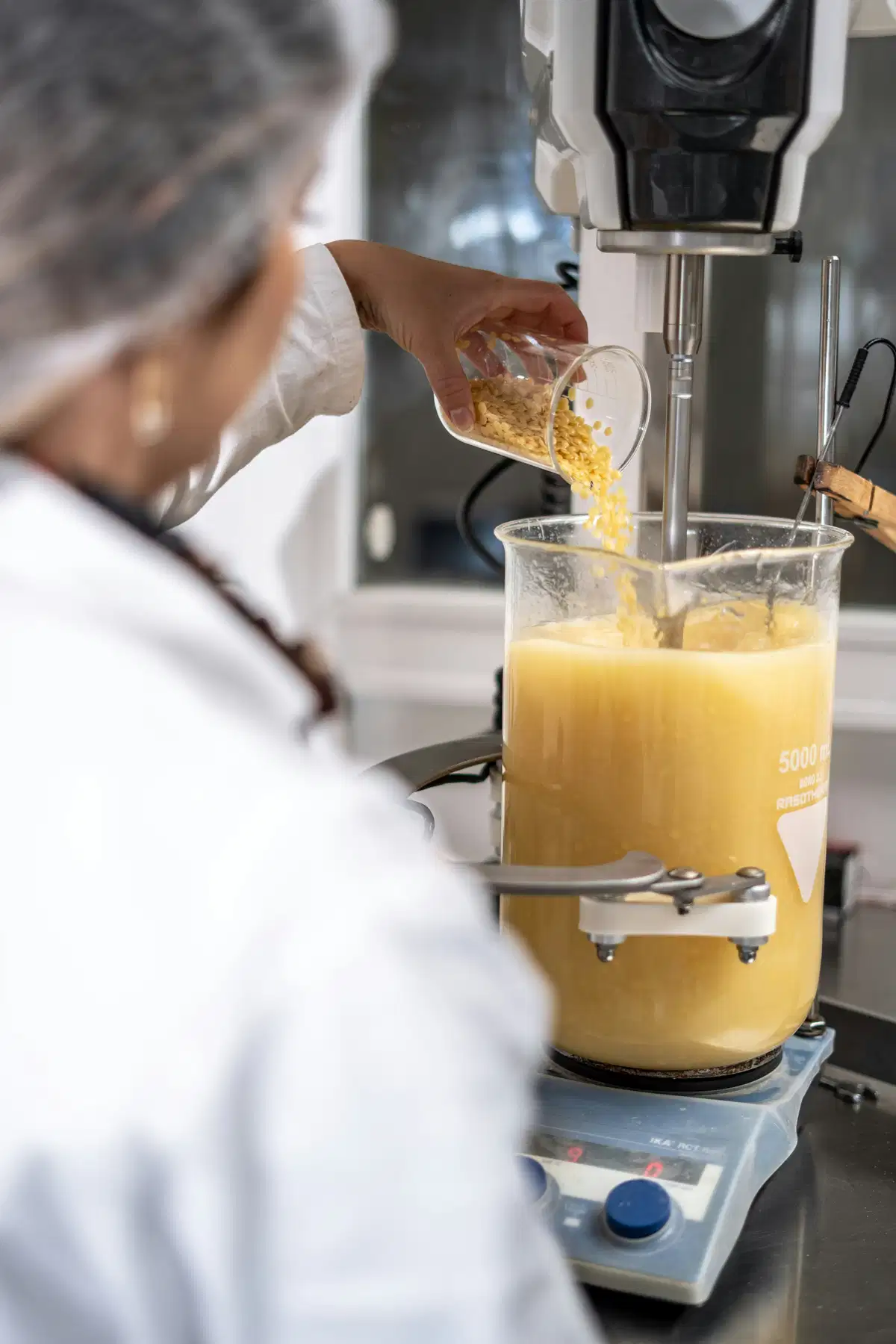
An emulsion is a mixture of two liquids, such as oil and water, that do not naturally mix easily. Lecithin contains phospholipids with both water-interacting and oil-interacting regions, allowing them to accumulate at the interface between these phases.
This interfacial activity helps facilitate emulsification and can improve the stability of suitable food formulations. However, performance depends on the lecithin's composition, dosage, processing conditions, and the other ingredients in the product.
Lecithin can also help wet powders, improve ingredient dispersion, influence viscosity, and reduce sticking during certain manufacturing operations. These properties make it useful beyond traditional oil-and-water emulsions.
Major Applications of Lecithin in Food Manufacturing

1. Chocolate and Confectionery
Lecithin is widely used in chocolate manufacturing to improve flow properties and help control viscosity. This supports efficient mixing, moulding, pumping, and coating during production.
It can also help manufacturers manage the processing characteristics of chocolate while maintaining the desired texture and finish.
2. Bakery Products
In bread, cakes, biscuits, and other baked goods, lecithin can support dough handling, ingredient distribution, and interactions between fats and water. Depending on the formulation, it may contribute to improved dough performance and finished-product consistency.
Bakery manufacturers select the grade and dosage according to the recipe, production equipment, and desired product characteristics.
3. Sauces, Dressings, and Spreads
Lecithin can help emulsify oil-containing formulations and improve the distribution of ingredients in suitable sauces, dressings, and spreads.
Its effectiveness depends on the complete formulation, including oil content, water phase, acidity, and other stabilising ingredients.
4. Margarine and Fat-Based Products
Lecithin helps manufacturers manage the behaviour of fat-and-water systems. In selected margarine and shortening applications, it can contribute to emulsion properties, texture, and processing performance.
It may also help reduce splattering during frying in suitable fat formulations.

5. Instant Powders and Beverage Mixes
Lecithin is used to improve the wetting and dispersion of certain powders in water or milk. This is valuable for products such as cocoa mixes, powdered beverages, and selected nutritional formulations.
Suitable lecithin grades can help powders disperse more readily and reduce floating or clumping during preparation.
These applications are consistent with the USDA's technical review of lecithin, which describes its use in chocolate, margarine, bakery products, instantising powders, and release applications.
Types of Lecithin Used in Food Processing
Different lecithin sources and processing methods produce ingredients with different functional properties.
Lecithin type | Key characteristics | Typical applications |
|---|---|---|
Soy lecithin | Widely used, available in liquid and powdered forms | Chocolate, bakery products, sauces, and food powders |
Sunflower lecithin | Plant-based alternative to soy lecithin | Chocolate, confectionery, bakery, and specialised formulations |
Liquid lecithin | Convenient for liquid and fat-based manufacturing systems | Chocolate, margarine, and industrial food processing |
Powdered or de-oiled lecithin | Easier handling in certain dry ingredient systems | Instant powders, dry mixes, and bakery formulations |
Modified lecithin | Processed to alter functional properties for particular formulations | Selected emulsification and specialised food applications |
The most suitable grade depends on the required functionality, phospholipid profile, processing method, allergen-management policy, and final product specifications. Sunflower lecithin should not automatically be assumed to perform identically to soybean lecithin in every formulation.
Who Buys Lecithin? Key B2B Buyer Segments
Lecithin buyers generally include manufacturers that use emulsifiers directly in production and ingredient distributors that supply food factories.
Buyer category | Main applications | Purchasing priorities |
|---|---|---|
Chocolate and confectionery manufacturers | Chocolate flow, coating, and moulding | Viscosity performance, colour, and consistency |
Commercial bakeries | Bread, cakes, biscuits, and bakery mixes | Dough handling and finished-product quality |
Sauce and dressing manufacturers | Oil-based emulsions and spreads | Emulsion performance and formulation compatibility |
Margarine and fat processors | Fat-based emulsions and shortenings | Processing stability and functionality |
Instant beverage manufacturers | Powder wetting and dispersion | Dispersibility and powder handling |
Food ingredient importers and distributors | Resale to multiple manufacturers | Reliable supply, documentation, and competitive pricing |
How suppliers can identify potential buyers
For lecithin suppliers, the most effective approach is to focus on manufacturers whose products require emulsification, wetting, or flow modification.
Research chocolate factories, bakery manufacturers, sauce producers, and instant beverage businesses.
Identify procurement managers, research and development teams, and quality assurance departments.
Use trade directories and shipment databases to investigate historical importing activity.
Contact prospective customers to confirm their preferred lecithin source, grade, annual demand, and supplier approval requirements.
Historical import data can help identify leads, but it does not confirm that a business currently needs lecithin or is accepting new suppliers.
What Food Manufacturers Look for When Buying Lecithin
Commercial buyers evaluate lecithin based on its technical suitability and the reliability of the supplier.
Functional performance: Buyers need an ingredient that delivers the required emulsification, wetting, dispersion, or viscosity characteristics.
Product specifications: Important parameters may include phospholipid content, moisture, acidity, viscosity, colour, and other grade-specific requirements.
Quality documentation: A batch-specific Certificate of Analysis (COA), technical data sheet, safety data sheet, and relevant food-grade compliance documentation are commonly requested.
Source and allergen information: Buyers may specify soy or sunflower origin and require documentation for allergen management, traceability, and labelling.
Packaging and supply reliability: Packaging must suit the product's physical form and storage conditions. Consistent availability, minimum order quantities, lead times, and delivered pricing also influence procurement decisions.
For suppliers, providing a complete technical dossier and application guidance can help build trust with manufacturers and support long-term purchasing relationships.
Quality, Labelling, and Regulatory Considerations
Lecithin is recognised in the Codex food-additive system under INS 322, with separate entries for lecithin and partially hydrolysed lecithin. The Codex database lists its permitted use according to specific food standards and categories.
In the United States, lecithin is addressed under FDA food-substance regulations, including 21 CFR 184.1400. Manufacturers must still verify that the ingredient, intended use, and product labelling comply with all applicable requirements.
Food businesses should verify the ingredient's origin, purity, technical specification, and relevant allergen declarations before approving it for production. They should also conduct formulation trials to confirm performance under actual manufacturing conditions.
Frequently Asked Questions
What is lecithin mainly used for in food manufacturing?
Its primary function is emulsification. It also supports wetting, dispersion, flow modification, and release in suitable food-processing applications.
Which industries purchase lecithin?
Major buyer groups include chocolate manufacturers, commercial bakeries, sauce and dressing producers, margarine processors, instant beverage manufacturers, and food ingredient distributors.
Is sunflower lecithin better than soy lecithin?
Neither is universally better. The choice depends on formulation performance, source preferences, allergen-management requirements, cost, and product specifications.
Does lecithin improve chocolate processing?
Yes. It can reduce chocolate viscosity under suitable formulation conditions, improving flow and making certain pumping, moulding, and coating operations easier.
What documents should a lecithin supplier provide?
Typical documents include a product specification, batch-specific COA, safety data sheet, food-grade compliance information, source declaration, and relevant allergen documentation.
Sources
https://www.sciencedirect.com/science/article/abs/pii/S0001868626002940?
https://pubchem.ncbi.nlm.nih.gov/compound/lecithins?
https://hfpappexternal.fda.gov/scripts/fdcc/index.cfm?id=LECITHIN&set=FoodSubstances&
Lecithin CAS: 8002-43-5