Niacin and Niacinamide: Applications in Enriched Food Products
What Are Niacin and Niacinamide?
Niacinamide, also known as nicotinamide, is food-grade vitamin B3 form used in fortification, enrichment and premix-ready nutrition systems where permitted. Page prepared as industrial sourcing and specification-review guide for food manufacturers, premix producers, flour millers, beverage companies, dairy processors and nutrition brands.
Common names nicotinamide, vitamin B3, pyridine-3-carboxamide, nicotinic acid amide, food-grade niacinamide – CAS 98-92-0 – molecular formula C6H6N2O – typical form fine powder, crystalline powder, granule, beadlet, premix-ready grade or solution-compatible grade.
Niacinamide is used where permitted as vitamin B3 source for food fortification, enrichment and nutrition-positioned products. Common review areas include flour enrichment, breakfast cereals, beverages, dairy products, nutrition powders, infant and medical foods where permitted and vitamin-mineral premixes.
What is difference between niacinamide and nicotinic acid? Food and supplement developers often compare – both vitamin B3 forms, but may differ in formulation behavior, customer preference, nutritional labeling, physiological response and permitted use. Niacinamide often selected in fortification and premix systems where buyer wants non-acid amide form of vitamin B3 with good compatibility in dry blends and nutrition products.
Niacin supplements available as nicotinamide or nicotinic acid. Nicotinamide is form typically used in nutritional supplements and food fortification.
Why Enrich Foods with Niacin?
Niacinamide is used as defined source of vitamin B3 activity in fortified foods and premixes. In nutrition science, niacin is water-soluble B vitamin family that includes nicotinic acid and nicotinamide. In industrial food manufacturing, purchased for accurate nutrient delivery, enrichment compliance, nutrition-label support, premix uniformity and stable performance in wide range of dry and liquid systems.
Prevents pellagra: Niacin deficiency causes pellagra – dermatitis, diarrhea, dementia – enrichment of refined grains prevents deficiency in populations dependent on refined flour
Energy metabolism: Essential for NAD/NADP coenzymes – supports energy, skin, nervous system health
Regulatory compliance: Federal regulations mandate addition of particular vitamins and minerals to refined grain products like bread and cereals – enrichment of refined grain products with niacin, iron, thiamin, and folic – mandatory – magnesium and zinc not mandatory under federal regulations for enriched grain products
Consumer demand: Niacin is incorporated into multivitamin formulations and other nutritional products designed to help meet daily vitamin requirements – food manufacturers use niacin to enrich selected products including cereals, flour, and other fortified foods – fortification initiatives and consumer demand for nutritionally enhanced products can support continued ingredient consumption
Mandatory and Voluntary Applications
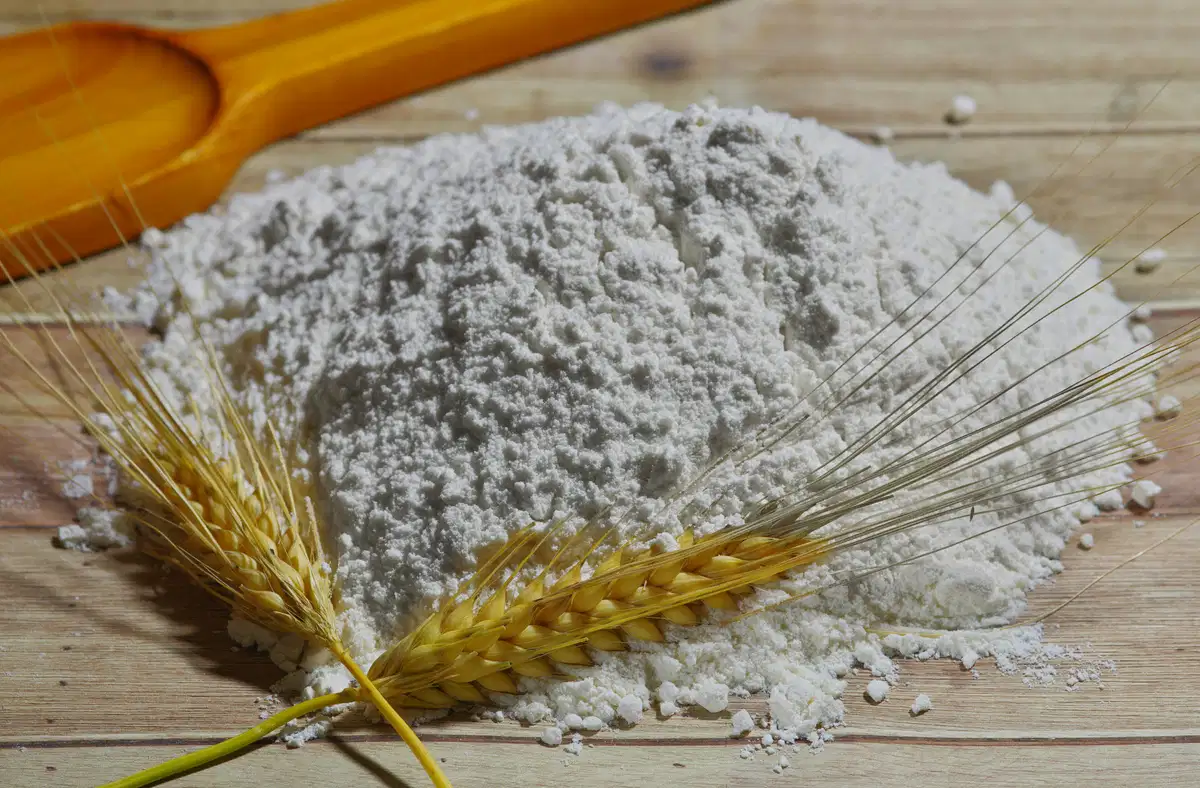
Flour Enrichment and Cereal Grain Fortification
Flour enrichment and cereal grain fortification – Support vitamin B3 enrichment in standardized or market-specific fortification systems – Legal enrichment level, accepted vitamin form, premix uniformity, mill addition point, flour flow and finished-flour assay.
Wheat flour: Approximately 76 countries globally require mandatory niacin supplementation in wheat flour and rice products as primary staple foods, with fortification mandates requiring producers to add 2.5 to 4.0 mg niacin per 100 grams flour depending on regional guidelines – countries including India, Philippines, Mexico, and many African nations enforce through laboratory testing
US FDA: FDA mandates niacin fortification in enriched grain products at minimum levels of 2.4 milligrams per pound – Required levels 15-34 mg niacin per pound flour – Must provide 8-15% DV per serving in final products – 2.4 mg per pound equals ∼5.29 mg per kg – typically enriched flour contains 3.0-4.0 mg per 100g
Process: Niacinamide added via vitamin-mineral premix with thiamin, riboflavin, folic acid, iron – added at mill via microfeeder – premix-ready grade – particle size matching reduces segregation – Niacinamide is often blended with thiamin, riboflavin, folic acid, vitamin B6, vitamin B12, iron, zinc, calcium, vitamin A, vitamin D
Stability: Niacinamide generally considered relatively stable vitamin B3 form compared with some more sensitive micronutrients – losses minimal during baking, extrusion – no significant heat degradation
Breakfast Cereals, Extruded Cereals and Cereal Bars
Vitamin B3 fortification and nutrition-label support – Extrusion heat, coating step, overage design, serving size, vitamin retention, flavor impact and label claim thresholds.
Breakfast cereals: Optional fortification allowed in cereals, beverages, meal replacements – Common fortified foods – cereals – Bread and bakery products – Many bread and bakery products enriched with niacinamide to boost nutritional content – cereals often fortified at 25-100% DV per serving (4-16 mg) – added via spray or in coating syrup after extrusion to preserve stability
Cereal bars and extruded snacks: Added in dry mix – stable during extrusion – fortified cereals contribute significantly to daily niacin intake
Beverages and Drink Powders
Vitamin fortification in liquid or reconstituted systems – Solubility, pH, clarity, flavor, color, heat treatment, light exposure, precipitation risk and shelf-life retention.
Beverage powders, fortified drinks and nutrition beverages: Potential use area – Niacinamide highly water soluble (∼1000 g/L) – ideal for clear beverages – unlike nicotinic acid does not cause flushing at food levels – dissolves quickly – check final beverage clarity and precipitation risk
Fortified juices and energy drinks: Optional fortification allowed in most products – E-number not assigned (niacin isn't considered additive but nutrient) – Maximum levels set per food category to prevent excessive intake
Dairy Products and Dairy-Based Nutritional Systems
Nutrition positioning and B-vitamin enrichment – pH, protein interaction, heat process, homogenization, sensory impact, label declaration and vitamin stability.
Dairy products: Milk and other dairy products can be fortified with niacinamide to support overall health – Dairy products and dairy-based nutritional systems – fortified milk, yogurt drinks, flavored milk – niacinamide stable during pasteurization and UHT – added before homogenization – 1-2 mg per 100 ml typical
Dairy alternatives: Soy, oat milks fortified to match dairy B-vitamin profile – plant-based systems
Other Enriched Foods
Processed foods: Some processed foods such as pasta, rice, and meal replacement products, are fortified with niacinamide to enhance nutritional profile – Pasta, rice – enriched rice products – mandatory in many countries
Infant, follow-on and medical foods where permitted: Controlled nutrient delivery in specialized foods – Strict regulatory limits, assay control, supplier qualification, contaminant limits, homogeneity, stability and finished-product release testing – niacin required in infant formula 0.8-3 mg per 100 kcal
Sports nutrition, meal replacements and dietary supplement blends: Vitamin B3 contribution and nutrition panel design – Water activity, vitamin retention, flavor masking, premix distribution, serving-size contribution and overage control – meal replacements fortified at 30-50% DV per serving
Vitamin-mineral premixes: Accurate microingredient dosing and uniform nutrient distribution – Particle size, bulk density, segregation risk, carrier compatibility, blend uniformity and analytical verification – premix producers use niacinamide for reliable premix compatibility, label-friendly vitamin B3 delivery
Niacinamide vs Nicotinic Acid – Choosing Form
Vitamin B3 form main industrial consideration – Niacinamide / Nicotinamide – Vitamin B3 source used in many food, beverage, premix and nutrition systems – Often reviewed for nutritional fortification, premix compatibility and label-friendly vitamin B3 delivery – Nicotinic acid – Alternative vitamin B3 form used in enrichment and fortification systems – May be specified in some standards or customer formulations; do not substitute without regulatory review.
Niacinamide preferred for most foods: No flushing, neutral pH, better taste, excellent compatibility in dry blends – stable in wide range dry and liquid systems
Nicotinic acid: Used where standard of identity specifically requires nicotinic acid – some older enrichment standards – can cause flushing at high doses – acidic form – may affect flavor in beverages – substitution between forms should be approved by R&D, regulatory, QA and brand owner before purchasing
Encapsulated or beadlet grade: Improved handling, reduced dusting or enhanced stability – Carrier, coating, allergen status and label declaration must be reviewed – Vitamin B-complex premix – Preblended nutrient system containing niacinamide with other B vitamins – Useful for uniform dosing and lower weighing risk
Fortification Design and Processing Considerations
Industrial use of niacinamide requires controlled fortification plan. Formulators should define target vitamin B3 contribution per serving, legal minimum and maximum levels, expected processing losses, shelf-life overage, finished-product assay method and label claim objective. Nutrient contribution should be calculated on actual assay of ingredient, not only nominal purchase weight.
Assay-Based Dosing and Overage
Confirm assay on dry or as-is basis – Calculate dose using actual active content – Include process and shelf-life overage where justified – Verify finished-product niacin content by analysis where required
Overage may be used to ensure declared or required vitamin level maintained through shelf life – Overage must be scientifically justified and remain within regulatory and customer limits – Base overage on stability data, not guesswork – Niacinamide relatively heat stable – typical overage 5-10% only – much lower than sensitive vitamins like vitamin C or B12
Premix Uniformity
Because vitamin addition levels often small, industrial users commonly add niacinamide through premix. Particle size and bulk density should match carriers and other nutrients to reduce segregation.
Review blend homogeneity data – Match particle size to carrier system – Control mixing time and order of addition – Validate dosing accuracy at plant scale
Heat, Moisture, Solubility
Heat processing: Fortified cereals, bakery products, dairy systems and beverages may expose niacinamide to heat – Test before and after extrusion, baking, pasteurization or drying – Compare addition before versus after heat where possible – Niacinamide stable up to 200°C – minimal loss
Moisture and caking: Powder handling can be affected by humidity – Keep containers tightly closed – Control humidity in weighing and premix rooms – Use moisture-protective packaging
Solubility and sensory: Liquid products require attention to solubility, pH, clarity and taste – Prepare stock solutions according to supplier instructions – High local concentration can create processing or sensory issues – Evaluate bitterness – niacinamide slight bitter at high levels >50 mg per serving – flavor masking may be needed – Confirm compatibility with flavors, acids and minerals
Regulatory and Labeling
US: Enriched grain products – mandatory – European Food Safety Authority permits niacin fortification in milk, milk products, and breakfast cereals within specified maximum levels – E / INS number usually treated as nutrient or vitamin ingredient; confirm by destination market
EU: Regulation 1925/2006 lists niacin and niacinamide as permitted – no E-number – maximum levels set per food category – source claim requires 15% NRV per 100g (2.4 mg) – high source 30% NRV
Label claim control: Vitamin B3 or niacin claims must be reviewed against finished product, not only ingredient – Serving size, nutrient reference values, tolerances and destination-market wording must be confirmed – Check local thresholds for source or high-source claims – Confirm nutrient declaration units and rounding rules
Specification Parameters
Assay primary value for dose calculation – Identity confirms material is niacinamide not nicotinic acid – Purity and related substances – Moisture or loss on drying – Heavy metals – Particle size controls blend uniformity – Solubility critical for beverages – Microbiological limits may be required for infant, medical, beverage applications.
Niacinamide is typically handled as fine powder – Store closed original packaging protected from moisture, dust contamination, strong odors, direct sunlight and excessive heat – Use first-expired first-out rotation.
Working Source Links:
Niacinamide Nicotinamide Vitamin B3 Fortification Ingredient – food-grade vitamin B3 form used in fortification enrichment – application fit flour enrichment breakfast cereals beverages dairy – https://foodgradeadditives.com
Niacinamide in Foods: Applications & Benefits – Required levels 15-34 mg niacin per pound flour – Must provide 8-15% DV – Optional fortification allowed in cereals beverages meal replacements – https://elchemy.com
Niacin supplements are available as nicotinamide or nicotinic acid. Nicotinamide is form typically used in nutritional supplements and food fortification – https://lpi.oregonstate.edu