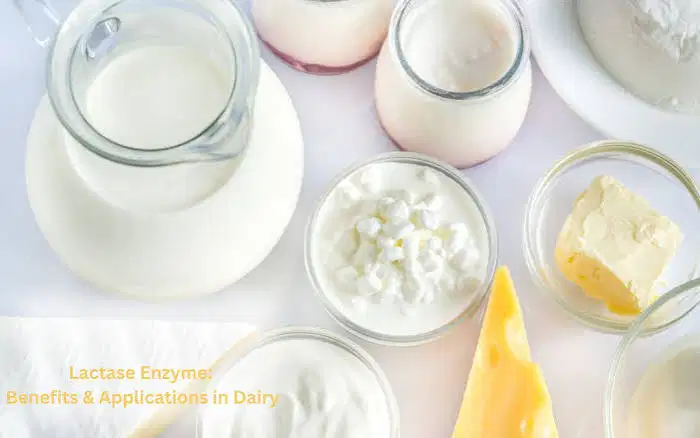
Lactase enzyme plays an important role in modern dairy manufacturing by enabling the production of lactose-free and low-lactose dairy products. As consumer demand for digestive-friendly foods grows, dairy processors are increasingly using lactase to develop milk, yogurt, ice cream, and other dairy products suitable for people who have difficulty digesting lactose.
For industrial dairy manufacturers, lactase offers more than lactose reduction. It can also influence sweetness, product formulation, fermentation performance, and texture. Understanding its functionality helps manufacturers improve product consistency, optimise processing operations, and respond to evolving consumer preferences.
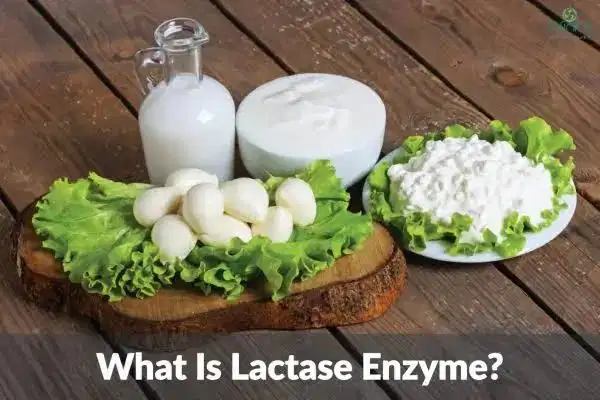
What Is Lactase Enzyme?
Lactase, also known as beta-galactosidase, is an enzyme that breaks down lactose, the naturally occurring sugar in milk, into two simpler sugars: glucose and galactose.
This process, known as lactose hydrolysis, makes the sugars easier to digest for people who have lactose malabsorption. Commercial lactase preparations are commonly produced through microbial fermentation using selected yeasts or fungi.
The enzyme is available in different preparations designed for specific processing conditions. Manufacturers select an appropriate grade according to temperature, pH, processing time, product composition, and required lactose reduction.
Key Applications of Lactase in Dairy Production
1. Lactose-Free Milk Manufacturing
Lactose-free milk is one of the most important applications of lactase in the dairy industry. The enzyme breaks down lactose in milk, allowing manufacturers to produce milk with substantially reduced residual lactose.
Depending on the production process, lactase can be added before or after heat treatment. In a batch process, milk may be treated with the enzyme under controlled conditions before packaging. Alternatively, certain industrial systems use aseptic enzyme dosing.
Key manufacturing considerations include:
Achieving the target residual lactose concentration
Controlling enzyme dosage and reaction time
Maintaining microbiological safety
Preventing unwanted flavour changes
Verifying the final product against applicable lactose-free labelling requirements
Because glucose and galactose taste sweeter than lactose, lactose-free milk often tastes sweeter than conventional milk even when no additional sugar has been added.
2. Lactose-Free Yogurt Production
Lactase is also used to manufacture lactose-free and reduced-lactose yogurt. By hydrolysing lactose, the enzyme helps dairy producers develop products intended for consumers who need to limit lactose intake.
Its use must be coordinated with the yogurt fermentation process because lactose availability, sugar composition, starter culture activity, and acidity can affect the final product.
Potential benefits include improved suitability for lactose-sensitive consumers and flexibility in product development. Manufacturers should evaluate sweetness, acidity, viscosity, texture, and residual lactose to ensure the finished yogurt meets product specifications.
3. Ice Cream and Frozen Dairy Desserts
Lactase can improve the formulation of lactose-free ice cream and other frozen dairy products.
When lactose is broken down into glucose and galactose, the resulting sugars have different solubility and freezing characteristics. This can help reduce the risk of lactose crystallisation, which may otherwise create a gritty or sandy texture in certain frozen dairy formulations.
However, lactose hydrolysis also changes the freezing point and perceived sweetness of the mixture. Manufacturers may therefore need to adjust the sugar balance, stabiliser system, and processing conditions.
For commercial ice cream producers, these formulation changes are important for maintaining smooth texture, scoopability, and consistent sensory quality.
4. Lactose-Free Cheese and Whey Processing
Lactase has applications in selected cheese and whey processing operations, although its role differs from that in milk production.
In cheese manufacturing, much of the lactose is removed with the whey or consumed during fermentation, depending on the cheese variety and production method. Enzyme treatment may be useful in particular formulations, but it is not necessary for every cheese product.
In whey processing, lactase can hydrolyse residual lactose to produce ingredients with modified sugar composition. These ingredients may be used in specialised dairy formulations and other food applications, subject to the intended product specifications.
5. Dairy-Based Beverages and Nutritional Products
Lactase is used in selected dairy-based beverages, milk concentrates, and nutritional formulations to reduce lactose content.
This application can be valuable for manufacturers producing ready-to-drink beverages, dairy-based nutritional products, and specialised formulations. Enzyme selection depends on the required lactose reduction, heat-treatment conditions, shelf-life targets, and the characteristics of the final product.
Manufacturers must also account for the increased concentration of glucose and galactose when evaluating sweetness, browning potential, and storage stability.
How Lactase Improves Dairy Product Quality
Lactase supports lactose-free product development through several functional effects.
Functional effect | Potential manufacturing benefit |
|---|---|
Lactose hydrolysis | Enables lactose-reduced product formulations |
Increased glucose and galactose | Produces a sweeter taste without necessarily adding sugar |
Reduced lactose crystallisation | Can improve texture in selected concentrated and frozen dairy products |
Modified sugar composition | Provides flexibility in dairy ingredient formulation |
Controlled enzyme treatment | Supports consistent lactose reduction when properly validated |
These effects vary by product category. Increased sweetness may be beneficial in some formulations but undesirable in others, making sensory testing and formulation optimisation essential.
Factors Affecting Lactase Performance
Successful industrial use depends on several process variables.
Enzyme source: Lactase preparations derived from different microorganisms may have different temperature and pH optima.
Temperature: Reaction speed depends on temperature, but excessive heat can inactivate the enzyme. High-temperature dairy processing must therefore be coordinated with the enzyme treatment stage.
pH: The acidity of the product affects enzyme activity. A preparation suitable for milk may not be optimal for an acidic dairy formulation.
Dosage and reaction time: Higher enzyme dosage or longer treatment may increase lactose hydrolysis, but the appropriate conditions depend on the required endpoint and production economics.
Milk composition: Fat, protein, total solids, and other ingredients can influence processing behaviour and final product characteristics.
Storage and shelf life: Residual enzyme activity, temperature control, and storage conditions can affect product quality over time.
Dairy processors should establish validated operating parameters and use appropriate analytical methods to verify residual lactose rather than relying solely on theoretical calculations.
Quality Control and Regulatory Considerations
Quality assurance is essential when manufacturing lactose-free dairy products. Specifications and permitted claims vary across markets, so manufacturers must confirm the requirements applicable to their destination countries.
Important quality-control measures include:
Measuring residual lactose using a suitable validated analytical method
Confirming enzyme activity and batch consistency
Reviewing the Certificate of Analysis (COA)
Assessing microbiological quality and relevant contaminant specifications
Reviewing technical data sheets and applicable Safety Data Sheets (SDS)
Verifying food-grade suitability and regulatory authorisation
Confirming packaging, storage, traceability, and labelling requirements
Lactose-free does not necessarily mean dairy-free or milk-protein-free. Products treated with lactase can still contain milk proteins and may remain unsuitable for people with milk allergies. Clear labelling is therefore important for consumer safety.
Sourcing Lactase Enzyme for Industrial Dairy Manufacturing
Selecting a suitable lactase supplier requires consideration of both technical performance and supply reliability.
Procurement teams should evaluate the following factors:
Application suitability: Confirm whether the enzyme is intended for milk, yogurt, ice cream, whey, or another dairy application.
Enzyme activity: Compare activity specifications and recommended dosage ranges rather than relying only on cost per kilogram.
Processing compatibility: Check performance under the planned temperature, pH, and treatment time.
Documentation: Request a COA, technical data sheet, and relevant regulatory documentation.
Technical support: Assess whether the supplier can assist with process optimisation and troubleshooting.
Supply continuity: Review production capacity, packaging options, delivery lead times, and storage requirements.
Pilot-scale trials can help manufacturers compare enzyme preparations, determine the most economical operating conditions, and confirm that the finished product meets its quality targets.
Market Outlook: Growing Importance of Lactose-Free Dairy
Lactose-free dairy is an established product category within the broader functional and specialised food market. Consumer interest in digestive comfort, product variety, and convenient dairy alternatives continues to create opportunities for manufacturers.
Lactase enzyme suppliers can support this market by providing application-specific preparations, consistent enzyme activity, and technical assistance. Dairy manufacturers, meanwhile, can differentiate their products through reliable lactose reduction, desirable taste and texture, and transparent product labelling.
Market success will depend on more than enzyme availability. Manufacturers must also consider consumer pricing, formulation costs, processing efficiency, distribution, and compliance with local food regulations.
Key Takeaways
Lactase enzyme is a critical processing aid for lactose-free and reduced-lactose dairy production. By converting lactose into glucose and galactose, it enables the manufacture of milk, yogurt, ice cream, and selected dairy ingredients with modified lactose content.
Its effectiveness depends on enzyme source, dosage, temperature, pH, reaction time, and product formulation. For industrial dairy manufacturers, combining validated processing conditions with appropriate supplier selection and rigorous quality control can support consistent product performance and reliable lactose-free production.
Sources
U.S. Food and Drug Administration — Food Allergies and Lactose Intolerance
Enzyme Research — Beta-Galactosidase and Lactose Hydrolysis Research
Lactose CAS: 63-42-3