Introduction
Industrial Applications and Buyer Landscape Analysis
Sodium caseinate, a water-soluble dairy protein derived from casein, has become an essential functional ingredient in the global food industry. Its versatility in emulsification, stabilization, and texture enhancement makes it a preferred choice for manufacturers of processed and formulated foods. As consumer demand shifts toward convenience foods and protein-enriched products, the industrial relevance of sodium caseinate continues to expand across multiple purchasing sectors.
Expanding Role of Sodium Caseinate in Modern Food Manufacturing
Sodium caseinate has evolved from a niche dairy derivative to a mainstream food ingredient used in large-scale manufacturing. Its ability to improve texture and protein content makes it highly relevant in industrial formulations, particularly where consistency and shelf stability are critical. Food processors increasingly rely on it to enhance product performance without compromising taste or structure.
Functional Benefits Driving Industrial Adoption
The widespread adoption of sodium caseinate is largely driven by its multifunctional properties. It acts as an emulsifier, stabilizer, and foaming agent, making it valuable in complex food systems. Its high protein content also supports nutritional fortification, which is particularly important in health-oriented product development. These combined functionalities reduce the need for multiple additives, streamlining production processes.
Key Applications Across Processed Food Categories
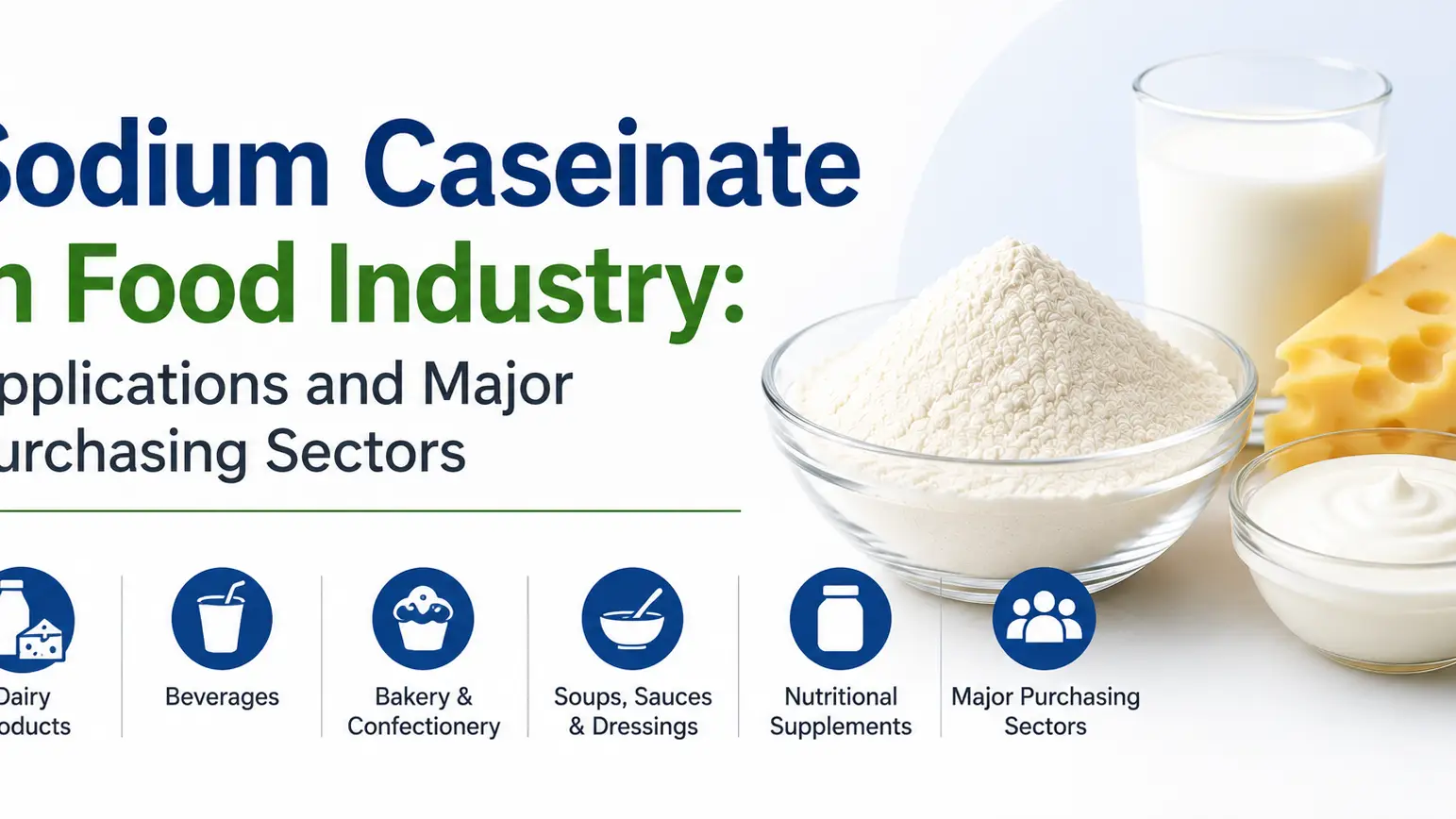
In the food industry, sodium caseinate is widely used in coffee creamers, processed cheese, baked goods, and ready-to-eat meals. It improves mouthfeel in dairy-based beverages and enhances melting properties in cheese analogues. In bakery applications, it contributes to dough strength and moisture retention, ensuring consistent product quality in mass production environments.
Major Purchasing Sectors and Buyer Profiles
The primary buyers of sodium caseinate include processed food manufacturers, dairy product companies, beverage producers, and nutritional supplement brands. Industrial food service providers also represent a significant demand segment, especially in large-scale catering and institutional food supply chains. These buyers prioritize consistent quality, bulk availability, and compliance with international food safety standards.
Global Supply Chain Dynamics and Quality Standards
The sodium caseinate supply chain is highly globalized, with sourcing driven by dairy-producing regions and processed food manufacturing hubs. Buyers often require strict adherence to certifications such as ISO, HACCP, and Halal compliance, especially in export-oriented markets. Price volatility in dairy commodities and logistics costs also influence procurement strategies across industries.
Market Outlook and Emerging Demand Drivers
Growing demand for high-protein diets and functional foods is expected to sustain sodium caseinate consumption globally. Emerging applications in sports nutrition and medical nutrition products are further expanding its industrial footprint. Additionally, clean-label trends are pushing manufacturers to optimize formulations while maintaining functional performance.
Conclusion
As the food industry continues to evolve toward efficiency, nutrition, and product innovation, sodium caseinate remains a critical ingredient supporting industrial food formulation. Its multifunctional properties and broad applicability make it indispensable for manufacturers seeking performance and consistency at scale. In this expanding global supply network, companies like Tradeasia International play an important role in ensuring reliable access to high-quality chemical and food ingredients, supporting industries with consistent supply chain solutions and international sourcing expertise.