What Is Calcium Carbonate?
Calcium carbonate food grade – chemical composition assay CaCO3 98.0% 99.5% min – food additive code E170 – anticaking, acidity regulator, fortification. Food grade calcium carbonate (E170) is used as calcium fortification ingredient, anti-caking agent, and pH stabilizer in food products such as bakery items, beverages, dairy alternatives, and nutritional supplements.
High purity calcium carbonate approved as food additive E170 in EU, GRAS status in USA serves multiple functions including pH regulation, nutritional fortification, and anti-caking agent in powdered food products. Acts as food additive E170 for color and as calcium fortification agent.
Producer of natural food-grade calcium carbonate for fortification, texturizing, anti-caking, pH buffering, and processing aids in dairy, bakery, cereals, snacks, confectionery, and beverages; meets E170, FCC, USP, EP, JP standards, Halal and Kosher certified.
Food & beverage industry – Acidity Regulator E170, Calcium Fortification – Calcium source.
Nutritional fortification – calcium carbonate approved as food additive E170 and widely used to enrich foods and beverages with calcium, including cereals, plant-based milks, juices, and infant formulas. Helps combat calcium deficiency and supports public health initiatives. Preferred for fortification due to high elemental calcium content (40% by weight), low cost, and neutral taste.
In food industry, calcium carbonate used as food additive labelled E170 with INS number 170. Food additive added to most milled bread flours, except wholemeal flour, to give flour bright white color. Also used in sugar production to produce white sugar crystals.
Key Functions in Food Processing
Calcium Fortification – Primary Use
Usage & applications – Calcium fortification in foods (calcium enrichment) – Bakery products (bread, biscuits, cakes) – Breakfast cereals – Dairy products (milk powders, cheese formulations) – Confectionery and sweets (as calcium source / processing aid).
High elemental calcium: 40% by weight – highest among economical calcium salts – calcium carbonate preferred due to high elemental calcium content, low cost, neutral taste – compared to calcium citrate 21%, calcium lactate 13%
Public health role: Used to enrich foods and beverages with calcium including cereals, plant-based milks, juices, infant formulas – helps combat calcium deficiency
Cost-effective: Cheapest calcium source – ideal for mass fortification programs
Acidity Regulator and pH Stabilizer
Food grade calcium carbonate used as acidity regulator, pH stabilizer in food products.
Dough pH control: In bakery, neutralizes acidic dough conditioners – improves yeast activity – optimizes gluten development
Beverages and juices: Buffers acidity in plant-based milks and fortified juices – prevents protein precipitation
Wine and brewing: Traditional deacidification agent – reduces tartaric acid – raises pH – also used in sugar production to produce white sugar crystals – clarifying agent
Anticaking Agent and Flow Aid
Food additive code E170 anticaking, acidity regulator, fortification – anti-caking agent and pH stabilizer.
Powdered foods: Prevents clumping in milk powders, spice blends, seasoning, cake mixes, beverage powders – keeps powders free-flowing
Table salt and spices: Coating particles to absorb moisture
Mechanism: Insoluble fine particles physically separate hygroscopic particles – improves flowability
Dough Conditioner and Bakery Processing
Bakery products bread biscuits cakes – breakfast cereals – dairy products milk powders cheese formulations – confectionery sweets as calcium source / processing aid.
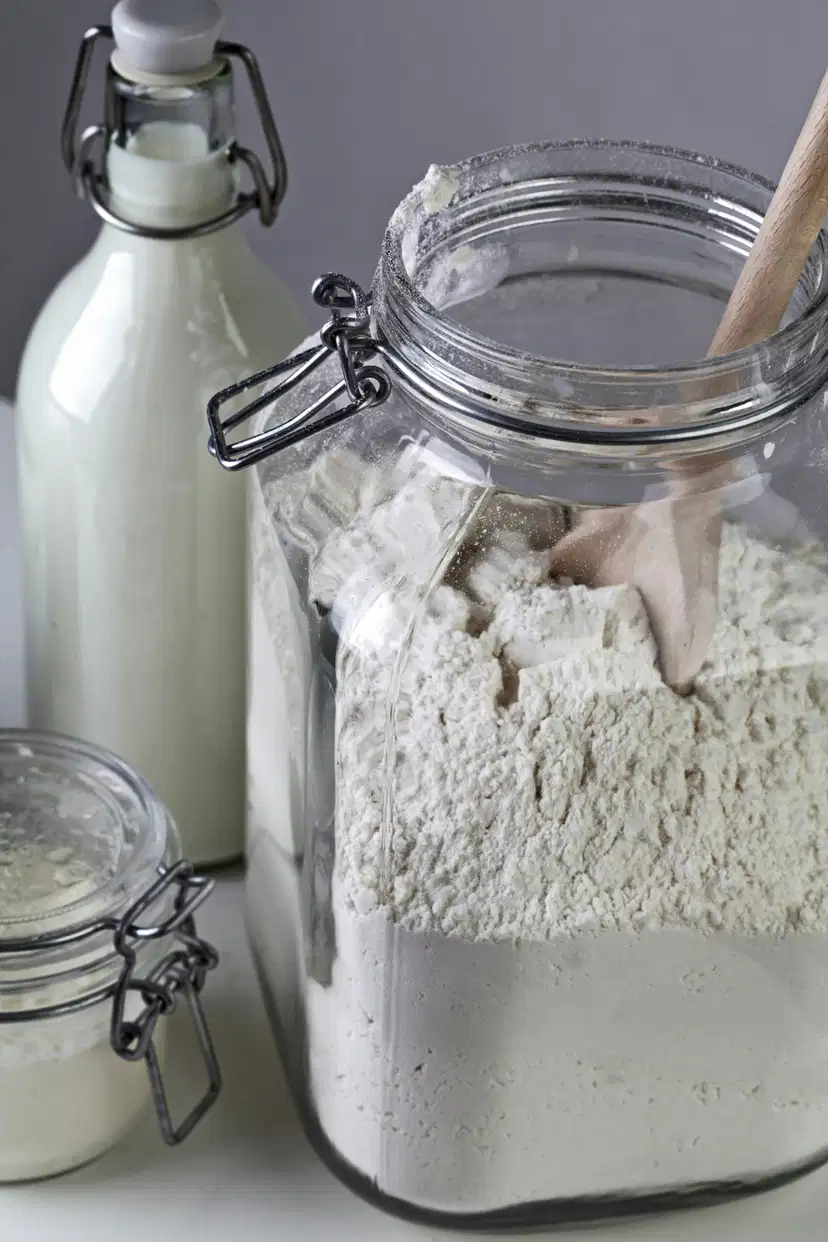
Flour treatment: Added to most milled bread flours, except wholemeal flour, to give flour bright white color – mandatory in UK under Bread and Flour Regulations – 0.14-0.35% of flour – improves whiteness, nutritional value
Calcium source for yeast: Provides calcium ions for yeast nutrition – strengthens gluten network slightly – improves machinability
Tortillas and flatbreads: Reduces stickiness, improves sheeting
Leavening system: Reacts with acids in baking powder – releases CO2 – contributes to leavening
Other Food Processing Applications
Cheese making: Firming agent – calcium helps coagulate milk proteins – used in cheese formulations
Confectionery: As calcium source / processing aid – calcium fortification in chewing gum base, gummy coatings – opacifier and whitening agent
Plant-based dairy alternatives: Fortifies soy, oat, almond milks – neutral taste does not mask original flavor – provides calcium content comparable to cow's milk (120 mg/100ml)
Breakfast cereals and cereal bars: Calcium enrichment without altering taste – stable during extrusion
Nutritional supplements: Global dietary supplement market valued at $231 billion in 2025, integrates calcium carbonate as primary source elemental calcium in multivitamin formulations and standalone calcium supplements
Canning and vegetable processing: Firming agent for canned tomatoes and vegetables – maintains texture
Types for Food Use – GCC vs PCC
Ground Calcium Carbonate GCC: Natural limestone ground to fine powder – 2-10 micron – economical – used for bakery fortification, animal feed
Precipitated Calcium Carbonate PCC: Chemically purified, precipitated – higher purity, smaller particle size 0.07-0.5 micron – brighter white – better for beverage fortification, chewing gum, infant formula – consistent performance across applications
CALPURE from Calspar India designed for consistent performance across applications.
Formulation Guidelines
Dosage for Fortification
Bread flour: UK mandatory 0.14-0.35% (1400-3500 mg/kg) – US typically 0.1-0.2% for calcium-enriched bread
Plant-based milks: 120 mg calcium per 100 ml requires ∼300 mg CaCO3 per 100 ml – micronized PCC preferred for suspension stability – shake well claim
Breakfast cereals: 10-20% RDA per serving – ∼200-400 mg CaCO3 per 40g serving
Infant formula and follow-on: Regulated – typically 50-90 mg calcium per 100 kcal – calcium carbonate often blended with calcium phosphate for balanced solubility
Processing Tips
Dispersion: Insoluble in water – requires high shear mixing or homogenization – in beverages use micronized grade with stabilizers (gellan, pectin) to prevent sedimentation
Neutral taste: Low taste impact vs calcium chloride or lactate – preferred when neutral flavor needed
Interaction: Can neutralize acids – account for acid balance in leavened products and fruit juices – excess can raise pH and affect flavor or preservation
Labeling: Calcium carbonate, E170, INS 170 – permitted as fortificant, acidity regulator, anticaking – in US GRAS 184.1191 – in EU E170 allowed quantum satis in many categories
Allergen and dietary: Vegan, non-GMO options available – Halal Kosher certified – meets FCC USP EP JP
Quality Specifications
Assay CaCO3 98.0-99.5% min, melting point 825°C – lead, arsenic, heavy metals low – microbiology per FCC – particle size distribution critical for beverage vs bakery – food grade mineral materials market producers like Omya meet E170 FCC USP EP JP.
Benefits Summary
Calcium carbonate preferred for fortification due to high elemental calcium content (40%), low cost, neutral taste. Multifunctional: calcium fortification in foods (calcium enrichment), bakery products, breakfast cereals, dairy products milk powders cheese formulations, confectionery sweets as calcium source / processing aid, E170 anticaking acidity regulator fortification. Supports public health initiatives combating calcium deficiency while providing processing aids – pH stabilization, anticaking, dough conditioning, whitening, fortification – essential ingredient across bakery, beverages, dairy alternatives, supplements.
Bovine Gelatin (E428) CAS: 9000-70-8