Carrageenan in Food Products: Texture, Stabilisation, and Industrial Applications
What Is Carrageenan?
Carrageenan is a food-grade hydrocolloid extracted from certain species of red seaweed. It is widely used in food manufacturing as a thickener, stabiliser, gelling agent, and emulsifier. Listed as INS 407 in the international food additive numbering system, carrageenan helps manufacturers control texture, improve product consistency, and maintain the desired structure of different food formulations. Source: WHO/FAO JECFA
Carrageenan is particularly valued in dairy products, plant-based beverages, desserts, processed meats, and selected sauces. Depending on its type, concentration, processing conditions, and interaction with other ingredients, it can produce anything from a soft gel to a thicker, more stable liquid.
For food manufacturers, selecting the appropriate carrageenan grade is essential because different types have different functional properties.
Types of Carrageenan Used in Food Manufacturing
Commercial carrageenan is commonly classified into three principal types: kappa, iota, and lambda. Each offers different thickening and gelling characteristics.
1. Kappa Carrageenan
Kappa carrageenan is known for forming relatively firm, brittle gels, particularly in the presence of suitable potassium ions. It is commonly considered for products requiring a defined gel structure.
Potential applications include:
Processed cheese and cheese analogues.
Dairy desserts and puddings.
Selected meat products.
Gelled food preparations.
2. Iota Carrageenan
Iota carrageenan forms softer, more elastic gels, particularly when suitable calcium ions are present. It may be selected when a formulation requires flexibility and a smooth texture rather than a firm, brittle gel.
Potential applications include:
Dairy desserts.
Selected dairy-based sauces.
Gelled and spoonable products.
Formulations requiring a softer gel structure.
3. Lambda Carrageenan
Lambda carrageenan primarily acts as a thickener rather than forming the same type of gel as kappa and iota carrageenan. It is useful in formulations where manufacturers want to increase viscosity without creating a firm gel.
Potential applications include:
Dairy-based beverages.
Creamy sauces.
Selected liquid food systems.
Products requiring a thicker mouthfeel.
The best grade depends on the food matrix, processing method, target texture, and other ingredients. Suppliers' technical specifications should be reviewed before selecting a product.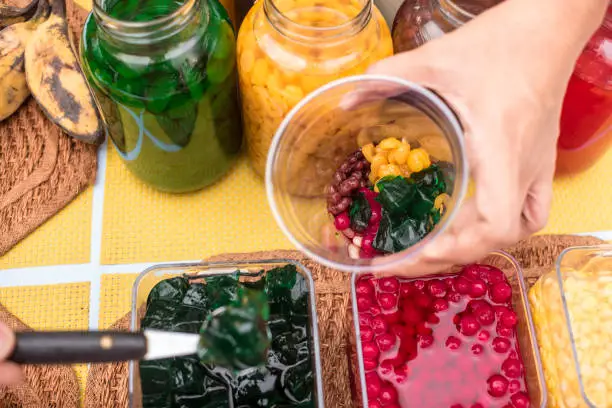
Key Applications of Carrageenan in Food Products
1. Dairy Products and Flavoured Milk
Dairy manufacturing is an important application area for carrageenan. In chocolate milk, flavoured milk, dairy drinks, and selected cream-based products, it can help control suspension and texture.
Its functions may include:
Helping keep cocoa particles suspended in chocolate milk.
Reducing visible separation during storage.
Improving mouthfeel and consistency.
Supporting a uniform product appearance.
Carrageenan interacts with components of milk, including proteins, so the final result depends on the specific formulation and processing conditions. The amount used must be optimised through product trials.
2. Ice Cream and Frozen Desserts
In ice cream and other frozen desserts, stabilisers help manage the behaviour of water during freezing and storage. Carrageenan may be included in stabiliser blends to support texture and product uniformity.
Potential benefits include:
Helping manage water mobility in the formulation.
Supporting a smooth mouthfeel.
Improving consistency during storage.
Working alongside other hydrocolloids in a stabiliser system.
Carrageenan is not a complete replacement for a carefully designed ice cream stabiliser system. Manufacturers need to consider freezing conditions, fat content, proteins, sugar composition, and storage temperatures.
3. Plant-Based Milk and Dairy Alternatives
Plant-based beverages made from soy, oats, almonds, and other ingredients can experience sedimentation, separation, or changes in mouthfeel. Hydrocolloids may be used to improve the physical stability of these products.
Depending on the formulation and permitted use, carrageenan may help:
Improve suspension of dispersed ingredients.
Increase body and mouthfeel.
Support a more consistent appearance.
Reduce certain forms of physical separation.
Its performance varies according to the plant protein, mineral content, pH, heat treatment, and other stabilisers in the beverage. Manufacturers should conduct compatibility and shelf-life tests before commercial production.
4. Processed Meat and Poultry Products
Carrageenan is used in certain processed meat and poultry formulations where texture, moisture retention, and product consistency are important.
Potential applications include selected:
Cooked meat products.
Formulated poultry products.
Sliced or restructured meat products.
Meat emulsions and other processed preparations.
Depending on the formulation, carrageenan can contribute to gel structure and water management, helping manufacturers achieve the intended texture. Results depend on the protein system, salt levels, cooking process, and other functional ingredients.
5. Desserts, Puddings, and Gelled Foods
Carrageenan is used in selected puddings, dairy desserts, custard-style products, and gelled foods. Kappa and iota carrageenan may be suitable where a gel structure is required, while other formulations may use carrageenan primarily for thickening.
For manufacturers, the ingredient can support:
Defined gel strength.
Smooth or elastic texture, depending on grade.
Consistent spoonability.
Product structure during storage.
The target gel must be designed around the complete formulation, including the type and concentration of carrageenan, available ions, pH, heating conditions, and cooling profile.
6. Sauces, Dressings, and Cream-Based Products
Carrageenan may be incorporated into selected sauces, dressings, gravies, and cream-based formulations to control viscosity and improve physical stability.
Its potential functions include:
Creating the desired thickness.
Supporting a consistent texture.
Helping control separation in compatible formulations.
Improving the body of low-viscosity products.
Carrageenan does not automatically stabilise every oil-and-water emulsion. Formulators may need emulsifiers or other stabilisers depending on the product's composition and processing conditions.
Formulation Benefits of Carrageenan
Improved Texture and Mouthfeel
Texture influences how consumers experience a food product. Carrageenan helps manufacturers adjust thickness, firmness, elasticity, and smoothness depending on the grade selected and the surrounding formulation.
This is particularly important in dairy desserts, chocolate milk, processed foods, and plant-based products where a uniform texture is part of the product's quality expectations.
Stabilisation and Reduced Separation
In compatible food systems, carrageenan can help maintain a more uniform distribution of ingredients during storage. This is useful for products that may otherwise develop sedimentation, liquid separation, or inconsistent texture.
However, performance depends on the ingredient system, processing method, packaging, and storage conditions. Shelf-life testing is necessary to confirm the stabilising effect.
Gel Formation and Structure Control
Kappa and iota carrageenan can form gels under suitable conditions. Manufacturers can use this property to develop products with specific firmness, elasticity, and shape retention.
The final gel characteristics depend on carrageenan type, concentration, temperature, and the presence of ions such as potassium or calcium.
Water Management
Carrageenan can contribute to water retention and the structure of certain food products. In selected formulations, this helps control moisture distribution and maintain the desired consistency.
Its effect is not identical across all food categories, so manufacturers should assess water release, texture, and product yield under actual processing conditions.
Consistent Commercial Production
Using a specified carrageenan grade can help manufacturers achieve more repeatable results between production batches. Standardised ingredient specifications, accurate dosing, and controlled processing conditions are important for maintaining quality at scale.
Who Buys Carrageenan? Key Industrial Buyer Segments
Carrageenan is relevant to food manufacturers that need to control viscosity, stabilise ingredients, or create a defined gel structure.
Buyer segment | Typical applications | Main purchasing considerations |
|---|---|---|
Dairy manufacturers | Flavoured milk, dairy drinks, creams | Protein compatibility, suspension, viscosity |
Ice cream producers | Ice cream and frozen desserts | Texture, storage stability, stabiliser compatibility |
Plant-based beverage companies | Soy, oat, almond, and other plant-based drinks | Suspension, mouthfeel, formulation compatibility |
Meat and poultry processors | Selected cooked and processed meat products | Water management, gel strength, processing performance |
Dessert manufacturers | Puddings, custards, gelled desserts | Gel strength, elasticity, spoonability |
Sauce and dressing manufacturers | Gravies, creamy sauces, dressings | Viscosity, physical stability, ingredient compatibility |
Food ingredient blenders | Custom stabiliser and hydrocolloid blends | Functional grade, consistency, technical support |
Food ingredient distributors | Supply to industrial food producers | Reliable sourcing, packaging, documentation, order quantities |
What Do Industrial Buyers Look For?
When sourcing carrageenan, industrial buyers commonly evaluate:
Functional grade: Whether kappa, iota, lambda, or a specialised blend meets the intended application.
Technical specifications: Relevant viscosity, gel strength, moisture, and other agreed parameters.
Food-grade documentation: Certificate of analysis (COA), specification sheet, safety data sheet (SDS), and relevant compliance documents.
Processing compatibility: Performance under the customer's heating, mixing, cooling, and storage conditions.
Packaging and storage: Protection from moisture and contamination.
Supply reliability: Consistent quality, lead times, minimum order quantities, and production capacity.
Regulatory compliance: Suitability for the intended food category and destination market.
Carrageenan vs. Other Hydrocolloids
Carrageenan is one of several hydrocolloids used to manage texture and stability in food products. It is not interchangeable with every other stabiliser.
Ingredient | Main functional characteristics | Common application considerations |
|---|---|---|
Carrageenan | Thickening, stabilisation, and gel formation depending on type | Useful in compatible dairy, dessert, beverage, and processed-food systems |
Xanthan gum | Thickening and viscosity control across many formulations | Often selected for sauces, dressings, and beverages |
Guar gum | Thickening and water-binding | Used in selected dairy, bakery, sauce, and frozen-food applications |
Pectin | Gel formation and texture control under suitable conditions | Common in jams, fruit preparations, and confectionery |
Agar | Gel formation and structure | Used in selected desserts and speciality gelled foods |
Choosing between these ingredients requires consideration of the product's pH, temperature, mineral content, texture target, processing method, and cost. Some products benefit from combinations of hydrocolloids rather than a single ingredient.
Quality, Handling, and Regulatory Considerations
Carrageenan is identified as INS 407, and its permitted uses depend on the relevant jurisdiction and food category. The Codex Alimentarius General Standard for Food Additives lists carrageenan's functional classes and provisions for specified food categories. In the United States, 21 CFR § 172.620 addresses its use as an emulsifier, stabiliser, or thickener under specified conditions. <Cite refs={["turn946594search2","turn946594search1"]} />
Before commercial use, manufacturers should:
Confirm that the selected grade is appropriate for the intended application.
Review supplier specifications and the certificate of analysis.
Test hydration, dispersion, viscosity, and gel formation under actual processing conditions.
Assess interactions with proteins, salts, minerals, and other hydrocolloids.
Conduct stability and shelf-life trials.
Verify applicable food additive permissions and labelling requirements in the destination market.
Carrageenan should not be assumed to be permitted in every food or at every concentration. Regulatory review is especially important for specialised foods and products intended for vulnerable consumer groups.
Sourcing Opportunities for Food Ingredient Suppliers
For food ingredient suppliers and distributors, carrageenan offers opportunities across several manufacturing sectors because different food products require different combinations of thickening, stabilisation, and gelling functionality.
Suppliers can improve buyer qualification by asking:
What type of food product is being manufactured?
Is the required function thickening, stabilisation, gel formation, or a combination?
Which carrageenan type or blend has been specified?
What are the target viscosity, texture, and processing conditions?
What packaging size and order volume are required?
Which technical and regulatory documents must accompany the shipment?
Providing application-specific technical information can help suppliers distinguish their offerings and support long-term relationships with industrial customers.
Carrageenan is a versatile seaweed-derived hydrocolloid that helps food manufacturers manage texture, stabilisation, viscosity, and gel formation. Its applications span dairy products, plant-based beverages, frozen desserts, processed meats, puddings, and selected sauces.
The best results depend on selecting the right carrageenan type, understanding its interaction with other ingredients, and validating performance under commercial processing conditions. For industrial buyers, consistent quality, suitable technical documentation, dependable supply, and regulatory compliance are key factors when choosing a carrageenan supplier.
WHO/FAO JECFA — Carrageenan
https://apps.who.int/food-additives-contaminants-jecfa-database/Home/Chemical/377Codex Alimentarius — General Standard for Food Additives: Carrageenan (INS 407)
https://codex.fao.org/codex-texts/gsfa/food-additives-list/food-additive-details?
Potassium Sorbate Food Grade (E202) CAS: 24634-61-5