Dextrose Monohydrate: Uses in Food Processing and Fermentation
What Is Dextrose Monohydrate?
Natural form (D-glucose) also referred as dextrose or dextrose monohydrate powder especially in food industry. Form of glucose derived from corn starch. Common food additive used as sweetener, often found in sports drinks, energy bars, and various processed foods. In addition to role as sweetener, also used in baking and brewing to facilitate fermentation.
Dextrose Monohydrate Powder (DMH) – CAS 14431-43-7 (monohydrate) – white crystalline powder, sweetness about 75% of sucrose. Reducing sugar content ≥99% – guarantees maximal substrate availability for optimal microbial growth. Melting point 83°C – used in bakery where assists in Maillard reaction enhancement. Simplest carbon source monosaccharide and used extensively in fermentation process for rapid growth with excellent yield, no non-fermentable sugars, low level of trace minerals organics, few leftovers to purify and consistency.
Food & beverage formulators use dextrose monohydrate for immediate sweetness, fermentation control, browning, and freezing-point depression across beverages, bakery, confectionery, and processed foods.
Uses in Food Processing
Bakery Sector
In bakery sector, dextrose monohydrate used at commercial scale as fermentation enhancer, browning agent, and humectant.
Carbohydrate source for yeast fermentation: Production of baked goods – carbohydrate source for yeast fermentation – natural sweetener and energy source – fermentation substrate in brewing and alcoholic beverages
Maillard reaction: Assists in Maillard Reaction in all kinds of baking – Cargill Dextrose Monohydrate with melting point 83°C used in bakery applications where assists in Maillard reaction enhancement for improved flavor and browning – controls crust color, aroma development
Humectant and texture: Helps retain moisture, extends shelf life, improves softness
Sweetener with clean profile: Used as flavour to food preparations when added alone or in combination with other sweetener – less sweet than sucrose (75%), allows higher solids without excessive sweetness
Applications: Breads, buns, pizza dough, tortillas, cakes, cookies, biscuits – typical dosage 1-5% flour weight.
Confectionery and Beverages
Sweetener and bulking agent: Staple in food and beverage manufacturing, used as sweetener, bulking agent, fermentation substrate – immediate sweetness – energy source
Freezing-point depression: In ice creams and frozen desserts – controls ice crystal formation
Sports drinks, energy bars: Rapidly absorbed glucose source
Brewing sugar: Food grade dextrose monohydrate powder – ideal for brewing, baking and fermentation – fermentation support for yeast activity
Food Processing and Preservation
Dextrose monohydrate used in food processing and preservation. Used in extending shelf life of many food products. Functions as nutritive sweetener, filler, carrier for flavors and colors.
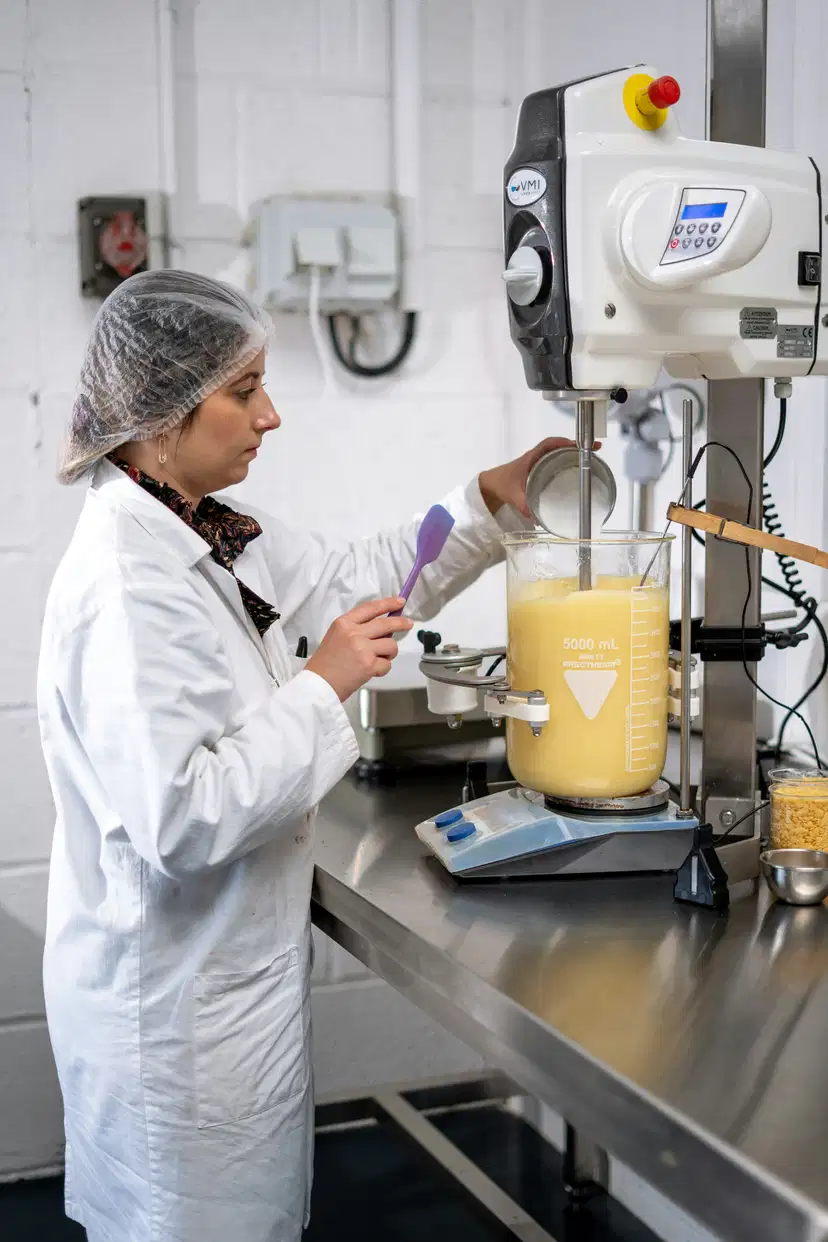
Uses in Fermentation – Primary Industrial Carbon Source
Large-scale fermentation industries, including bioethanol, organic acids, and amino acid production, consume dextrose monohydrate as primary carbon source, representing significant industrial demand channel beyond food and pharmaceutical uses.
Simplest carbon source monosaccharide and used extensively in fermentation process for rapid growth with excellent yield, no non-fermentable sugars, low level of trace minerals organics, few leftovers to purify and consistency.
Why Fermentation Industries Prefer Dextrose Monohydrate
Rapid growth with excellent yield: Fully fermentable – 100% utilizable by most microorganisms – no non-fermentable residues like in maltose syrups
Low impurities: Low level of trace minerals organics – few leftovers to purify – consistency batch to batch – critical for pharmaceutical-grade fermentation
Purity requirements: For fermentation: SO2 ≤20 ppm (inhibits fermentation strains) – high purity ≥99% reducing sugar
Cost-effective: Cheapest pure glucose source from corn starch
Major Fermentation Applications
Bioethanol and alcoholic beverages: Primary substrate for yeast – ethanol production – brewing and distilling – fermentation and brewing – utilized in fermentation processes particularly in brewing and distilling
Organic acids: Citric acid, lactic acid, gluconic acid, itaconic acid – Aspergillus niger and lactic acid bacteria use dextrose as carbon source
Amino acids: L-lysine, L-glutamate (MSG), L-cysteine – Corynebacterium fermentation
Vitamin C – Two-step fermentation: Route: Dextrose monohydrate → (hydrogenation) → D-sorbitol → (microbial oxidation, Acetobacter suboxydans) → L-sorbose → (co-fermentation, Ketogulonigenium vulgare + Bacillus megaterium) → 2-keto-L-gulonic acid (2-KLG) → chemical conversion → vitamin C – China dominates – purity requirements critical
Sorbitol, Vitamin C & Gluconates Manufacturing – From Food Ingredient to Industrial Workhorse: Dextrose monohydrate in sorbitol, vitamin C & gluconates – industrial workhorse
Antibiotics and enzymes: Penicillin, asparaginase, amylase production – dextrose as feed
Probiotics and yeast extracts: Biomass production for baker's yeast, brewer's yeast, probiotic cultures
Fermentation Process Conditions
Dosage: 5-20% solids in fermentation medium depending on organism and product
Sterilization: Dextrose monohydrate solutions sterilized separately to avoid Maillard with nitrogen sources – fed-batch often used to avoid Crabtree effect in yeast
Control: pH, temperature, dissolved oxygen optimized – dextrose consumption monitored via HPLC
Quality and Regulatory Considerations
Food grade: FCC, EU food additive E1200? Actually dextrose monohydrate is not E-numbered as additive but as food ingredient – GRAS – permitted worldwide
Forms: Monohydrate (melting 83°C, contains 9% water of crystallization) vs anhydrous (higher sweetness, higher melting point) – monohydrate more stable, less hygroscopic, easier handling
Specifications: Reducing sugar ≥99%, moisture 7.5-9.5%, SO2 low for fermentation, heavy metals, microbiology
Labeling: Dextrose monohydrate, D-glucose monohydrate, corn sugar – clean label, non-GMO options available
Storage: Up to 50°C stable – used in beverage – store cool dry – 12-24 months shelf life
Benefits Summary for Manufacturers
Dextrose monohydrate provides immediate sweetness 75% sucrose, rapid energy, fermentation enhancer, browning agent, humectant, freezing-point depressor, and ideal carbon source with no non-fermentable sugars, low trace minerals, excellent yield, consistency, and low purification burden – essential across food processing and large-scale fermentation from bakery to bioethanol to vitamin C.
Working Source Links:
From Food Ingredient to Industrial Workhorse: Dextrose Monohydrate in Sorbitol, Vitamin C & Gluconates – Two-Step Fermentation – Purity SO2 ≤20 ppm inhibits fermentation strains – https://linkedin.com
Dextrose Monohydrate and Dextrose Anhydrous Market – In bakery sector used as fermentation enhancer, browning agent, humectant – Large-scale fermentation including bioethanol, organic acids, amino acid production consume as primary carbon source – https://dataintelo.com
Dextrose Monohydrate Powder – Production of baked goods – Carbohydrate source for yeast fermentation – Assists in Maillard Reaction – https://melbournefooddepot.com
Dextrose Exporter | Dextrose Monohydrate Producer – Simplest carbon source monosaccharide used extensively in fermentation for rapid growth excellent yield, no non-fermentable sugars, low trace minerals – https://gulshanindia.com
Calcium Chloride (E509) CAS: 10043-52-4