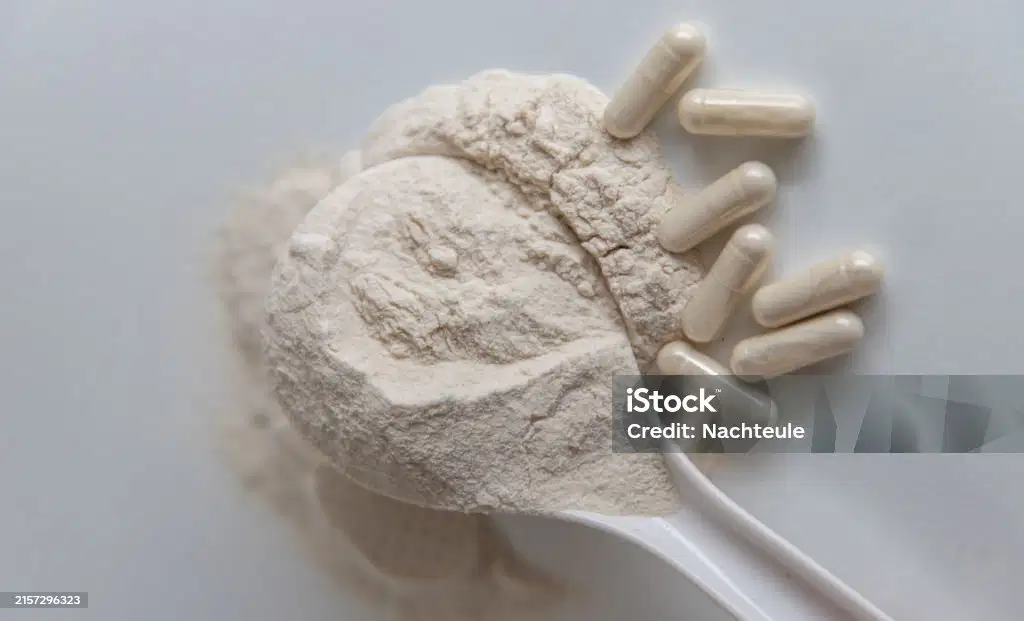
Microcrystalline cellulose (MCC) helps food manufacturers solve three important formulation challenges: keeping particles evenly distributed, creating desirable textures and reducing fat without sacrificing product quality. As food brands develop sauces, beverages, dairy products and processed foods with specific performance and sensory requirements, this versatile cellulose ingredient offers several useful formulation options.
For procurement teams, microcrystalline cellulose represents more than a functional powder. Its performance depends on the selected grade, dispersion method, concentration and compatibility with other ingredients. Understanding these factors helps buyers source suitable materials and supports manufacturers in developing consistent products across production batches.
What Is Microcrystalline Cellulose and How Does It Work?
Microcrystalline cellulose is a purified, partially depolymerized form of cellulose, a structural carbohydrate found in plant materials. Manufacturers commonly produce it by treating purified cellulose with mineral acid, followed by neutralization, washing and other processing steps that create the desired particle characteristics.
Food manufacturers use MCC as a stabilizer, texture modifier, bulking agent and fat replacer. Its insoluble particles can interact with water and other formulation components to influence viscosity, physical structure and mouthfeel.
Commercial products vary in particle characteristics and functionality. Some grades primarily provide bulk, while colloidal MCC systems use finely dispersed particles, often combined with a hydrocolloid such as sodium carboxymethyl cellulose, to improve suspension and stabilization performance.
The distinction matters during procurement because two MCC products may contain the same principal ingredient but perform differently in a finished formulation.
Suspension Stability: Keeping Ingredients Evenly Distributed
Suspension stability is one of the most valuable applications of microcrystalline cellulose, particularly in products containing insoluble particles. Without effective stabilization, ingredients may settle, separate or create visible inconsistencies during storage.
MCC can help build a supporting structure within the liquid phase. Depending on the grade and formulation, this structure can slow particle movement and improve the uniformity of the finished product.
Food applications include:
Beverages: MCC can help suspend insoluble ingredients and maintain a more uniform appearance throughout storage.
Sauces and dressings: It can support the distribution of seasoning particles, spices and other suspended components.
Dairy formulations: MCC can contribute to physical stability and consistency in selected dairy-based products.
Prepared food systems: Manufacturers can use suitable MCC grades to manage the distribution of solid ingredients within liquid or semi-liquid matrices.
Suspension performance depends on more than ingredient selection alone. Particle size, density differences, viscosity, processing conditions and interactions with other stabilizers all influence the final result.
Manufacturers should therefore evaluate MCC under realistic storage and handling conditions. A formulation that looks uniform immediately after mixing may still develop sedimentation or separation during its intended shelf life.
Texture Modification Across Food Formulations
Texture influences how consumers perceive thickness, creaminess, smoothness and overall product quality. Microcrystalline cellulose gives formulators another way to adjust these properties without relying exclusively on fat, starch or conventional gums.
MCC particles can contribute to a product's internal structure and influence its flow behavior. Depending on the formulation, manufacturers may use it to improve body, increase consistency or create a more substantial mouthfeel.
Common texture applications include:
Sauces and gravies: MCC can help provide body and improve the perception of thickness in reduced-fat formulations.
Yogurt and dairy products: Suitable grades can support consistency and modify the texture of selected products.
Bakery products: MCC can influence dough structure and the texture of finished products, although the result depends on the recipe and processing conditions.
Processed meat products: It can contribute to firmness, moisture management and structural consistency in certain formulations.
Frozen desserts: MCC-based systems can help manage texture and support product stability during storage.
The objective is not always to make a product thicker. Manufacturers may instead seek a smoother texture, a more consistent flow profile or improved resistance to physical changes during storage.
Because MCC can alter firmness and mouthfeel, excessive addition may create an undesirable texture. Product developers should assess concentration alongside sensory performance rather than treating viscosity or firmness as the only measure of success.
Fat Replacement: Maintaining Creaminess With Less Fat
Reducing fat presents a significant formulation challenge because fat contributes lubrication, richness, smoothness and structure. When manufacturers remove it, products can become thinner, less creamy or less satisfying.
Microcrystalline cellulose can help compensate for some of these changes. Its particulate structure and interactions with water can contribute to a fuller mouthfeel and support the physical properties of reduced-fat foods.
MCC can play a role in:
Salad dressings and mayonnaise-style products: It can help maintain body and a creamy texture while supporting emulsion stability.
Sauces and spreads: Formulators can use it to improve consistency and reduce the textural differences associated with fat reduction.
Processed meats: It can contribute to structure and moisture management when manufacturers reduce or replace part of the fat component.
Bakery products: Selected formulations can use MCC to modify texture when reducing fat, although manufacturers must account for changes in dough handling and finished-product firmness.
Frozen desserts: MCC-based systems can help create a fuller mouthfeel in certain lower-fat formulations.
MCC does not reproduce every function of fat. It cannot automatically replace the flavor, melting behavior or lubrication provided by oils and fats, so formulators may need complementary ingredients to achieve the desired result.
Manufacturers should also distinguish between reducing fat content and reducing total calories. The nutritional outcome depends on the full recipe and the ingredients used to replace the removed fat.

How MCC Supports Emulsions and Product Consistency
Emulsion-based foods combine ingredients that do not naturally remain uniformly mixed, such as oil and water. Manufacturers need suitable formulation strategies to control separation and preserve the product's intended appearance and texture.
Microcrystalline cellulose can contribute to emulsion stability by influencing the surrounding structure and slowing physical movement within the formulation. In suitable systems, it can work alongside emulsifiers and hydrocolloids to support a consistent product.
This makes MCC relevant to dressings, sauces, spreads and other products where physical stability affects commercial quality.
However, MCC should not be treated as a universal replacement for an emulsifier. Its effectiveness depends on the food matrix, the emulsifier system and the grade selected. Formulation trials should examine oil separation, texture, flow behavior and stability throughout the expected shelf life.
Choosing the Right MCC Grade for Food Manufacturing
Not every MCC grade suits every application. Buyers should assess the material against the technical requirements of the finished product instead of selecting it solely by name or price.
Several purchasing factors deserve attention:
Functional grade: Determine whether the application requires suspension support, texture modification, fat replacement or a combination of functions. Colloidal systems may suit some stabilization applications better than conventional powdered grades.
Dispersion performance: Ask suppliers about hydration requirements, mixing procedures and compatibility with other ingredients. Poor dispersion can produce lumps and inconsistent performance.
Particle characteristics: Particle size and related physical properties can influence mouthfeel, suspension behavior and processing performance.
Documentation: Request a technical data sheet, certificate of analysis and relevant food-grade compliance documentation. Confirm that the material meets the requirements of the destination market and intended application.
Supply consistency: Check batch-to-batch specifications, packaging integrity, lead times and the supplier's ability to maintain reliable deliveries.
Before committing to a large purchase, manufacturers should conduct trials using the intended equipment and process conditions. This helps reveal whether the selected grade delivers the required performance at a commercially practical inclusion level.
Formulation Challenges and Quality Control
MCC can improve product performance, but successful implementation requires careful process control. Incorrect addition methods, unsuitable concentrations or poor ingredient compatibility may limit its effectiveness.
Common issues include uneven dispersion, excessive thickness, an overly firm texture and inadequate suspension stability. These problems may require adjustments to mixing speed, addition sequence, hydration conditions or the balance of stabilizers in the recipe.
Quality teams should assess more than the appearance of freshly manufactured samples. Relevant checks may include viscosity, particle distribution, sedimentation, emulsion separation, sensory properties and stability under intended storage conditions.
For fat-reduced foods, manufacturers should compare the revised formulation with the original product. This helps identify changes in texture, flavor release, processing behavior and consumer acceptability.
What Procurement Teams Should Prioritize When Sourcing MCC
A reliable purchasing strategy starts with a clear application brief. Buyers should explain whether the ingredient will support a beverage suspension, improve a sauce's texture or help replace fat in a processed food.
Procurement teams can then compare suppliers against measurable technical and commercial requirements.
Prioritize the following actions:
Define the performance target. Specify the desired texture, suspension behavior or fat-reduction objective before requesting quotations.
Request application-specific guidance. Ask suppliers to recommend an appropriate grade and provide instructions for dispersion and processing.
Evaluate the total formulation cost. Compare the required inclusion level, processing adjustments and effects on other ingredients, not just the purchase price per kilogram.
Verify quality documentation. Confirm product specifications, traceability, packaging requirements and applicable regulatory documentation.
Validate supply reliability. Review available stock, minimum order quantities, delivery schedules and the supplier's ability to support repeat orders.
These steps help reduce formulation risk and improve purchasing decisions. They also make supplier comparisons more meaningful because buyers can evaluate performance alongside price and availability.
The Outlook for Microcrystalline Cellulose in Food Formulation
Food manufacturers continue to explore ways to balance product quality, ingredient functionality and changing consumer preferences. Microcrystalline cellulose offers a flexible option for applications that require suspension stability, texture control or partial fat replacement.
Its usefulness depends on selecting the right grade and integrating it into a well-designed formulation. Manufacturers that combine supplier technical support with structured product testing can better assess where MCC adds value and where complementary ingredients remain necessary.
Sodium Carboxyl Methyl Cellulose CAS: 9000-11-07
SOURCE LINK :https://www.hfpappexternal.fda.gov/scripts/fdcc/index.cfm?id=CELLULOSEMICROCRYSTALLINE&set=FoodSubstances&ut