Guar Gum: Applications and Buyers in Sauces, Dairy, and Gluten-Free Foods
What Is Guar Gum?
Guar gum is a natural, plant-derived hydrocolloid obtained from the seeds of the guar plant (Cyamopsis tetragonoloba). It is widely used in food manufacturing as a thickener, stabiliser, and texturising agent. Because guar gum binds water and increases viscosity at relatively low concentrations, it can help manufacturers achieve the desired consistency across a variety of food products.
Guar gum is commonly used in sauces, salad dressings, dairy products, ice cream, bakery mixes, and gluten-free foods. Its performance depends on the grade, concentration, temperature, processing conditions, and other ingredients in the formulation. The US Food and Drug Administration lists guar gum among food ingredients used for functions including stabilisation, thickening, and texturising. Source: FDA
For food manufacturers, guar gum offers a practical way to improve texture, manage moisture, and support consistent product quality.
Key Applications of Guar Gum in Food Manufacturing
1. Sauces, Gravies, and Salad Dressings
Sauces and dressings require a carefully controlled consistency so they can be poured, spread, or dispensed easily. Guar gum helps increase the viscosity of the water phase, making it useful in products such as ketchup, mayonnaise-style dressings, gravies, dips, and cooking sauces.
Its key formulation benefits include:
Thickness control: Helps achieve a smooth, desirable consistency.
Physical stability: Can slow the separation of oil and water phases in compatible formulations.
Improved mouthfeel: Adds body without necessarily changing the intended flavour profile.
Consistent dispensing: Helps manufacturers achieve a repeatable flow during filling and consumer use.
Formulation flexibility: Can be combined with other hydrocolloids to achieve specific texture targets.
Guar gum is especially useful in salad dressings and acidic sauces, although the final performance depends on the complete formulation. In emulsified products, it may work alongside emulsifiers and other stabilisers rather than replacing them.
2. Dairy Products and Flavoured Milk
Dairy products often require stabilisation to maintain a uniform texture and prevent unwanted changes during storage. Guar gum can increase viscosity and contribute to the desired body in selected milk-based products.
Typical applications include:
Flavoured milk and dairy beverages.
Ice cream and frozen desserts.
Yoghurt and selected fermented dairy products.
Cream-based preparations.
Dairy desserts and dessert mixes.
In ice cream, guar gum can help control water mobility and support a smoother texture. In dairy beverages, it may improve body and help maintain a consistent mouthfeel.
The right quantity is important. Excessive use can produce an overly thick, sticky, or gummy texture, while insufficient use may not provide the intended stabilising effect. Manufacturers should test guar gum with the product's proteins, fats, sugars, and other stabilisers before scaling up production.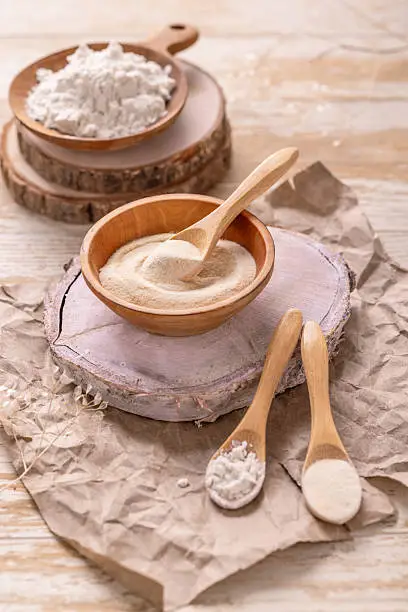
3. Gluten-Free Bread and Bakery Products
Gluten-free baking presents a major formulation challenge because removing wheat gluten also removes an important source of elasticity, structure, and gas retention in dough.
Guar gum can help compensate for some of these functional properties by binding water, increasing viscosity, and improving the structure of gluten-free dough and batter.
Potential applications include:
Gluten-free bread and rolls.
Cakes and muffins.
Cookies and biscuits.
Pizza bases and flatbreads.
Pancake and baking mixes.
Its formulation benefits may include improved moisture retention, reduced crumbling, better dough handling, and a softer texture. Guar gum may also work with starches, proteins, and other hydrocolloids to produce a more balanced gluten-free structure.
However, guar gum does not fully replicate gluten. The best results depend on the flour blend, hydration level, baking process, and the other ingredients used.
4. Ice Cream and Frozen Desserts
Ice cream manufacturers use stabiliser systems to help maintain texture during freezing, storage, and temperature fluctuations. Guar gum is valued for its water-binding and thickening properties.
It can help:
Increase the viscosity of the unfrozen mix.
Support a smooth and creamy mouthfeel.
Reduce undesirable changes in texture during storage.
Work with other stabilisers to manage ice crystal growth.
Guar gum is frequently evaluated alongside ingredients such as locust bean gum, carrageenan, and other hydrocolloids. The appropriate combination depends on the required texture, production process, and storage conditions.
5. Soups, Instant Mixes, and Ready Meals
Guar gum can also be used in soups, gravies, instant meal mixes, and selected ready-to-eat products.
In these applications, it may provide thickness, improve body, and help manufacturers achieve consistent reconstitution when a powdered product is mixed with water. Its performance depends on how quickly it hydrates, the temperature of the liquid, the presence of salts, and the mixing process.
Food producers should test dispersion methods carefully because poor hydration can lead to lumps and uneven texture.
Formulation Benefits of Guar Gum
Effective Thickening
Guar gum increases the viscosity of many water-based food systems. This makes it useful when manufacturers want a thicker sauce, creamier beverage, or more structured gluten-free dough.
Water Binding and Moisture Management
Guar gum interacts with water, helping control moisture distribution in suitable formulations. In bakery products, this can support softness; in sauces and dairy products, it can contribute to the desired consistency.
Improved Texture and Mouthfeel
The ingredient can create a fuller, smoother mouthfeel in products that might otherwise feel thin or watery. However, dosage must be optimised to avoid excessive gumminess.
Support for Physical Stability
By increasing viscosity, guar gum can slow the movement of dispersed particles and droplets in certain products. This can help manage separation, although it is not a universal solution for every emulsion or suspension.
Flexible Formulation Options
Guar gum can be used alone or in combination with other hydrocolloids. Blending may allow manufacturers to tailor texture, hydration, and stability for specific applications.
Who Buys Guar Gum? Key Industrial Buyer Segments
Guar gum serves a broad range of food manufacturers. The most relevant buyers are businesses that need reliable thickening, water binding, or texture control in commercial production.
Buyer segment | Typical applications | Main purchasing priorities |
|---|---|---|
Sauce and condiment manufacturers | Ketchup, dressings, dips, gravies | Viscosity, flow behaviour, physical stability |
Dairy manufacturers | Flavoured milk, yoghurt, dairy desserts | Mouthfeel, hydration, compatibility with proteins |
Ice cream producers | Ice cream, frozen desserts | Smooth texture, stabiliser compatibility, storage performance |
Gluten-free food brands | Bread, cakes, cookies, baking mixes | Moisture retention, dough structure, reduced crumbling |
Bakery ingredient manufacturers | Premixes and speciality baking ingredients | Consistent performance, blending compatibility |
Instant food manufacturers | Soups, gravies, powdered mixes | Dispersibility, hydration, final viscosity |
Food ingredient blenders | Custom hydrocolloid blends | Technical specifications, repeatability, formulation support |
Food ingredient distributors | Supply to industrial processors | Reliable supply, packaging, documentation, order volumes |
What Do Industrial Buyers Look For?
Before purchasing guar gum, industrial buyers typically evaluate:
Viscosity grade: Whether the grade provides the required thickening performance.
Particle size: Whether the powder suits the buyer's mixing and dispersion process.
Purity and quality: Compliance with the buyer's ingredient specifications.
Hydration performance: How the gum disperses and develops viscosity in the intended formulation.
Documentation: Certificate of analysis (COA), technical data sheet, safety data sheet (SDS), and relevant compliance documentation.
Packaging: Suitable food-grade packaging that protects the powder during transport and storage.
Supply reliability: Lead times, minimum order quantities, consistency between batches, and production capacity.
Guar Gum vs. Xanthan Gum: Which Is Better?
Guar gum and xanthan gum are both widely used food hydrocolloids, but they have different functional characteristics. The right choice depends on the food product and the desired performance.
Feature | Guar gum | Xanthan gum |
|---|---|---|
Primary function | Thickening and water binding | Thickening and rheology control |
Common applications | Sauces, dairy, bakery, gluten-free foods | Sauces, dressings, beverages, gluten-free foods |
Texture contribution | Can provide a fuller, sometimes creamy or gummy texture | Often provides strong viscosity and useful flow control |
Formulation approach | May be used alone or in blends | May be used alone or in blends |
Selection factors | Hydration, texture, processing conditions, cost | Flow behaviour, stability, processing conditions, cost |
Neither ingredient is universally superior. Some formulations use guar gum alone, while others combine it with xanthan gum or other hydrocolloids to achieve a specific texture and stability profile.
Quality, Handling, and Regulatory Considerations
Food manufacturers should purchase guar gum that meets the specification and regulatory requirements for the intended application.
In the United States, guar gum is addressed under 21 CFR § 184.1339, which specifies conditions for its use in food. Permitted uses and limitations may vary by food category and destination market. Manufacturers should verify the applicable rules rather than applying a single usage level to every product. Source: eCFR
Important considerations include:
Confirm the correct food-grade specification and intended use.
Review the supplier's certificate of analysis and technical documentation.
Protect the powder from moisture and store it in suitable sealed packaging.
Validate mixing and hydration methods to reduce lump formation.
Conduct formulation and shelf-life testing under expected storage conditions.
Check local food additive and labelling requirements before commercial production.
For gluten-free products, manufacturers must also ensure that all ingredients, processing practices, and final labelling comply with the relevant gluten-free requirements. The use of guar gum alone does not establish that a finished product is gluten-free. Source: FDA gluten-free labelling guidance
Sourcing Opportunities for Food Ingredient Suppliers
For ingredient suppliers and distributors, guar gum presents opportunities across sauce manufacturing, dairy processing, frozen desserts, and gluten-free bakery production.
Suppliers can better qualify potential buyers by identifying the specific technical challenge each manufacturer needs to solve. A sauce producer may prioritise viscosity and separation control, while a gluten-free bakery brand may focus on moisture retention and crumb structure.
Useful questions to ask prospective buyers include:
What type of food product are you manufacturing?
What viscosity or texture target do you need to achieve?
Are you looking for a standard guar gum grade or a customised hydrocolloid blend?
What are your processing conditions and hydration requirements?
What packaging size and monthly volume do you require?
Which quality certifications and regulatory documents must the supplier provide?
Providing application-specific technical information and consistent product quality can help suppliers build stronger relationships with industrial food manufacturers.
Final Takeaway
Guar gum is a versatile plant-derived hydrocolloid used to improve thickness, texture, water binding, and physical stability in sauces, dairy products, ice cream, and gluten-free foods. Its ability to deliver useful functionality in a range of formulations makes it an important ingredient for food processors seeking consistent product performance.
For industrial buyers, selecting the right grade requires consideration of viscosity, hydration, processing conditions, ingredient compatibility, and regulatory requirements. Reliable specifications, technical support, and consistent supply are equally important when choosing a guar gum supplier.
US Food and Drug Administration — Guar Gum: Substances Added to Food
https://www.hfpappexternal.fda.gov/scripts/fdcc/index.cfm?Guar Gum: Processing, Properties and Food Applications — Review Article
https://pmc.ncbi.nlm.nih.gov/articles/PMC3931889/
Guar Gum (E412) CAS: 9000-30-0