Ammonium Bicarbonate: Applications in Biscuits and Crackers
What Is Ammonium Bicarbonate?
Ammonium bicarbonate (CAS 1066-33-7), also known as E503(ii) and ammonium acid carbonate, is an inorganic salt that decomposes cleanly into ammonia, carbon dioxide, and water upon heating. This decomposition behavior makes it a practical leavening and pH-adjusting agent across food, pharmaceutical industries. In baked goods, particularly flat or low-moisture products like crackers, cookies, and hard biscuits, it acts as chemical leavening agent.
Known commonly as "baking ammonia", often generates confusion because instinctively associated with ammonia for cleaning. However, these are two conceptually different products which, when used correctly, present no danger to health. Ammonia (NH4) gas dissolved in water is cleaning product; ammonium bicarbonate (NH4HCO3) is food additive authorized and strictly regulated by EU (code E503), which activates at 36°C and evaporates completely at 60°C leaving absolutely no trace.
Chemical reaction: NH4HCO3 → NH3 + CO2 + H2O
This reaction produces significant quantity of gas: ammonia, carbon dioxide, water vapor. Consider that 2g of ammonium bicarbonate can produce more than 1 litre of gas. For this reason particularly useful in baking of dunking biscuits, which require vigorous leavening to obtain open and airy structure, perfect for absorbing liquids.
Affirmed by US FDA as GRAS and widely accepted as safe food additive with E number E503. ARM & HAMMER® Ammonium Bicarbonate – Untreated is white crystalline powder composed of pure ammonium bicarbonate. Functioning as chemical leavening agent, reacts rapidly to presence of moisture and/or heat to release NH3 + CO2 gases. Commonly used in applications such as biscuits, cakes, cookies, and crackers.
Why It Is Preferred for Biscuits and Crackers
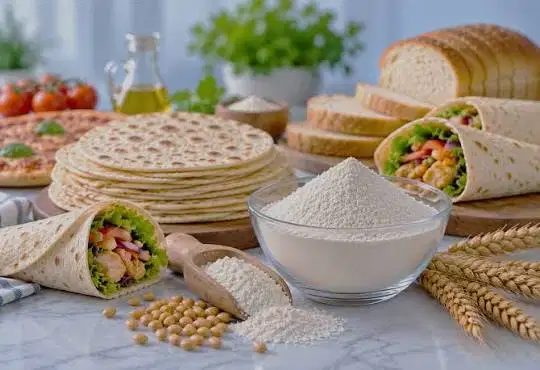
Ammonium bicarbonate is primarily used as leavening agent in baked goods. This makes it ideal for cookies, crackers, and biscuits. Its ability to produce uniform results at scale is major advantage for large-scale manufacturers.
Key advantages:
No alkaline residue: Unlike sodium bicarbonate (baking soda), ammonium bicarbonate does not leave residual alkaline taste, making it ideal for delicate recipes. Does not leave salty or soapy taste. Enhances flavor profiles. Unlike other leavening agents, it does not leave residual alkaline taste
Highest leavening power: Decomposition at moderate temperatures (around 60°C) produces carbon dioxide, which creates light, airy texture. Produces more gas than sodium bicarbonate without leaving salty taste. Acts quickly, ensuring uniform product quality in large-scale production
Crispness retention: Biscotti and hard biscuits retain crispness better than sodium bicarbonate alternatives. Ideal for low-moisture products
Color control: Sprayed butter crackers – controls color – avoids excessive browning that sodium bicarbonate can cause
Typical Usage Levels and Dosage
Ammonium bicarbonate is typically used at 0.5–2% of flour weight in baked goods like biscuits and crackers. Why ammonium bicarbonate preferred over other leavening agents in certain baked goods? Because low moisture allows full ammonia evaporation.
Detailed guidance:
Dosage for baking: 1 tsp (4g) on 500 grams of flour – i.e., 0.8% – dosage varies between 0.5% and 1.5% of weight of flour, depending on desired structure. Typical dosage – 5-10g per 1 kg flour; about 1 tsp per 500g for traditional springerle or Lebkuchen
Low dosage: Generates moderate leavening which translates into greater friability of biscuit, without creating real honeycombing. Good example is cantucci, dry, crumbly biscuits with compact structure
High dosage: Produces more significant leavening, which translates into more open structure with evident honeycombing. Typical of dunking biscuits, which should easily absorb liquids
Codex limit: Codex Alimentarius GSFA kept ammonium bicarbonate permission at up to 10 g/kg in biscuits (INS 503(ii)), unchanged since 2023 revision
Industrial formulas: e.g., Fishbone soda biscuits – Baking soda 0.2%, Ammonium bicarbonate 0.2%; Sodium bicarbonate 0.04%, Ammonium bicarbonate 0.08% – biscuits subjectively assessed, utilized as additive to shortening
Important not to use too much – to avoid excessive development in oven, which often results in loss of shape and extreme fragility.
Applications by Biscuit and Cracker Type
AMMONIUM BICARBONATE APPLICATIONS: LEAVENING OF COOKIES AND CRACKERS, BY TYPE OF PRODUCT
Soda & Saltine Crackers: Controls spread and provides lift, sprayed butter crackers – controls color
Semi-Sweet Rotary Molded Products (Tea, Shortcake, Butter Biscuits): Creates light, friable texture without alkaline aftertaste
Wire-Cut Deposited Products (Chocolate Chip, etc.): Uniform aeration
Thin crackers: Where full ammonia release guaranteed during baking
Biscotti and hard biscuits: Retains crispness better than sodium bicarbonate alternatives
Puffed snacks: Leavening Agent – Used in cookies, biscuits, crackers, and puffed snacks
Springerle, Lebkuchen, Cantucci, Dunking biscuits: Traditional European applications requiring open structure for liquid absorption
How to Use Correctly – Technical Tips
Guide to use ammonium bicarbonate as raising agent:
Add as last ingredient: Its relatively low activation temperature means must ensure not to activate prematurely during processing so doesn't lose leavening power. Good practice to add as last ingredient, while trying to keep temperature of dough under control
Avoid premature contact with liquids: Ammonium bicarbonate is white powder, useful tip to incorporate into other dried ingredients such as flour or starch, to keep it dry and bring into contact with wet ingredients as late as possible
Ensure complete evaporation: During cooking normal for very strong acrid, pungent odor to be released, best not to inhale in large quantities as ammonia toxic in high concentrations. However presence of residues should cause no concern – once 60°C reached, in dry environment decomposes completely and evaporates, leaving no trace. Since ammonia extremely soluble in water, important product is dried out carefully in oven. If more than 3-4% residual humidity remains, some ammonia dissolves in water instead of evaporating, transmitting unwanted aftertaste and limiting leavening. This is why not recommended to use in moist desserts (e.g., sponges, cakes), but better reserved for extremely dry products (e.g., biscuits, crackers)
Storage: Keep cool, dry, sealed – decomposes at 36°C, loses potency if exposed to humidity
Comparison: Ammonium Bicarbonate vs Sodium Bicarbonate
Feature | Ammonium Bicarbonate | Sodium Bicarbonate |
|---|---|---|
Formula | NH4HCO3 | NaHCO3 |
Gases released | NH3 + CO2 + H2O | CO2 only (needs acid) |
Residue | None (fully volatile at 60°C) | Sodium residue, alkaline taste possible |
Flavor impact | Neutral, no salty/soapy taste | Can impart salty/soapy if excess |
Best for | Low-moisture biscuits, crackers | Cakes, soft cookies, high-moisture products |
Leavening volume | Very high – 2g >1L gas | Lower |
Limitation | Not for moist products (>4% moisture residual) | Requires acid component (cream of tartar, phosphate) |
E-number | E503(ii) | E500(ii) |
Usage level | 0.5-1.5% flour weight | 0.5-1% plus acid |
Accordingly, ammonium bicarbonate alone is not suitable replacement for sodium bicarbonate in production of acceptable low sodium soda cracker – Potassium bicarbonate has been used as component in leavening mixtures for baked products intended to be consumed in sodium-free diets. However, as disclosed by Matz in Cookie and Cracker Technology (1968), potassium bicarbonate very hygroscopic and tends to impart bitter flavor. Crackers baked to low moisture – often combination of ammonium + sodium bicarbonate used to balance spread and lift.
Safety and Regulatory Status
FDA GRAS: Affirmed as GRAS
EU: E503(ii) authorized, strict specifications – purity >99%, heavy metals limits
Handling: Avoid inhalation of ammonia gas during baking – ensure ventilation in industrial ovens; strong acrid odor normal
Acrylamide considerations: Sodium bicarbonate competed directly in baking formulations, and consumer concerns also weighed on sales prospects, particularly around acrylamide formation in high-temperature baked goods – ammonium bicarbonate does not increase acrylamide vs sodium bicarbonate when used correctly, but high ammonia may affect pH
Formulation Example – Typical Cracker
Flour 100%, shortening 10-12%, sugar 2-4%, salt 1.5-2%, ammonium bicarbonate 0.5-0.8%, sodium bicarbonate 0.2-0.4%, yeast or chemical leavening balance, water 20-25%. Mix dry, add fat, add water last with ammonium bicarbonate dissolved in small water portion just before mixing end.
For sprayed butter crackers – function controls color – prevents excessive Maillard browning by not raising pH.
Working Source Links:
Ammonium Bicarbonate: Versatile Applications & Technical Excellence – primarily used as leavening agent, ideal for cookies, crackers, biscuits, uniform results at scale – https://tengerchemical.com
Ammonium bicarbonate | CAS 1066-33-7 | SoleChem – CAS 1066-33-7 also known as E503(ii) decomposes cleanly – https://solechem.eu – In baked goods flat or low-moisture products
Ammonium Bicarbonate Applications – Food Industry: Enhancing Texture – popular choice for cookies, crackers, biscuits, does not leave residual alkaline taste – https://tengerchemical.com
Dosage for baking: 1tsp (4g) on 500 grams flour – decomposes at 60°C does not leave flavor affecting residues – https://natuurlijknatuurlijk.nl – NH4HCO3 = NH3 + H2O + CO2
Guide to use ammonium bicarbonate as raising agent – 0.5% to 1.5% weight of flour, low dosage greater friability, high dosage open structure – cantucci, dunking biscuits – https://mulinopadano.it
Ammonium bicarbonate E503 – typical usage 0.5–2% flour weight – https://addi-group.com
Calcium Chloride (E509) CAS: 10043-52-4